Oriental Reed-Warbler

Oriental Reed-Warbler

Acrocephalus orientalis

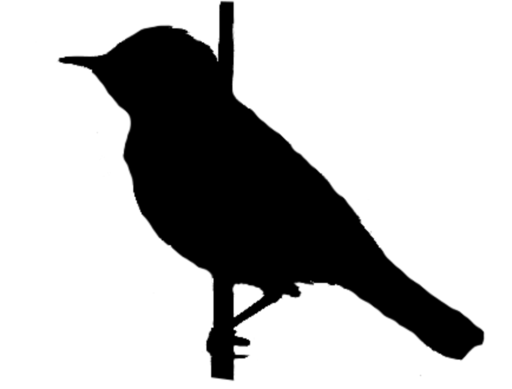
Silhouette: Yves Hoebeke · PhyloPic

LCLeast ConcernNTVUENCR
Daily sighting probability <5% · Rare
at Nikko National Park

In 3 days <5% in a week ~10%

5 Verified sightings at Nikko National Park From 2019 to 2026
46 In all 3 parks
August Best month

About the Oriental Reed-Warbler

The Oriental reed warbler (Acrocephalus orientalis) is a passerine bird of eastern Asia belonging to the reed warbler genus Acrocephalus. It was formerly classified as a subspecies of the great reed warbler (A. arundinaceus) of the western Palearctic.

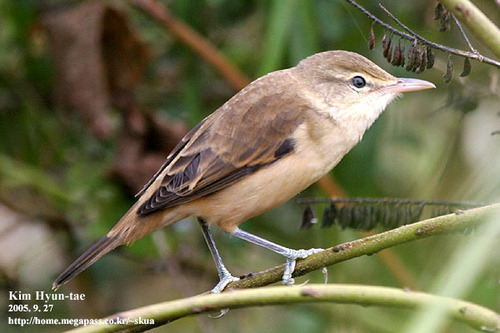
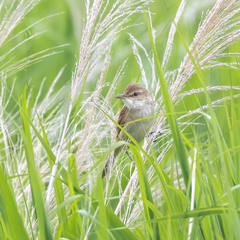
It is a large warbler, 18–20 cm long with a wingspan of 23–26 cm. The plumage is brown above with a paler rump and whitish tips to the tail feathers. The underparts are whitish below, browner on the flanks and undertail-coverts. There are narrow greyish streaks on the throat and breast. It has a dark eyestripe and a whitish stripe above the eye. The fairly long, heavy bill is brownish above and pink below with a bright orange gape. The feet are grey.

It is slightly smaller, slenderer and shorter-winged than the great reed warbler. Its tail is shorter and more square-ended than that of the clamorous reed warbler (A. stentoreus) and it has a slightly longer primary projection and a slightly shorter and thicker bill. The pale tip to the tail separates it from both species.

The song is a mixture of warbling phrases and guttural, croaking notes. It is given from a prominent perch such as the top of a reed stem or bush. The... Wikipedia →
Sounds

Song0:59

China · 2025

© Bo Shunqi 薄顺奇 · XC1181329 · CC BY-NC-SA 4.0

Subsong0:39

Singapore · 2026

© Ding Li Yong · XC1100682 · CC BY-NC-ND 4.0

Call0:23

Malaysia · 2026

© Lim Ying Hien 林勇贤 · XC1089811 · CC BY-NC-ND 4.0

Global Distribution

Parks Where Found

# Park Country Daily sighting probability
1 Nikko National Park 🇯🇵 Japan
<5%
2 Kaeng Krachan National Park 🇹🇭 Thailand
<5%
3 Cat Tien National Park 🇻🇳 Vietnam
<5%

Cities Where Found

# City Country Daily sighting probability
1 Shijiazhuang 🇨🇳 China
~20%
2 Phnom Penh 🇰🇭 Cambodia
~20%
3 Ho Chi Minh City 🇻🇳 Vietnam
~10%
4 Đà Nẵng 🇻🇳 Vietnam
~10%
5 Beijing 🇨🇳 China
~10%
6 Jinan 🇨🇳 China
~10%
7 Kitakyushu 🇯🇵 Japan
~10%
8 Sendai 🇯🇵 Japan
~10%
9 Tianjin 🇨🇳 China
~10%
10 Lanzhou 🇨🇳 China
~10%

Before you go

What are the chances of seeing an Oriental Reed-Warbler in Nikko National Park?

Rare

Under 5% of wildlife watchers report an Oriental Reed-Warbler sighting in Nikko National Park on a given day, based on 5 verified sightings from GBIF citizen-science data from 2019 to 2026. It is the 97th most-seen of the 102 birds we can rate there. Over three days the chance rises to under 5%, and over a week to about 10%, if each day is a fresh chance.

When is the best time to see an Oriental Reed-Warbler in Nikko National Park?

August

In that month about 10% of wildlife watchers report an Oriental Reed-Warbler in Nikko National Park on a given day, against under 5% in September to July, the lowest months. That is one of Nikko National Park's wettest months, with about 230 mm of rain against 100 mm in November.

Is Nikko National Park the best place to see an Oriental Reed-Warbler?

Yes

Of the 3 parks where we can rate Oriental Reed-Warbler sightings, Nikko National Park has the highest daily chance: under 5%. Next come Kaeng Krachan National Park (Thailand, under 5%) and Cat Tien National Park (Vietnam, under 5%).

Which relatives of the Oriental Reed-Warbler live in Nikko National Park?

Same order: Passeriformes

The closest relatives of the Oriental Reed-Warbler that you can see in Nikko National Park (order Passeriformes, Perching Birds) are Cinereous Tit (about 80%), Japanese Bush Warbler (about 70%) and Coal Tit (about 60%), with each one's daily chance of a sighting.

Where does the Oriental Reed-Warbler sighting chance come from?

GBIF citizen-science records

It is estimated from how often the Oriental Reed-Warbler is recorded against all the birds logged in Nikko National Park (5 verified sightings from 2019 to 2026), calibrated against known sighting rates. Figures are rounded to the nearest 10% because citizen-science data supports honest approximations, not decimals, and months with records from fewer than five people show "—". How it works.

← Back to Nikko National Park