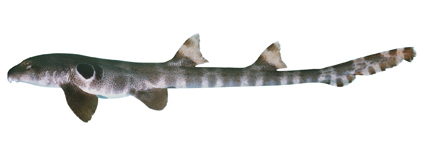
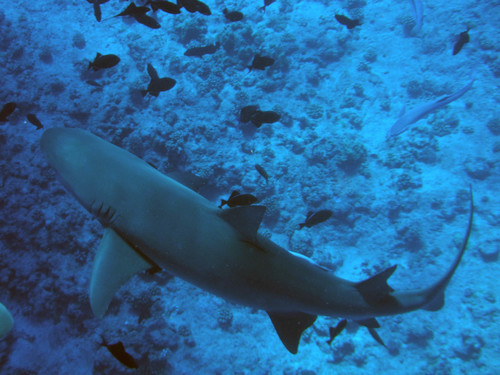
Tawny Nurse Shark

Tawny Nurse Shark

Nebrius ferrugineus

Silhouette: based on photo by fokitochikito (https://www.inaturalist.org/observations/220751543) · PhyloPic

Daily sighting probability ~20% · Possible
at Ningaloo Marine Park

In 3 days ~50% in a week ~80%

7 Verified sightings at Ningaloo Marine Park From 2019 to 2026
7 In 1 park
January Best month
☀️ Diurnal When it's spotted

About the Tawny Nurse Shark

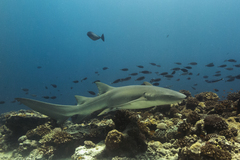
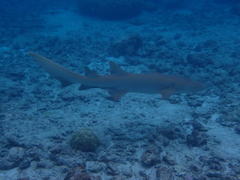
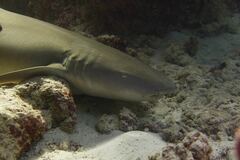
The tawny nurse shark (Nebrius ferrugineus) is a species of carpet shark in the family Ginglymostomatidae, and the only extant member of the genus Nebrius. It is found widely along coastlines in the Indo-Pacific, preferring reefs, sandy flats, and seagrass beds from very shallow water to a depth of 70 m (230 ft). With a cylindrical body and a broad, flattened head, the tawny nurse shark is quite similar in appearance to the nurse shark (Ginglymostoma cirratum) of the Atlantic and East Pacific, from which it can be distinguished by its pointed-tipped dorsal fins and narrow, sickle-shaped pectoral fins. The maximum recorded length of the tawny nurse shark is 3.2 m (10 ft).

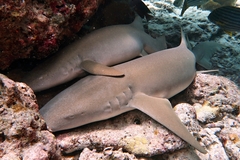
Nocturnal in habits, the tawny nurse shark tends to spend the day resting in piles of two dozen or more individuals inside caves or under ledges. At night, it is an active-swimming predator that uses a powerful suction force to extract prey from inside holes and crevices. The diet of this species consists mainly of octopus, though they also take other invertebrates, small bony fishes, and rarely sea snakes. It is aplacental viviparous, meaning the embryos hatch from egg capsules inside the mother. It is the only carpet shark in which the embryos are oophagous, feeding on eggs produced by the mother while inside the uterus. The litter size may be as small as one or two, based on the large size of near-term embryos.

Compared to the nurse shark, the tawny nurse shark has a more placid disposition and will often allow divers to touch and play with it. However, it should be accorded respect due to its powerful jaws and sharp teeth. This species is caught by commercial fisheries across most of its range for meat, fins, liver oil, leather, and fishmeal. It is also esteemed as a game fish off Queensland, Australia, and is known for its habit of spitting water in the faces of its captors. The International Union for Conservation of Nature (IUCN) has assessed the tawny nurse shark as Vulnerable, with subpopulations in several areas already diminished or extirpated. Wikipedia →

Global Distribution

Parks Where Found

# Park Country Daily sighting probability
1 Ningaloo Marine Park 🇦🇺 Australia
~20%

More parks will be added in future updates.

Zoos & Centres Where Found

# Zoo / Centre Country
1 Granby Zoo 🇨🇦 Canada In captivity
2 Sea World 🇦🇺 Australia In captivity
3 L'Oceanogràfic 🇪🇸 Spain In captivity
4 Hong Kong Zoological and Botanical Gardens 🇨🇳 China In captivity
5 黔灵山动物园 🇨🇳 China In captivity
6 AquaRio 🇧🇷 Brazil In captivity
7 Melbourne Aquarium 🇦🇺 Australia In captivity
8 Sea Life Sydney Aquarium 🇦🇺 Australia In captivity
9 Wonders of Wildlife Museum & Aquarium 🇺🇸 United States In captivity
10 Sea World Indonesia 🇮🇩 Indonesia In captivity
11 Marine Life Park 🇸🇬 Singapore In captivity
12 Sea Life Sunshine Coast 🇦🇺 Australia In captivity
13 Shanghai Ocean Aquarium 🇨🇳 China In captivity
14 Wild Life Sydney 🇦🇺 Australia In captivity
15 Aviary 🇭🇰 Hong Kong SAR China In captivity
16 Acuario Inbursa 🇲🇽 Mexico In captivity

Before you go

What are the chances of seeing a Tawny Nurse Shark in Ningaloo Marine Park?

Possible

About 20% of wildlife watchers report a Tawny Nurse Shark sighting in Ningaloo Marine Park on a given day, based on 7 verified sightings from GBIF citizen-science data from 2019 to 2026. It is the 20th most-seen of the 24 sharks and rays we can rate there. Over three days the chance rises to about 50%, and over a week to about 80%, if each day is a fresh chance.

When is the best time to see a Tawny Nurse Shark in Ningaloo Marine Park?

January and February

In those months about 50% of wildlife watchers report a Tawny Nurse Shark in Ningaloo Marine Park on a given day, against under 5% in March–April and August–November, the lowest months.

What time of day is best to see a Tawny Nurse Shark?

Between 9 am and noon

Across all the parks we cover, that three-hour window holds the most Tawny Nurse Shark sightings with a recorded time, and about 7 in 10 of them come between 6 am and 6 pm: it is a daytime animal.

Where else can you see a Tawny Nurse Shark?

Only Ningaloo Marine Park, in our data

Ningaloo Marine Park is the only park on Wallace's Line with enough records to rate Tawny Nurse Shark sightings: about 20% of wildlife watchers there report one on a given day.

Which relatives of the Tawny Nurse Shark live in Ningaloo Marine Park?

Same order: Orectolobiformes

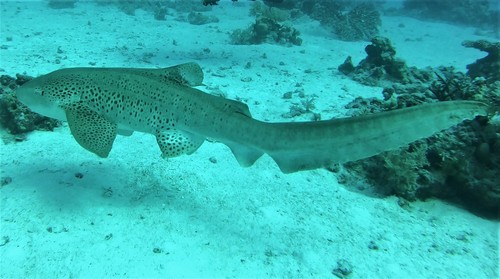
The closest relatives of the Tawny Nurse Shark that you can see in Ningaloo Marine Park (order Orectolobiformes, Carpet Sharks) are Whale Shark (about 60%), Zebra Shark (about 40%) and Tasselled Wobbegong (about 40%), with each one's daily chance of a sighting.

Where does the Tawny Nurse Shark sighting chance come from?

GBIF citizen-science records

It is estimated from how often the Tawny Nurse Shark is recorded against all the sharks and rays logged in Ningaloo Marine Park (7 verified sightings from 2019 to 2026), calibrated against known sighting rates. Figures are rounded to the nearest 10% because citizen-science data supports honest approximations, not decimals, and months with records from fewer than five people show "—". How it works.

← Back to Ningaloo Marine Park