


Completed


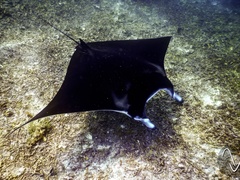


Reef Manta Ray
Mobula alfredi
Silhouette: M Kolmann · PhyloPic
- KingdomAnimalia (Animals)
- PhylumChordata (Chordates)
- ClassElasmobranchii
- OrderMyliobatiformes (Stingrays)
- FamilyMyliobatidae (Eagle Rays)
- GenusMobula (Devil Rays)
- SpeciesMobula alfredi (Reef Manta Ray)
In 3 days ~90% in a week >90%
74 Verified sightings at Ningaloo Marine Park From 2019 to 2026
328 In all 3 parks
July Best month
☀️ Diurnal When it's spotted


Completed
About the Reef Manta Ray
The reef manta ray or hāhālua (Mobula alfredi) is a species of ray in the family Mobulidae, one of the largest rays in the world. Among generally recognized species, it is the third-largest species of ray, surpassed by the Giant oceanic manta ray and the Atlantic manta ray.
The species was described in 1868 by Gerard Krefft, the director of the Australian Museum. He named it M. alfredi in honor of Alfred, Duke of Edinburgh, the first member of the British royal family to visit Australia. It was originally described as part of the genus Manta but in 2017 was changed, along with the rest of the mantas, to be included as part of the genus Mobula.
Reef manta rays are typically 3 to 3.5 m (9.8 to 11.5 ft) in disc width, with a maximum size of about 5.5 m (18 ft). For a long time included in M. birostris, the status of the reef manta ray as a separate species was only confirmed in 2009. The reef manta ray is found widely in the tropical and subtropical Indo-Pacific, but with a few records from the tropical East Atlantic and none from the West Atlantic or East Pacific. Compared to the giant oceanic manta ray, the reef manta ray tends to be found in shallower, more coastal habitats, but local migrations are sometimes reported.
Mobula birostris is similar in appearance to Mobula alfredi and the two species may be confused as their distribution overlaps. However, there are distinguishing features. Wikipedia →
Recent sightings of Reef Manta Ray in Ningaloo Marine Park
LIVEiNaturalistGlobal Distribution
Parks Where Found
| # | Park | Country | Daily sighting probability |
|---|---|---|---|
| 1 | Komodo National Park | 🇮🇩 Indonesia | |
| 2 | Raja Ampat | 🇮🇩 Indonesia | |
| 3 | Ningaloo Marine Park | 🇦🇺 Australia |
Zoos & Centres Where Found
| # | Zoo / Centre | Country | |
|---|---|---|---|
| 1 | Zhuhai Chimelong Ocean Kingdom | 🇨🇳 China | |
| 2 | Zoo Atlanta | 🇺🇸 United States | |
| 3 | Tennōji Zoo | 🇯🇵 Japan | |
| 4 | Hong Kong Zoological and Botanical Gardens | 🇨🇳 China | |
| 5 | Chittagong Zoo | 🇧🇩 Bangladesh | |
| 6 | Okinawa Churaumi Aquarium | 🇯🇵 Japan | |
| 7 | Marine Life Park | 🇸🇬 Singapore | |
| 8 | Singapore Oceanarium | 🇸🇬 Singapore | |
| 9 | Aviary | 🇭🇰 Hong Kong SAR China | |
| 10 | Osaka Water Museum | 🇯🇵 Japan |
Closest Relatives at Ningaloo Marine Park







Before you go
What are the chances of seeing a Reef Manta Ray in Ningaloo Marine Park?
Likely
About 60% of wildlife watchers report a Reef Manta Ray sighting in Ningaloo Marine Park on a given day, based on 74 verified sightings from GBIF citizen-science data from 2019 to 2026. It is the 4th most-seen of the 24 sharks and rays we can rate there. Over three days the chance rises to about 90%, and over a week to over 90%, if each day is a fresh chance.
When is the best time to see a Reef Manta Ray in Ningaloo Marine Park?
February and June–July
In those months about 80% of wildlife watchers report a Reef Manta Ray in Ningaloo Marine Park on a given day, against about 10% in November, the lowest month. Those are among Ningaloo Marine Park's wettest months, with about 30 mm of rain a month against almost none in October.
What time of day is best to see a Reef Manta Ray?
Between 9 am and noon
Across all the parks we cover, that three-hour window holds the most Reef Manta Ray sightings with a recorded time, and about 8 in 10 of them come between 6 am and 6 pm: it is a daytime animal.
Is Ningaloo Marine Park the best place to see a Reef Manta Ray?
3rd of 3
Of the 3 parks where we can rate Reef Manta Ray sightings, Ningaloo Marine Park ranks 3rd at about 60%. The best odds are in Komodo National Park (Indonesia, about 90%) and Raja Ampat (Indonesia, about 70%).
Which relatives of the Reef Manta Ray live in Ningaloo Marine Park?
Same order: Myliobatiformes
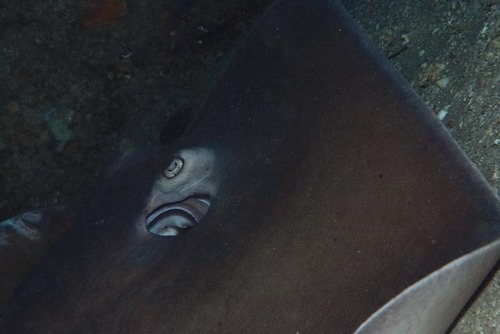
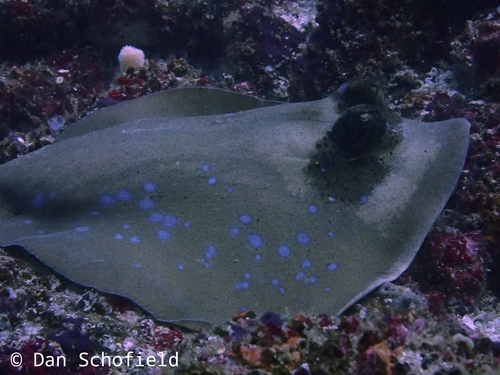
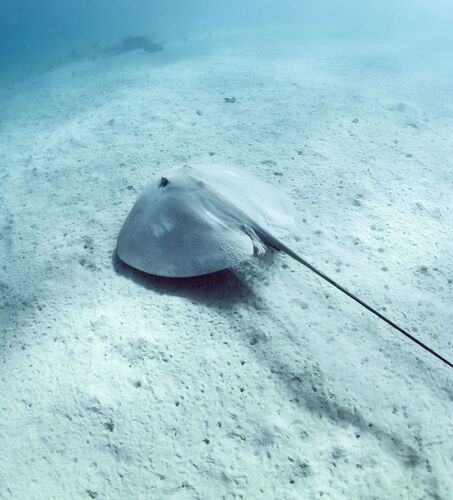
The closest relatives of the Reef Manta Ray that you can see in Ningaloo Marine Park (order Myliobatiformes, Stingrays) are Reef ray (about 70%), Broad Cowtail Stingray (about 50%) and Dragon stingray (about 30%), with each one's daily chance of a sighting.
Where does the Reef Manta Ray sighting chance come from?
GBIF citizen-science records
It is estimated from how often the Reef Manta Ray is recorded against all the sharks and rays logged in Ningaloo Marine Park (74 verified sightings from 2019 to 2026), calibrated against known sighting rates. Figures are rounded to the nearest 10% because citizen-science data supports honest approximations, not decimals, and months with records from fewer than five people show "—". How it works.
