Western Tent Caterpillar Moth

Western Tent Caterpillar Moth

Malacosoma californica

Daily sighting probability ~10% · With luck
at Olympic National Park

In 3 days ~30% in a week ~50%

44 Verified sightings at Olympic National Park From 2019 to 2026
589 In all 11 parks
June Best month
☀️ Diurnal When it's spotted

About the Western Tent Caterpillar Moth

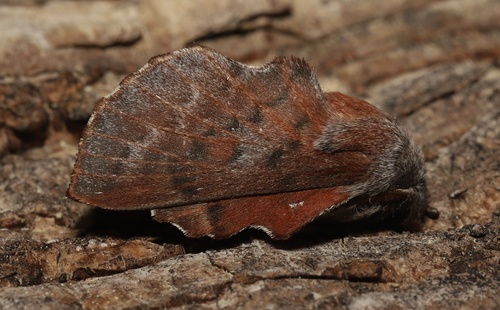
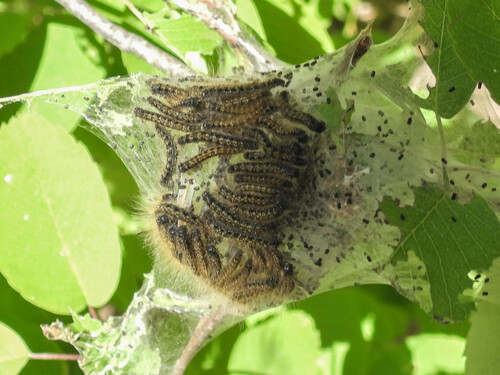
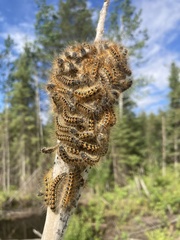
Malacosoma californicum, the western tent caterpillar, is a moth of the family Lasiocampidae. It is a tent caterpillar. The Western Tent Caterpillar is found in southern Canada, the western United States, and parts of northern Mexico. There are currently six recognized subspecies of M. californicum. Western tent caterpillars are gregarious and will spend a large portion of their time with other caterpillars in silken tents constructed during their larval stage.

Western tent caterpillars are univoltine, going through a single generation per year. Adults emerge in the late summer to copulate and lay eggs. Adult moths will preferentially lay their eggs on the sunny side of their host trees. Eggs will lay in diapause over the winter and hatch the following spring. Population sizes of western tent caterpillar can reach outbreak proportions, where populations reach very high numbers and large scale defoliation occurs. Severe outbreaks can cause defoliation of host trees however, damage to trees is minimal and most trees will grow their leaves back quickly.

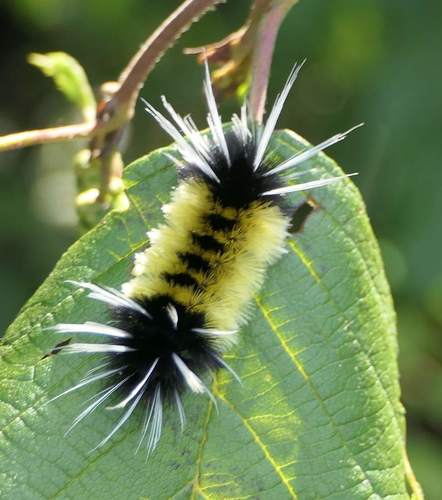
The mature Western Tent caterpillar pre-pupa is 4-5 centimeters long. The caterpillars are black, grey, or white with... Wikipedia →
Global Distribution

Parks Where Found

# Park Country Daily sighting probability
1 Glacier National Park 🇺🇸 United States
~30%
2 Grand Teton National Park 🇺🇸 United States
~30%
3 Joshua Tree National Park 🇺🇸 United States
~30%
4 Olympic National Park 🇺🇸 United States
~10%
5 Yellowstone National Park 🇺🇸 United States
~10%
6 Great Bear Rainforest 🇨🇦 Canada
~10%
7 Yosemite National Park 🇺🇸 United States
~10%
8 Zion National Park 🇺🇸 United States
~10%
9 Rocky Mountain National Park 🇺🇸 United States
~10%
10 Jasper National Park 🇨🇦 Canada
~10%
11 Sequoia and Kings Canyon National Parks 🇺🇸 United States
~10%

Cities Where Found

# City Country Daily sighting probability
1 Vancouver 🇨🇦 Canada
<5%
2 Seattle 🇺🇸 United States
<5%

Before you go

What are the chances of seeing a Western Tent Caterpillar Moth in Olympic National Park?

With luck

About 10% of wildlife watchers report a Western Tent Caterpillar Moth sighting in Olympic National Park on a given day, based on 44 verified sightings from GBIF citizen-science data from 2019 to 2026. It is the 27th most-seen of the 207 insects we can rate there. Over three days the chance rises to about 30%, and over a week to about 50%, if each day is a fresh chance.

When is the best time to see a Western Tent Caterpillar Moth in Olympic National Park?

June

In that month about 20% of wildlife watchers report a Western Tent Caterpillar Moth in Olympic National Park on a given day, against under 5% in August to March, the lowest months. That is one of Olympic National Park's driest months, with about 85 mm of rain against 370 mm in November.

What time of day is best to see a Western Tent Caterpillar Moth?

Between 10 am and 1 pm

Across all the parks we cover, that three-hour window holds the most Western Tent Caterpillar Moth sightings with a recorded time, and about 9 in 10 of them come between 6 am and 6 pm: it is a daytime animal.

Is Olympic National Park the best place to see a Western Tent Caterpillar Moth?

4th of 11

Of the 11 parks where we can rate Western Tent Caterpillar Moth sightings, Olympic National Park ranks 4th at about 10%. The best odds are in Glacier National Park (United States, about 30%), Grand Teton National Park (United States, about 30%) and Joshua Tree National Park (United States, about 30%).

Where does the Western Tent Caterpillar Moth sighting chance come from?

GBIF citizen-science records

It is estimated from how often the Western Tent Caterpillar Moth is recorded against all the insects logged in Olympic National Park (44 verified sightings from 2019 to 2026), calibrated against known sighting rates. Figures are rounded to the nearest 10% because citizen-science data supports honest approximations, not decimals, and months with records from fewer than five people show "—". How it works.

← Back to Olympic National Park