Large Banded Grasshopper

Large Banded Grasshopper

Arcyptera fusca

Daily sighting probability ~20% · Possible
at Ordesa y Monte Perdido National Park

In 3 days ~50% in a week ~80%

12 Verified sightings at Ordesa y Monte Perdido National Park From 2019 to 2026
411 In all 8 parks
July Best month
☀️ Diurnal When it's spotted

About the Large Banded Grasshopper

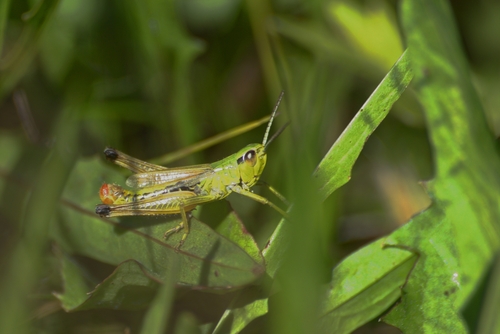
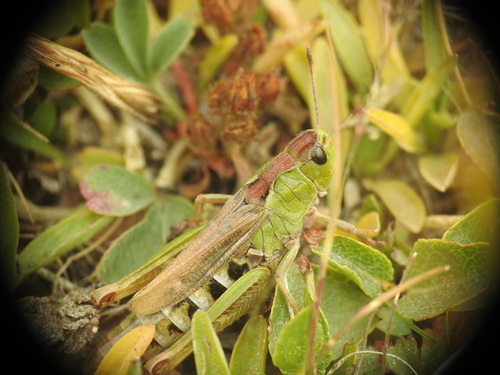
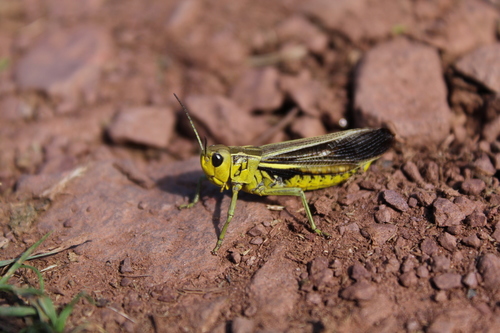
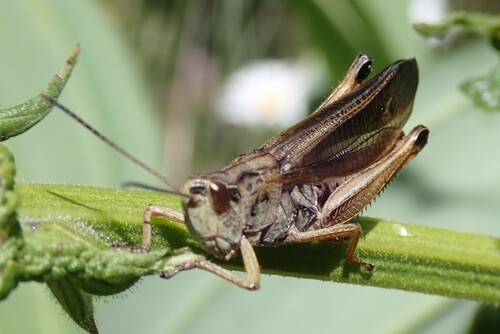
Arcyptera fusca, the large banded grasshopper, is a species of 'short-horned grasshoppers' belonging to the family Acrididae subfamily Gomphocerinae. This species is native of the steppes of Central Asia, but it is nowadays present in most of Europe, in eastern Palearctic realm, and in the Near East (the Pyrenees, the Alps, the Carpathians, the Caucasus and Siberia).

They can be encountered in the alpine dry meadows, glades, heath, mountain pastures and grasslands, at an elevation up to 1,000 metres (3,300 ft) above sea level. Arcyptera fusca can reach a body length of 22–35 millimetres (0.87–1.38 in) in males, while females reach a length of 29–44 millimetres (1.1–1.7 in). These medium-sized grasshoppers are characterized by a significant sexual dimorphism. Males have developed functional wings (oft 20–27.3 millimetres (0.79–1.07 in) covering the abdomen, while females have rudimentary wings (of 12.3–20.1 millimetres (0.48–0.79 in)), shorter than abdomen and unfit for flight (brachyptery). The basic body color is ocher or yellow-green, with dark markings. The hind tibiae have a characteristic bright red color that extended to the inner... Wikipedia →
Global Distribution

Parks Where Found

# Park Country Daily sighting probability
1 Mercantour National Park 🇫🇷 France
~50%
2 Vanoise National Park 🇫🇷 France
~40%
3 Aigüestortes National Park 🇪🇸 Spain
~30%
4 Ecrins National Park 🇫🇷 France
~20%
5 Ordesa y Monte Perdido National Park 🇪🇸 Spain
~20%
6 Pyrénées National Park 🇫🇷 France
~10%
7 Hohe Tauern National Park 🇦🇹 Austria
~10%
8 Cévennes National Park 🇫🇷 France
~10%

Cities Where Found

# City Country Daily sighting probability
1 Vienna 🇦🇹 Austria
<5%

Before you go

What are the chances of seeing a Large Banded Grasshopper in Ordesa y Monte Perdido National Park?

Possible

About 20% of wildlife watchers report a Large Banded Grasshopper sighting in Ordesa y Monte Perdido National Park on a given day, based on 12 verified sightings from GBIF citizen-science data from 2019 to 2026. It is the 26th most-seen of the 79 insects we can rate there. Over three days the chance rises to about 50%, and over a week to about 80%, if each day is a fresh chance.

When is the best time to see a Large Banded Grasshopper in Ordesa y Monte Perdido National Park?

July

In that month about 30% of wildlife watchers report a Large Banded Grasshopper in Ordesa y Monte Perdido National Park on a given day, against under 5% in April–June and October, the lowest months. That is one of Ordesa y Monte Perdido National Park's driest months, with about 70 mm of rain against 180 mm in October. January has too few records to rate.

What time of day is best to see a Large Banded Grasshopper?

Between 11 am and 2 pm

Across all the parks we cover, that three-hour window holds the most Large Banded Grasshopper sightings with a recorded time, and nearly all of them come between 6 am and 6 pm: it is a daytime animal.

Which relatives of the Large Banded Grasshopper live in Ordesa y Monte Perdido National Park?

Same family: Acrididae

The closest relatives of the Large Banded Grasshopper that you can see in Ordesa y Monte Perdido National Park (family Acrididae, Short-horned Grasshoppers) are Ladder Grasshopper (about 20%), Meadow Grasshopper (about 10%) and Club-Legged Grasshopper (about 10%), with each one's daily chance of a sighting.

Where does the Large Banded Grasshopper sighting chance come from?

GBIF citizen-science records

It is estimated from how often the Large Banded Grasshopper is recorded against all the insects logged in Ordesa y Monte Perdido National Park (12 verified sightings from 2019 to 2026), calibrated against known sighting rates. Figures are rounded to the nearest 10% because citizen-science data supports honest approximations, not decimals, and months with records from fewer than five people show "—". How it works.

← Back to Ordesa y Monte Perdido National Park