
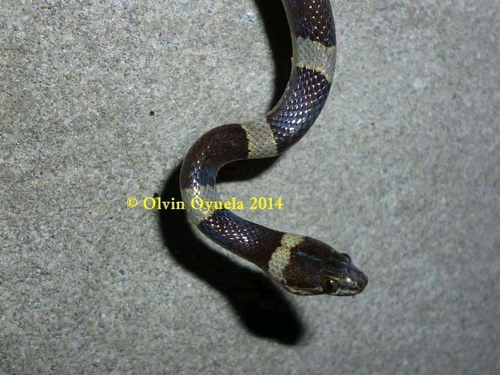
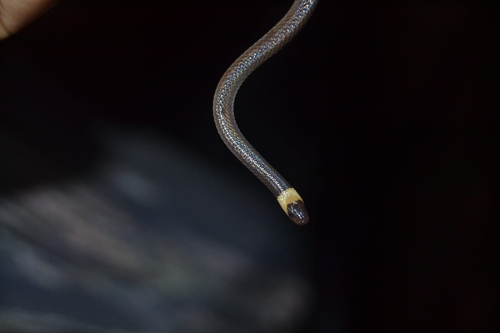
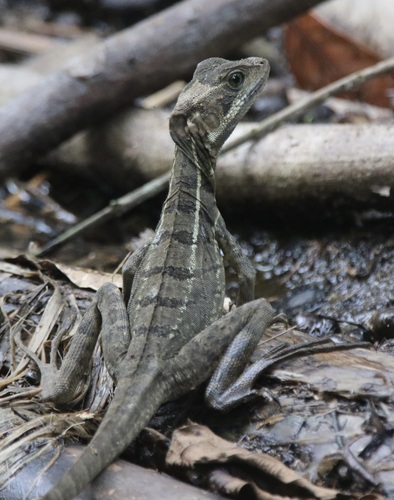
Western Ribbon Snake

Western Ribbon Snake

Thamnophis proximus

Silhouette: Alex Slavenko · PhyloPic

LCLeast ConcernNTVUENCR
Daily sighting probability ~20% · Possible
at Palo Verde National Park

In 3 days ~60% in a week ~90%

13 Verified sightings at Palo Verde National Park From 2019 to 2026
169 In all 4 parks
September Best month
☀️ Diurnal When it's spotted

About the Western Ribbon Snake

Thamnophis proximus, commonly known as the western ribbon snake or western ribbonsnake, is a species of garter snake in the subfamily Natricinae of the family Colubridae. The species is found in the central and southern United States, Mexico, and Central America south to central Costa Rica. The species has six recognized subspecies.

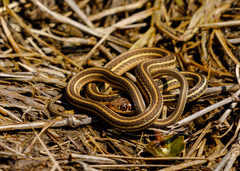
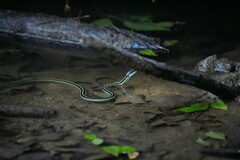
T. proximus is a slender snake with a very long tail, approximately one-third of the total length of the body. Dorsally, T. proximus is blackish, brown, or olive with three light-colored stripes. Ventrally, it is greenish-white or yellowish-white. The upper labials are whitish and unmarked, contrasting with the dark top and sides of the head. The specific name, proximus, describes the species' similarity to T. saurita.

Adults measure 17–50 in (43–127 cm) in total length (including the tail). Wikipedia →

Global Distribution

Parks Where Found

# Park Country Daily sighting probability
1 Padre Island National Seashore 🇺🇸 United States
~40%
2 Palo Verde National Park 🇨🇷 Costa Rica
~20%
3 Arrecifes de Cozumel National Park 🇲🇽 Mexico
~20%
4 Cumbres de Monterrey National Park 🇲🇽 Mexico
~10%

Cities Where Found

# City Country Daily sighting probability
1 Houston 🇺🇸 United States
~20%
2 Austin 🇺🇸 United States
~10%
3 Monterrey 🇲🇽 México
~10%
4 Dallas 🇺🇸 United States
~10%
5 San Antonio 🇺🇸 United States
<5%

Zoos & Centres Where Found

# Zoo / Centre Country
1 Dallas Zoo 🇺🇸 United States In captivity
2 Houston Zoo 🇺🇸 United States In captivity

Before you go

What are the chances of seeing a Western Ribbon Snake in Palo Verde National Park?

Possible

About 20% of wildlife watchers report a Western Ribbon Snake sighting in Palo Verde National Park on a given day, based on 13 verified sightings from GBIF citizen-science data from 2019 to 2026. It is the 11th most-seen of the 21 reptiles we can rate there. Over three days the chance rises to about 60%, and over a week to about 90%, if each day is a fresh chance.

When is the best time to see a Western Ribbon Snake in Palo Verde National Park?

March and September

In those months about 50% of wildlife watchers report a Western Ribbon Snake in Palo Verde National Park on a given day, against under 5% in April–August and November–February, the lowest months.

What time of day is best to see a Western Ribbon Snake?

Between 9 am and noon

Across all the parks we cover, that three-hour window holds the most Western Ribbon Snake sightings with a recorded time, and about 8 in 10 of them come between 6 am and 6 pm: it is a daytime animal.

Is Palo Verde National Park the best place to see a Western Ribbon Snake?

2nd of 4

Of the 4 parks where we can rate Western Ribbon Snake sightings, Palo Verde National Park ranks 2nd at about 20%. The best odds are in Padre Island National Seashore (United States, about 40%).

Which relatives of the Western Ribbon Snake live in Palo Verde National Park?

Same family: Colubridae

The closest relatives of the Western Ribbon Snake that you can see in Palo Verde National Park (family Colubridae, Colubrid Snakes) are Central American Lyresnake (about 40%), Rhombic Cat-eyed Snake (about 40%) and Cope's Snail Sucker (about 20%), with each one's daily chance of a sighting.

Where does the Western Ribbon Snake sighting chance come from?

GBIF citizen-science records

It is estimated from how often the Western Ribbon Snake is recorded against all the reptiles logged in Palo Verde National Park (13 verified sightings from 2019 to 2026), calibrated against known sighting rates. Figures are rounded to the nearest 10% because citizen-science data supports honest approximations, not decimals, and months with records from fewer than five people show "—". How it works.

← Back to Palo Verde National Park