Orange-Faced Sprite

Orange-Faced Sprite

Pseudagrion rubriceps

Daily sighting probability ~20% · Possible
at Periyar National Park

In 3 days ~50% in a week ~80%

5 Verified sightings at Periyar National Park From 2019 to 2026
26 In all 3 parks
February Best month
☀️ Diurnal When it's spotted

About the Orange-Faced Sprite

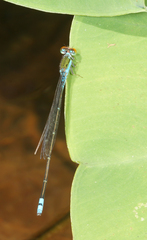
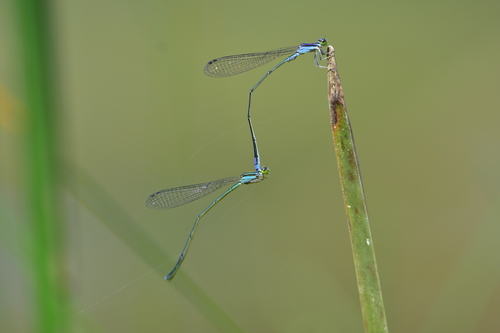
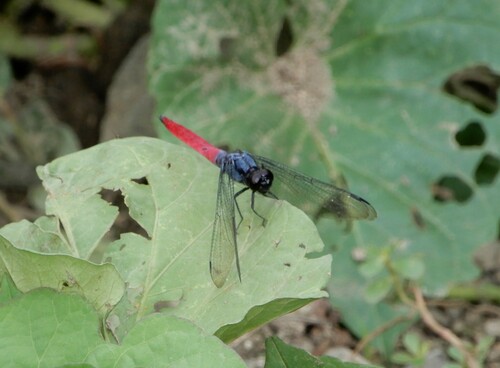
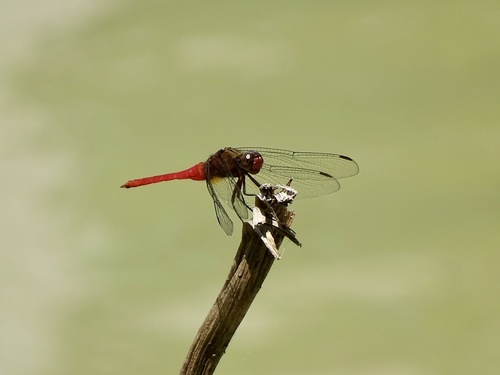
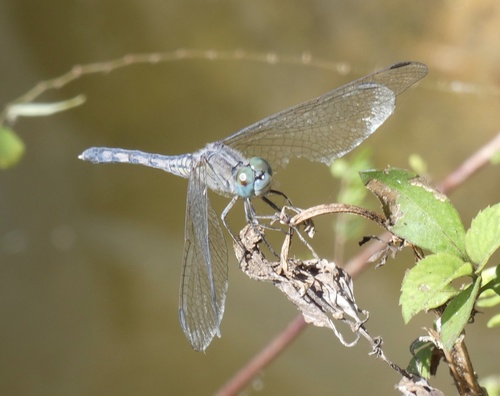
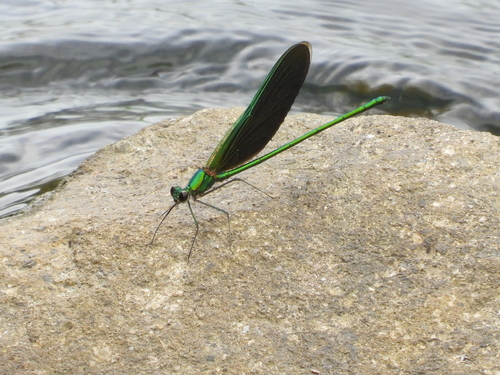
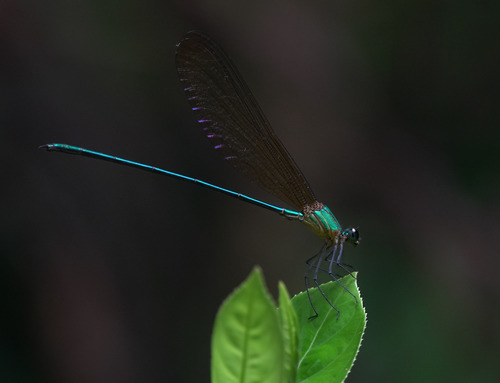
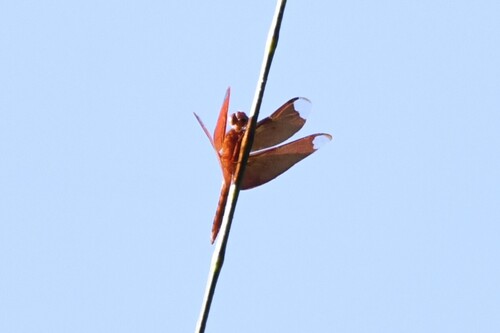
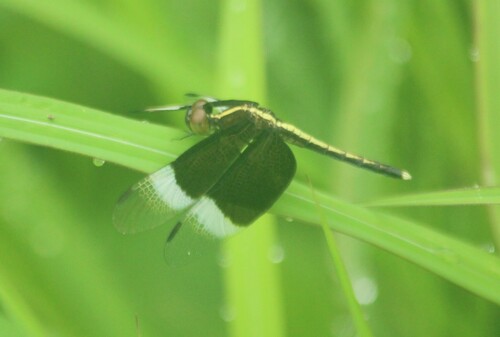
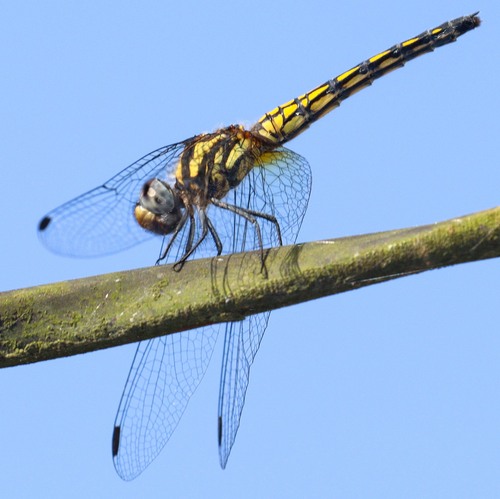
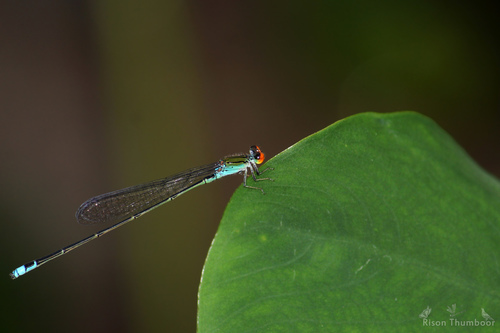
Pseudagrion rubriceps, saffron-faced blue dart, is a species of damselfly in the family Coenagrionidae. It is found in many tropical Asian countries. It is a medium sized damselfly with bright orange eyes, greenish below. The male is easily distinguished from all other Pseudagrion species by the brilliant reddish-orange face, from which it derives its common name. Its thorax is olive green above and azure blue on the sides. There is a narrow mid-dorsal carina and humeral stripes in black. Abdomen is blue on the sides, broadly marked with black on dorsum, up to segment 8. Segments 9 and 10 are azure blue without any marks. Anal appendages are black.

Eyes, face and thorax of the female is yellowish green, marked as in the male. Color of the abdomen is similar to the male; but paler. Segments 8 and 9 are also black with fine apical blue rings. Segment 10 is pale blue.

Widely distributed throughout the plains and submontane areas. It breeds in weedy streams and ponds. Two subspecies recognized. Pseudagrion rubriceps ceylonicum - Endemic to Sri Lanka Pseudagrion rubriceps rubriceps - Other Asian countries.

List of odonates of... Wikipedia →
Global Distribution

Parks Where Found

# Park Country Daily sighting probability
1 Periyar National Park 🇮🇳 India
~20%
2 Khao Sok National Park 🇹🇭 Thailand
~10%
3 Kaeng Krachan National Park 🇹🇭 Thailand
~10%

Cities Where Found

# City Country Daily sighting probability
1 Yogyakarta 🇮🇩 Indonesia
~20%
2 Jakarta 🇮🇩 Indonesia
~10%
3 Colombo [Sri Jayawardenepura Kotte] 🇱🇰 Sri Lanka
~10%
4 Denpasar 🇮🇩 Indonesia
~10%
5 Kolkata 🇮🇳 India
~10%
6 Mumbai 🇮🇳 India
~10%
7 Bangkok 🇹🇭 Thailand
~10%
8 Guangzhou 🇨🇳 China
<5%
9 Bengaluru 🇮🇳 India
<5%
10 Pune 🇮🇳 India
<5%

Before you go

What are the chances of seeing an Orange-Faced Sprite in Periyar National Park?

Possible

About 20% of wildlife watchers report an Orange-Faced Sprite sighting in Periyar National Park on a given day, based on 5 verified sightings from GBIF citizen-science data from 2019 to 2026. It is the 31st most-seen of the 44 insects we can rate there. Over three days the chance rises to about 50%, and over a week to about 80%, if each day is a fresh chance.

When is the best time to see an Orange-Faced Sprite in Periyar National Park?

February and June

In those months about 40% of wildlife watchers report an Orange-Faced Sprite in Periyar National Park on a given day, against under 5% in March–May, July and September–December, the lowest months.

What time of day is best to see an Orange-Faced Sprite?

Between noon and 3 pm

Across all the parks we cover, that three-hour window holds the most Orange-Faced Sprite sightings with a recorded time, and about 9 in 10 of them come between 6 am and 6 pm: it is a daytime animal.

Is Periyar National Park the best place to see an Orange-Faced Sprite?

Yes

Of the 3 parks where we can rate Orange-Faced Sprite sightings, Periyar National Park has the highest daily chance: about 20%. Next come Khao Sok National Park (Thailand, about 10%) and Kaeng Krachan National Park (Thailand, about 10%).

Where does the Orange-Faced Sprite sighting chance come from?

GBIF citizen-science records

It is estimated from how often the Orange-Faced Sprite is recorded against all the insects logged in Periyar National Park (5 verified sightings from 2019 to 2026), calibrated against known sighting rates. Figures are rounded to the nearest 10% because citizen-science data supports honest approximations, not decimals, and months with records from fewer than five people show "—". How it works.

← Back to Periyar National Park