Atlantic Spotted Dolphin

Atlantic Spotted Dolphin

Stenella frontalis

Silhouette: Chris huh · PhyloPic

LCLeast ConcernNTVUENCR
Daily sighting probability ~40% · Likely
at Pico Island Natural Park (Azores)

In 3 days ~80% in a week >90%

26 Verified sightings at Pico Island Natural Park (Azores) From 2019 to 2026
52 In all 2 parks
July Best month
☀️ Diurnal When it's spotted

About the Atlantic Spotted Dolphin

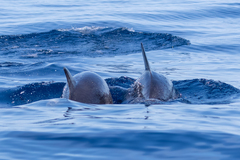
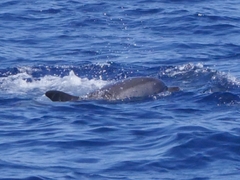
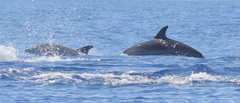
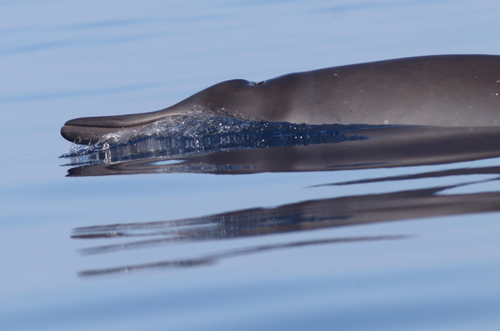
The Atlantic spotted dolphin (Stenella frontalis) is a dolphin found in warm temperate and tropical waters of the Atlantic Ocean. Older members of the species have a very distinctive spotted coloration all over their bodies.

The Atlantic spotted dolphin was first described by Cuvier in 1828. Considerable variation in the physical form of individuals occurs in the species, and specialists have long been uncertain as to the correct taxonomic classification. Currently, just one species is recognised, but a large, particularly spotty variant commonly found near Florida quite possibly may be classified as a formal subspecies or indeed a species in its own right.

Atlantic spotted dolphins in the Bahamas have been observed mating with bottlenose dolphins. Rich LeDuc has published data that suggest the Atlantic spotted dolphin may be more closely related to the bottlenose dolphins (genus Tursiops) than to other members of the genus Stenella. More recent studies in the 2020s indicate that this is a consequence of reticulate evolution (such as past hybridization between Stenella (spotted dolphins) and ancestral Tursiops (bottlenose dolphins)) and incomplete lineage sorting, and...


Wikipedia →

Global Distribution

Parks Where Found

# Park Country Daily sighting probability
1 Pico Island Natural Park (Azores) 🇵🇹 Portugal
~40%
2 Teno-Rasca Marine Strip (Tenerife) 🇪🇸 Spain
~20%

Before you go

What are the chances of seeing an Atlantic Spotted Dolphin in Pico Island Natural Park (Azores)?

Likely

About 40% of wildlife watchers report an Atlantic Spotted Dolphin sighting in Pico Island Natural Park (Azores) on a given day, based on 26 verified sightings from GBIF citizen-science data from 2019 to 2026. It is the 6th most-seen of the 13 mammals we can rate there. Over three days the chance rises to about 80%, and over a week to over 90%, if each day is a fresh chance.

When is the best time to see an Atlantic Spotted Dolphin in Pico Island Natural Park (Azores)?

July

In that month about 60% of wildlife watchers report an Atlantic Spotted Dolphin in Pico Island Natural Park (Azores) on a given day, against under 5% in April–June and October, the lowest months. That is one of Pico Island Natural Park (Azores)'s driest months, with about 70 mm of rain against 250 mm in December. January has too few records to rate.

What time of day is best to see an Atlantic Spotted Dolphin?

Between 9 am and noon

Across all the parks we cover, that three-hour window holds the most Atlantic Spotted Dolphin sightings with a recorded time, and about 9 in 10 of them come between 6 am and 6 pm: it is a daytime animal.

Is Pico Island Natural Park (Azores) the best place to see an Atlantic Spotted Dolphin?

Yes

Of the 2 parks where we can rate Atlantic Spotted Dolphin sightings, Pico Island Natural Park (Azores) has the highest daily chance: about 40%. Next come Teno-Rasca Marine Strip (Tenerife) (Spain, about 20%).

Where does the Atlantic Spotted Dolphin sighting chance come from?

GBIF citizen-science records

It is estimated from how often the Atlantic Spotted Dolphin is recorded against all the mammals logged in Pico Island Natural Park (Azores) (26 verified sightings from 2019 to 2026), calibrated against known sighting rates. Figures are rounded to the nearest 10% because citizen-science data supports honest approximations, not decimals, and months with records from fewer than five people show "—". How it works.

← Back to Pico Island Natural Park (Azores)