Adonis Blue

Adonis Blue

Lysandra bellargus

Daily sighting probability ~30% · Possible
at Picos de Europa National Park

In 3 days ~70% in a week ~90%

31 Verified sightings at Picos de Europa National Park From 2019 to 2026
470 In all 10 parks
June Best month
☀️ Diurnal When it's spotted

About the Adonis Blue

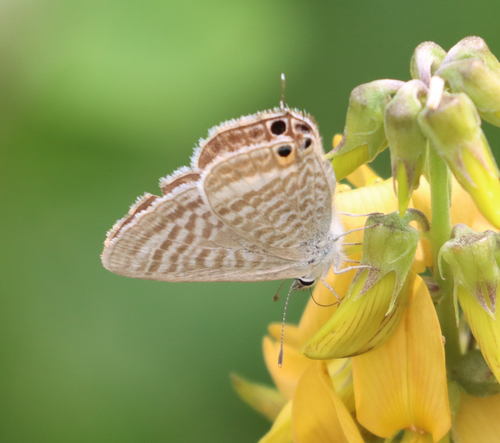
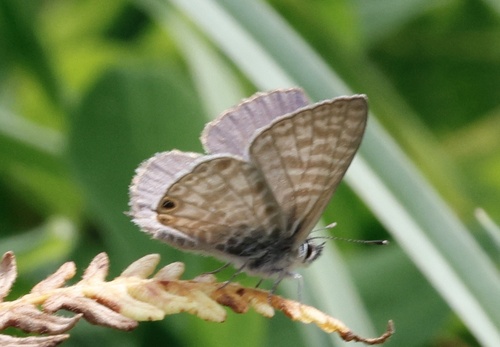
The Adonis blue (Lysandra bellargus, also known as Polyommatus bellargus) is a butterfly in the family Lycaenidae. It inhabits the Palearctic realm (Western Europe, Central Europe, Southern Europe, Southern Russia, Iraq, Iran, Caucasus, Transcaucasus, and Turkey).

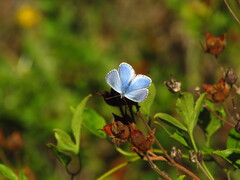
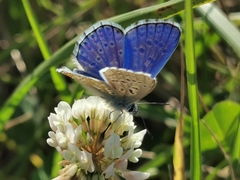
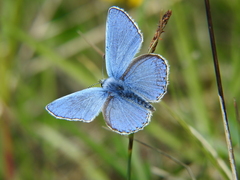
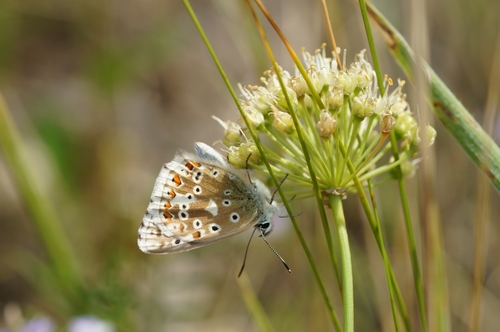
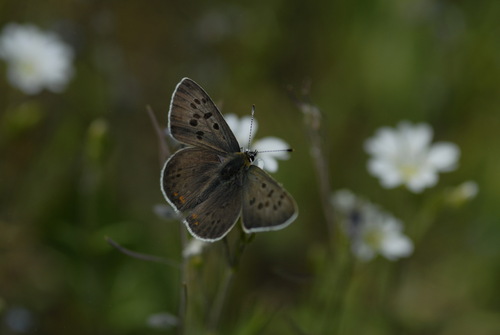
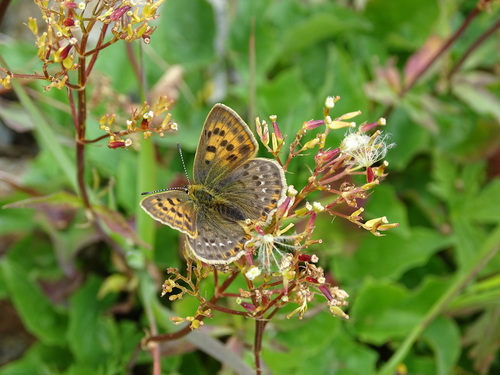
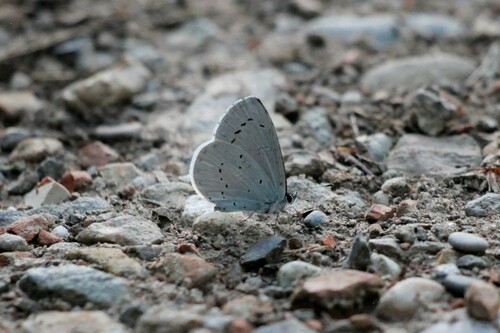
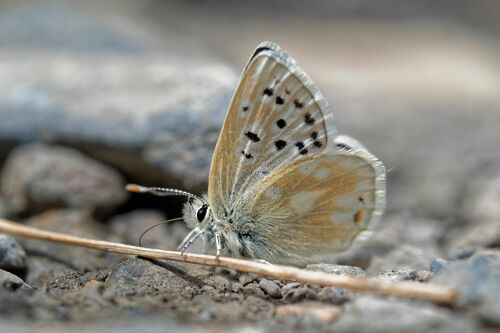
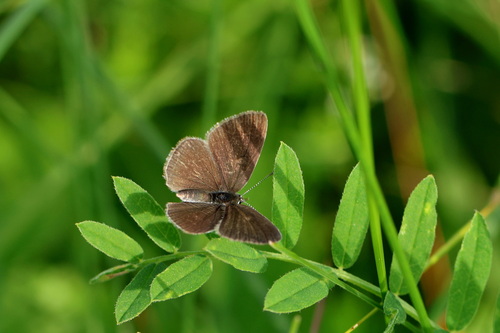
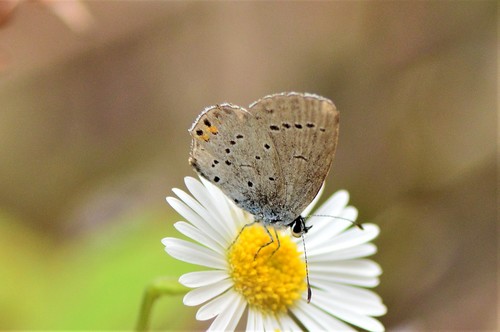
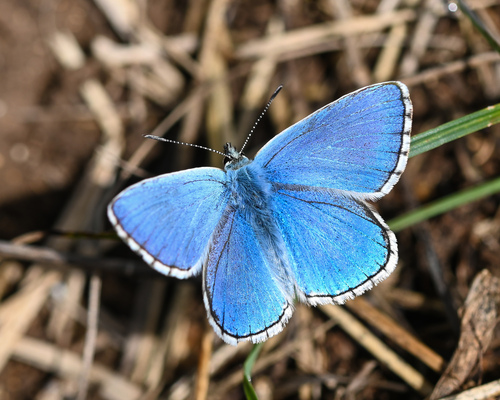
It is found in chalk downland, in warm, sheltered spots, flying low over vegetation, seeking females that are rich chocolate brown in color. The male has brilliantly colored blue wings that give it its name. The male has the upper side wings a brilliant sky blue, with a fine black line round the edge and a white margin. The female is chocolate brown with a few blue scales near the base, and with orange spots, bordered by blue scales, around the edge of the hind wing. The fringes are chequered both sexes. The underside is brownish grey with black and orange crescent spots. The wingspan is about 3 cm (1.2 in). The caterpillar reaches 1.6 centimetres (0.63 in) in length, has a dark green body with dark spines, and yellow bands along the back and sides.

L. bellargus Rott. (81 h). Of the size of icarus but the male above of a very light and glittering sky-blue: the female dark brown... Wikipedia →

Global Distribution

Parks Where Found

# Park Country Daily sighting probability
1 Picos de Europa National Park 🇪🇸 Spain
~30%
2 Mercantour National Park 🇫🇷 France
~20%
3 Cévennes National Park 🇫🇷 France
~20%
4 Triglav National Park 🇸🇮 Slovenia
~20%
5 Vanoise National Park 🇫🇷 France
~20%
6 Pyrénées National Park 🇫🇷 France
~20%
7 Aigüestortes National Park 🇪🇸 Spain
~20%
8 Ecrins National Park 🇫🇷 France
~10%
9 Ordesa y Monte Perdido National Park 🇪🇸 Spain
~10%
10 Sierra Nevada National Park 🇪🇸 Spain
~10%

Cities Where Found

# City Country Daily sighting probability
1 Budapest 🇭🇺 Hungary
~10%
2 Munich 🇩🇪 Germany
~10%
3 Vienna 🇦🇹 Austria
~10%
4 Lisbon 🇵🇹 Portugal
<5%

Before you go

What are the chances of seeing an Adonis Blue in Picos de Europa National Park?

Possible

About 30% of wildlife watchers report an Adonis Blue sighting in Picos de Europa National Park on a given day, based on 31 verified sightings from GBIF citizen-science data from 2019 to 2026. It is the 13th most-seen of the 118 insects we can rate there. Over three days the chance rises to about 70%, and over a week to about 90%, if each day is a fresh chance.

When is the best time to see an Adonis Blue in Picos de Europa National Park?

June–July and September–October

In those months about 40% of wildlife watchers report an Adonis Blue in Picos de Europa National Park on a given day, against under 5% in March, August and November, the lowest months.

What time of day is best to see an Adonis Blue?

Between 11 am and 2 pm

Across all the parks we cover, that three-hour window holds the most Adonis Blue sightings with a recorded time, and about 9 in 10 of them come between 6 am and 6 pm: it is a daytime animal.

Is Picos de Europa National Park the best place to see an Adonis Blue?

Yes

Of the 10 parks where we can rate Adonis Blue sightings, Picos de Europa National Park has the highest daily chance: about 30%. Next come Mercantour National Park (France, about 20%) and Cévennes National Park (France, about 20%).

Where does the Adonis Blue sighting chance come from?

GBIF citizen-science records

It is estimated from how often the Adonis Blue is recorded against all the insects logged in Picos de Europa National Park (31 verified sightings from 2019 to 2026), calibrated against known sighting rates. Figures are rounded to the nearest 10% because citizen-science data supports honest approximations, not decimals, and months with records from fewer than five people show "—". How it works.

← Back to Picos de Europa National Park