Western Gerygone

Western Gerygone

Gerygone fusca

Silhouette: Sheatherius · PhyloPic

LCLeast ConcernNTVUENCR Endemic
Daily sighting probability ~10% · With luck
at Pilliga National Park

In 3 days ~30% in a week ~60%

8 Verified sightings at Pilliga National Park From 2019 to 2026
174 In all 3 parks
November Best month
☀️ Diurnal When it's spotted

About the Western Gerygone

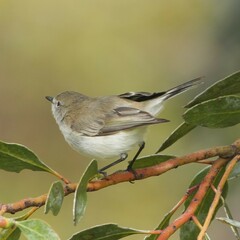
The western gerygone (Gerygone fusca) is a small, brownish-grey species of passerine bird, which is found in inland and south-west Australia. It is an arboreal, insectivore of open forest, woodland and dry shrubland. It is not currently threatened with extinction (IUCN: Least Concern).

The western gerygone is a member of the family Acanthizidae (Thornbills and Allies), which has been split from the family Pardalotidae (Pardalotes). It is a sister-species to the mangrove gerygone (Gerygone levigaster). The close relationship of this phylogenetic pair is suggested by analyses of both morphological characteristics and genetic loci. Populations of a common ancestor of the two species are thought to have diverged after becoming fragmented by severe aridity during the Pleistocene. These two species are now in secondary contact in the Carpentarian Basin, but occupy very different habitats and do not interbreed.

The common name western gerygone and scientific name Gerygone fusca are recognized by the taxonomies of the International Ornithological Congress, Clement's Checklist, the Handbook of the Birds of the World and Christidis and Boles.

Wikipedia →

Sounds

Song0:36

Australia · 2021

© Marc Anderson · XC689116 · CC BY-NC-ND 4.0

Call0:12

Australia · 2016

© Greg McLachlan · XC336500 · CC BY-NC-SA 4.0

Song0:37

Australia · 2021

© Drew Davison · XC637285 · CC BY-NC-SA 4.0

Global Distribution

Parks Where Found

# Park Country Daily sighting probability
1 Rottnest Island 🇦🇺 Australia
~30%
2 Pilliga National Park 🇦🇺 Australia
~10%
3 Hattah-Kulkyne National Park 🇦🇺 Australia
<5%

Cities Where Found

# City Country Daily sighting probability
1 Perth 🇦🇺 Australia
~30%
2 Brisbane 🇦🇺 Australia
<5%
3 Melbourne 🇦🇺 Australia
<5%

Before you go

What are the chances of seeing a Western Gerygone in Pilliga National Park?

With luck

About 10% of wildlife watchers report a Western Gerygone sighting in Pilliga National Park on a given day, based on 8 verified sightings from GBIF citizen-science data from 2019 to 2026. It is the 31st most-seen of the 58 birds we can rate there. Over three days the chance rises to about 30%, and over a week to about 60%, if each day is a fresh chance.

When is the best time to see a Western Gerygone in Pilliga National Park?

November and December

In those months about 20% of wildlife watchers report a Western Gerygone in Pilliga National Park on a given day, against under 5% in August, the lowest month. January, March–May and October have too few records to rate.

What time of day is best to see a Western Gerygone?

Between 11 am and 2 pm

Across all the parks we cover, that three-hour window holds the most Western Gerygone sightings with a recorded time, and about 9 in 10 of them come between 6 am and 6 pm: it is a daytime animal.

Is Pilliga National Park the best place to see a Western Gerygone?

2nd of 3

Of the 3 parks where we can rate Western Gerygone sightings, Pilliga National Park ranks 2nd at about 10%. The best odds are in Rottnest Island (Australia, about 30%).

Which relatives of the Western Gerygone live in Pilliga National Park?

Same family: Acanthizidae

The closest relatives of the Western Gerygone that you can see in Pilliga National Park (family Acanthizidae, Thornbills and Allies) are Weebill (about 30%), Yellow Thornbill (about 20%) and Speckled Warbler (about 10%), with each one's daily chance of a sighting.

Where does the Western Gerygone sighting chance come from?

GBIF citizen-science records

It is estimated from how often the Western Gerygone is recorded against all the birds logged in Pilliga National Park (8 verified sightings from 2019 to 2026), calibrated against known sighting rates. Figures are rounded to the nearest 10% because citizen-science data supports honest approximations, not decimals, and months with records from fewer than five people show "—". How it works.

← Back to Pilliga National Park