
Gray-mantled Wren

Gray-mantled Wren

Odontorchilus branickii

Silhouette: Matt Wilkins · PhyloPic

LCLeast ConcernNTVUENCR
Daily sighting probability <5% · Rare
at Podocarpus National Park

In 3 days <5%

8 Verified sightings at Podocarpus National Park From 2019 to 2026
8 In 1 park
November Best month
☀️ Diurnal When it's spotted

About the Gray-mantled Wren

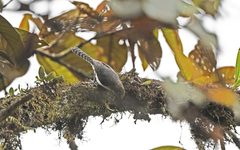
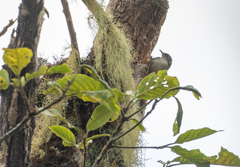
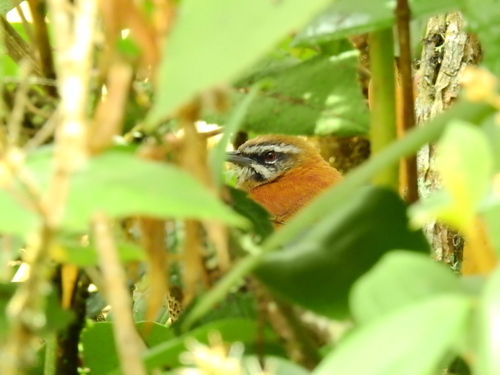
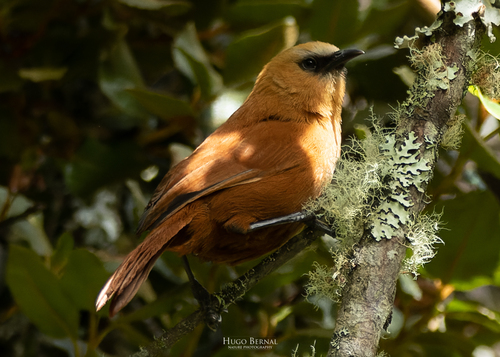
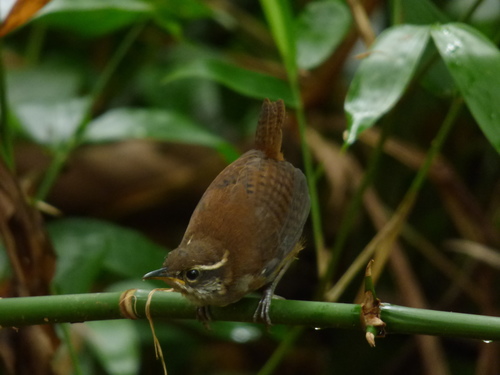
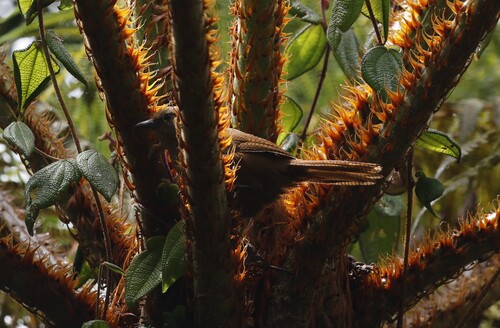
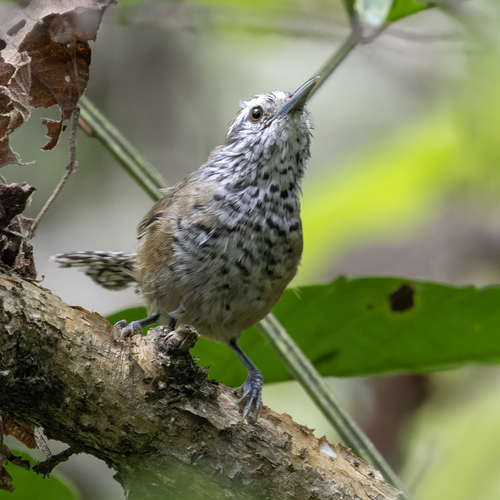
The grey-mantled wren (Odontorchilus branickii) is a species of bird in the family Troglodytidae. It is found in Bolivia, Colombia, Ecuador, and Peru. The grey-mantled wren shares its genus with one other species, the tooth-billed wren (Odontorchilus cinereous). Some authors have suggested that they are conspecific or that they form a superspecies. The grey-mantled wren has two subspecies, the nominate Odontorchilus branickii branickii and O. b. minor.

The nominate adult has a tawny forecrown and a darker brown crown the merges into the gray of its back, which is browner on the rump. The tail is medium gray with prominent black bars and a white bar near the end. It has a faint grayish brown supercilium and the face and sides of the neck are also grayish brown. The throat, breast, and belly are white slightly tinged with buff, and the flanks are grayish. The adult O. b. minor is similar but the barring on the tail is reduced on the central feathers. The juvenile has more of a buff wash on... Wikipedia →

Sounds

Song0:13

Colombia · 2021

© Mauricio Cuellar Ramirez (@Birding.travel) · XC662454 · CC BY-NC-SA 4.0

Call0:24

Ecuador · 1998

© Lelis Navarrete · XC364215 · CC BY-NC-SA 4.0

Song0:26

Ecuador · 2000

© Patricio Mena Valenzuela · XC275537 · CC BY-NC-SA 4.0

Global Distribution

Parks Where Found

# Park Country Daily sighting probability
1 Podocarpus National Park 🇪🇨 Ecuador
<5%

More parks will be added in future updates.

Before you go

What are the chances of seeing a Gray-mantled Wren in Podocarpus National Park?

Rare

Under 5% of wildlife watchers report a Gray-mantled Wren sighting in Podocarpus National Park on a given day, based on 8 verified sightings from GBIF citizen-science data from 2019 to 2026. It is the 391st most-seen of the 446 birds we can rate there. Over three days the chance rises to under 5%, if each day is a fresh chance.

When is the best time to see a Gray-mantled Wren in Podocarpus National Park?

Any time of year

In every month with enough records, under 5% of wildlife watchers report a Gray-mantled Wren in Podocarpus National Park on a given day, so our monthly data shows no clear season.

What time of day is best to see a Gray-mantled Wren?

Between 7 and 10 am

Across all the parks we cover, that three-hour window holds the most Gray-mantled Wren sightings with a recorded time, and nearly all of them come between 6 am and 6 pm: it is a daytime animal.

Where else can you see a Gray-mantled Wren?

Only Podocarpus National Park, in our data

Podocarpus National Park is the only park on Wallace's Line with enough records to rate Gray-mantled Wren sightings: under 5% of wildlife watchers there report one on a given day.

Which relatives of the Gray-mantled Wren live in Podocarpus National Park?

Same family: Troglodytidae

The closest relatives of the Gray-mantled Wren that you can see in Podocarpus National Park (family Troglodytidae, Wrens) are Plain-tailed Wren (about 30%), Rufous Wren (about 30%) and Mountain Wren (about 20%), with each one's daily chance of a sighting.

Where does the Gray-mantled Wren sighting chance come from?

GBIF citizen-science records

It is estimated from how often the Gray-mantled Wren is recorded against all the birds logged in Podocarpus National Park (8 verified sightings from 2019 to 2026), calibrated against known sighting rates. Figures are rounded to the nearest 10% because citizen-science data supports honest approximations, not decimals, and months with records from fewer than five people show "—". How it works.

← Back to Podocarpus National Park