

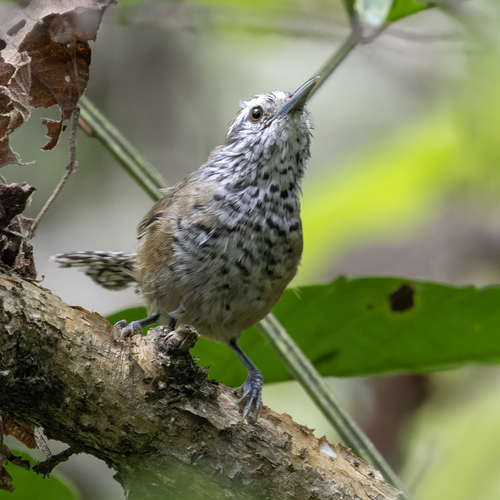
Rufous Wren

Rufous Wren

Cinnycerthia unirufa

Silhouette: Matt Wilkins · PhyloPic

LCLeast ConcernNTVUENCR
Daily sighting probability ~30% · Possible
at Podocarpus National Park

In 3 days ~60% in a week ~90%

422 Verified sightings at Podocarpus National Park From 2019 to 2026
1,133 In all 3 parks
June Best month
☀️ Diurnal When it's spotted

About the Rufous Wren

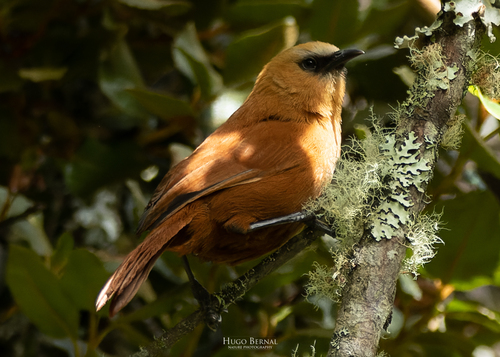
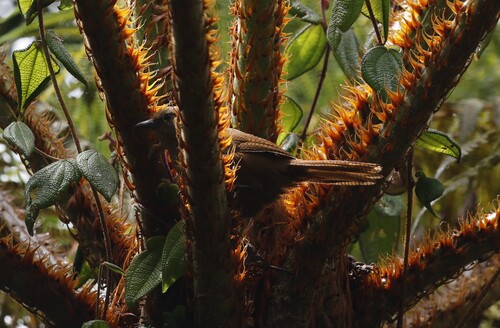
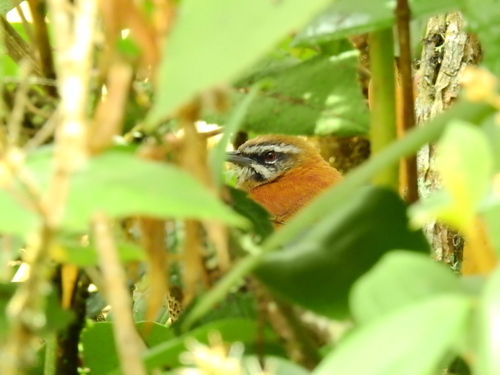
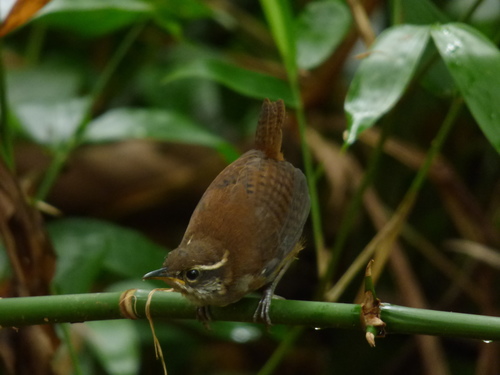
The rufous wren (Cinnycerthia unirufa) is a species of bird in the family Troglodytidae. It is found in Colombia, Ecuador, Peru, and Venezuela. Its natural habitat is subtropical or tropical moist montane forests. There are three subspecies:

C. u. unirufa - northeastern Colombia and the extreme west of Venezuela C. u. unibrunnea - most of Colombia, Ecuador, and the extreme north of Peru C. u. chakei - the Perijá Mountains on the border of Colombia and Venezuela

The rufous wren has a length of about 16.5 cm (6.5 in). Birds in most of Colombia and in Ecuador are a uniform dark chestnut-brown colour with slight blackish barring on the wings and tail, though this is difficult to observe in the field. The lores are also blackish. Individuals in northeastern Colombia and in Venezuela are a slightly paler shade, especially on the crown. The rufous wren could be confused with the sepia-brown wren (Cinnycerthia olivascens), but that species is less rufous and has bolder barring on wings and tail. Another similar bird is the rufous spinetail (Synallaxis unirufa), but that species has a longer tail, has no barring on wings and tail and is altogether different in voice and habits... Wikipedia →

Sounds

Song0:57

Ecuador · 2016

© Manuel Sánchez-Nivicela · XC1157910 · CC BY-NC-ND 4.0

Duet0:21

Ecuador · 2026

© Daan van der Hoeven · XC1155235 · CC BY-NC-SA 4.0

Call0:35

Colombia · 2016

© Pedro Arturo Camargo Martínez · XC356620 · CC BY-NC-SA 4.0

Global Distribution

Parks Where Found

# Park Country Daily sighting probability
1 Chingaza National Natural Park 🇨🇴 Colombia
~40%
2 Podocarpus National Park 🇪🇨 Ecuador
~30%
3 Los Nevados National Natural Park 🇨🇴 Colombia
<5%

Cities Where Found

# City Country Daily sighting probability
1 Bogota 🇨🇴 Colombia
<5%

Before you go

What are the chances of seeing a Rufous Wren in Podocarpus National Park?

Possible

About 30% of wildlife watchers report a Rufous Wren sighting in Podocarpus National Park on a given day, based on 422 verified sightings from GBIF citizen-science data from 2019 to 2026. It is the 33rd most-seen of the 446 birds we can rate there. Over three days the chance rises to about 60%, and over a week to about 90%, if each day is a fresh chance.

When is the best time to see a Rufous Wren in Podocarpus National Park?

June

In that month about 40% of wildlife watchers report a Rufous Wren in Podocarpus National Park on a given day, against about 10% in September, the lowest month.

What time of day is best to see a Rufous Wren?

Between 8 and 11 am

Across all the parks we cover, that three-hour window holds the most Rufous Wren sightings with a recorded time, and about 9 in 10 of them come between 6 am and 6 pm: it is a daytime animal.

Is Podocarpus National Park the best place to see a Rufous Wren?

2nd of 3

Of the 3 parks where we can rate Rufous Wren sightings, Podocarpus National Park ranks 2nd at about 30%. The best odds are in Chingaza National Natural Park (Colombia, about 40%).

Where does the Rufous Wren sighting chance come from?

GBIF citizen-science records

It is estimated from how often the Rufous Wren is recorded against all the birds logged in Podocarpus National Park (422 verified sightings from 2019 to 2026), calibrated against known sighting rates. Figures are rounded to the nearest 10% because citizen-science data supports honest approximations, not decimals, and months with records from fewer than five people show "—". How it works.

← Back to Podocarpus National Park