
Speckle-breasted Wren

Speckle-breasted Wren

Pheugopedius sclateri

Silhouette: Matt Wilkins · PhyloPic

LCLeast ConcernNTVUENCR
Daily sighting probability <5% · Rare
at Podocarpus National Park

In 3 days <5%

5 Verified sightings at Podocarpus National Park From 2019 to 2026
130 In all 2 parks
August Best month
☀️ Diurnal When it's spotted

About the Speckle-breasted Wren

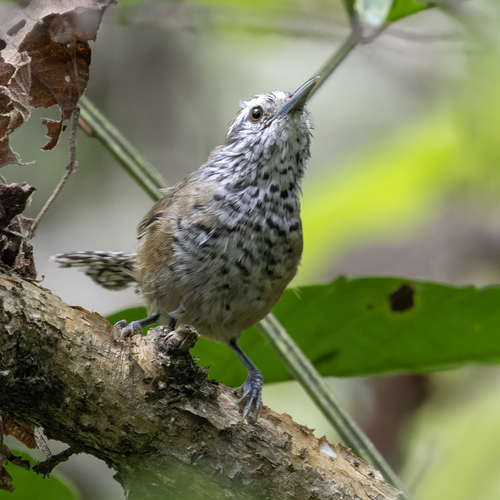
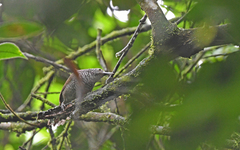
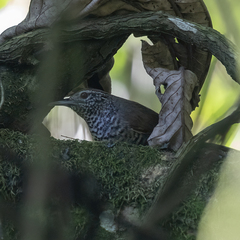
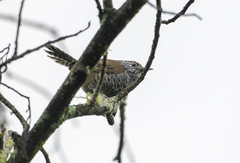
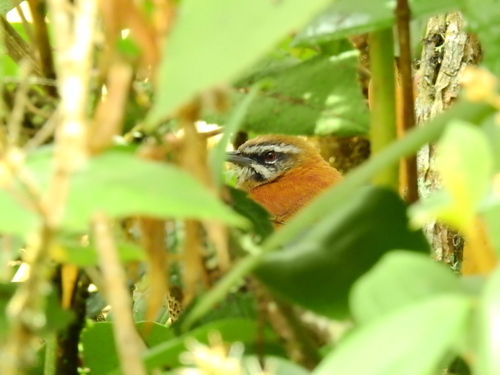
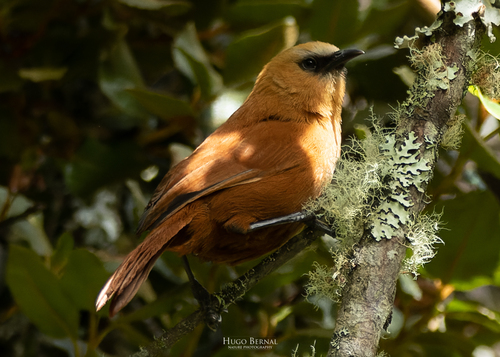
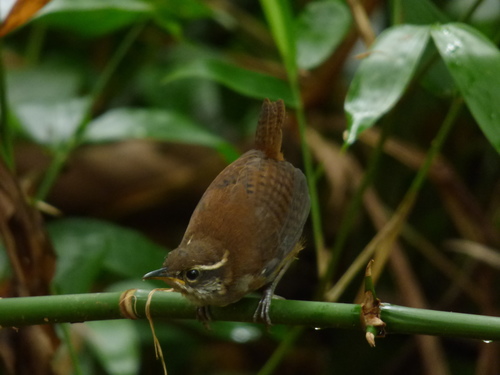
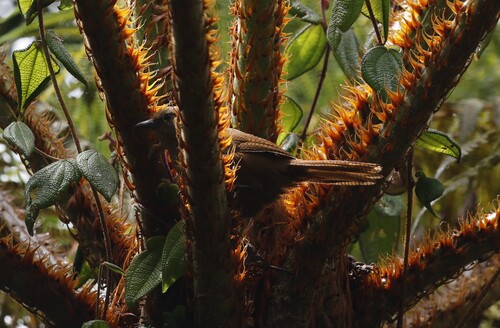
The speckle-breasted wren (Pheugopedius sclateri) is a species of bird in the family Troglodytidae. It is found in Colombia, Ecuador, and Peru. The speckle-breasted wren has at times been treated as conspecific with rufous-breasted wren (P. rutilus) and spot-breasted wren (P. maculipectus). They do form a superspecies.

The International Ornithological Committee (IOC) and the Clements taxonomy recognize three subspecies. The names in parentheses are from Clements. Pheugopedius sclateri sclateri (Marañon) Taczanowski (1879) Pheugopedius sclateri columbianus (Colombian) Chapman (1924)

Pheugopedius sclateri paucimaculatus (speckle-breasted) Sharpe (1882) BirdLife International (BLI) treats all three subspecies as separate species and calls them the "Maranon", "Colombian", and "speckle-breasted" wrens. The nominate P. s. sclateri is 14.5 to 15.5 cm (5.7 to 6.1 in) long and weighs 20 g (0.71 oz). Adults have a reddish brown crown and a medium brown back and rump. Their tail has alternating gray and dull black bars. They have a narrow white supercilium and a dark eyestripe; the sides of the face and neck are mottled black and white. Their... Wikipedia →

Sounds

Duet1:09

Ecuador · 2020

© Manuel Sánchez-Nivicela · XC1103833 · CC BY-NC-ND 4.0

Song0:39

Ecuador · 2021

© rudy gelis · XC823095 · CC BY-NC-SA 4.0

Call0:13

Ecuador · 2020

© Peter de Rouw · XC602511 · CC BY-NC-SA 4.0

Global Distribution

Parks Where Found

# Park Country Daily sighting probability
1 Machalilla National Park 🇪🇨 Ecuador
~20%
2 Podocarpus National Park 🇪🇨 Ecuador
<5%

Before you go

What are the chances of seeing a Speckle-breasted Wren in Podocarpus National Park?

Rare

Under 5% of wildlife watchers report a Speckle-breasted Wren sighting in Podocarpus National Park on a given day, based on 5 verified sightings from GBIF citizen-science data from 2019 to 2026. It is the 435th most-seen of the 446 birds we can rate there. Over three days the chance rises to under 5%, if each day is a fresh chance.

When is the best time to see a Speckle-breasted Wren in Podocarpus National Park?

Any time of year

In every month with enough records, under 5% of wildlife watchers report a Speckle-breasted Wren in Podocarpus National Park on a given day, so our monthly data shows no clear season.

What time of day is best to see a Speckle-breasted Wren?

Between 10 am and 1 pm

Across all the parks we cover, that three-hour window holds the most Speckle-breasted Wren sightings with a recorded time, and about 8 in 10 of them come between 6 am and 6 pm: it is a daytime animal.

Is Podocarpus National Park the best place to see a Speckle-breasted Wren?

2nd of 2

Of the 2 parks where we can rate Speckle-breasted Wren sightings, Podocarpus National Park ranks 2nd at under 5%. The best odds are in Machalilla National Park (Ecuador, about 20%).

Where does the Speckle-breasted Wren sighting chance come from?

GBIF citizen-science records

It is estimated from how often the Speckle-breasted Wren is recorded against all the birds logged in Podocarpus National Park (5 verified sightings from 2019 to 2026), calibrated against known sighting rates. Figures are rounded to the nearest 10% because citizen-science data supports honest approximations, not decimals, and months with records from fewer than five people show "—". How it works.

← Back to Podocarpus National Park