

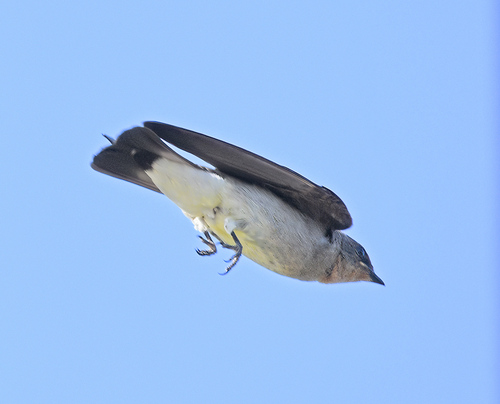
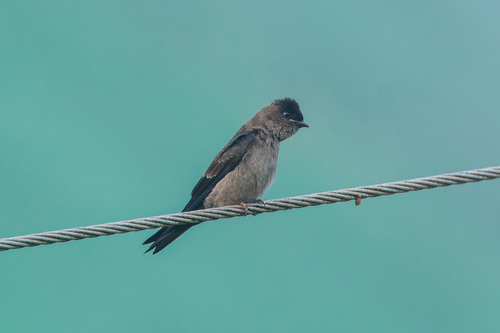
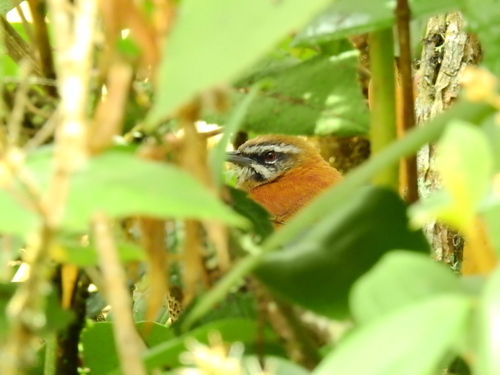
Pale-footed Swallow

Pale-footed Swallow

Notiochelidon flavipes

Silhouette: Sheatherius · PhyloPic

Daily sighting probability ~10% · With luck
at Podocarpus National Park

In 3 days ~20% in a week ~50%

122 Verified sightings at Podocarpus National Park From 2019 to 2026
170 In all 2 parks
August Best month
☀️ Diurnal When it's spotted

About the Pale-footed Swallow

The pale-footed swallow (Orochelidon flavipes) is a species of bird in the family Hirundinidae. It is found in the northern Andes, from Venezuela to Bolivia. It is monotypic. Its natural habitat is subtropical or tropical moist montane forests. They are usually seen in small flocks, occasionally with the blue-and-white swallow.

They are classified as a least-concern species by the International Union for Conservation of Nature (IUCN). This swallow is monotypic. The pale-footed swallow is also known as the cloud-forest swallow, supposedly because it is known to reside in cloud forests. This swallow has an average length of 12 cm (4.7 in) and an average weight of 10.6 g (0.37 oz). It has dark, glossy blue upperparts, with the wing, tail, and undertail coverts being more black than the rest. They have a dusky chin and a throat coloured cinnamon-buff. The white chest is tinged cinnamon-buff. The belly is also white. They have blackish-brown underwing coverts, axillars, flanks, and tibial feathers. They have a black bill with pink mouth-lining and a dark brown iris. They have a slightly notched tail. Their lower legs and toes are made of pink... Wikipedia →

Sounds

Flight call0:12

Colombia · 2023

© Daniel Moreno López · XC823170 · CC BY-NC-SA 4.0

Call1:01

Bolivia · 2023

© Niels Krabbe · XC778876 · CC BY-NC-SA 4.0

Flight call0:18

Ecuador · 2006

© Olaf Jahn · XC262371 · CC BY-NC-SA 4.0

Global Distribution

Parks Where Found

# Park Country Daily sighting probability
1 Podocarpus National Park 🇪🇨 Ecuador
~10%
2 Los Nevados National Natural Park 🇨🇴 Colombia
<5%

Before you go

What are the chances of seeing a Pale-footed Swallow in Podocarpus National Park?

With luck

About 10% of wildlife watchers report a Pale-footed Swallow sighting in Podocarpus National Park on a given day, based on 122 verified sightings from GBIF citizen-science data from 2019 to 2026. It is the 145th most-seen of the 446 birds we can rate there. Over three days the chance rises to about 20%, and over a week to about 50%, if each day is a fresh chance.

When is the best time to see a Pale-footed Swallow in Podocarpus National Park?

August and December

In those months about 20% of wildlife watchers report a Pale-footed Swallow in Podocarpus National Park on a given day, against under 5% in February to May, the lowest months.

What time of day is best to see a Pale-footed Swallow?

Between 8 and 11 am

Across all the parks we cover, that three-hour window holds the most Pale-footed Swallow sightings with a recorded time, and nearly all of them come between 6 am and 6 pm: it is a daytime animal.

Is Podocarpus National Park the best place to see a Pale-footed Swallow?

Yes

Of the 2 parks where we can rate Pale-footed Swallow sightings, Podocarpus National Park has the highest daily chance: about 10%. Next come Los Nevados National Natural Park (Colombia, under 5%).

Which relatives of the Pale-footed Swallow live in Podocarpus National Park?

Same genus: Notiochelidon

The closest relatives of the Pale-footed Swallow that you can see in Podocarpus National Park (genus Notiochelidon) are Blue-and-white Swallow (about 30%) and Brown-bellied Swallow (about 10%), with each one's daily chance of a sighting.

Where does the Pale-footed Swallow sighting chance come from?

GBIF citizen-science records

It is estimated from how often the Pale-footed Swallow is recorded against all the birds logged in Podocarpus National Park (122 verified sightings from 2019 to 2026), calibrated against known sighting rates. Figures are rounded to the nearest 10% because citizen-science data supports honest approximations, not decimals, and months with records from fewer than five people show "—". How it works.

← Back to Podocarpus National Park