Orange Bluet

Orange Bluet

Enallagma signatum

Daily sighting probability ~10% · With luck
at Point Pelee National Park

In 3 days ~20% in a week ~40%

7 Verified sightings at Point Pelee National Park From 2019 to 2026
13 In all 2 parks
July Best month
☀️🌙 Day & Night When it's spotted

About the Orange Bluet

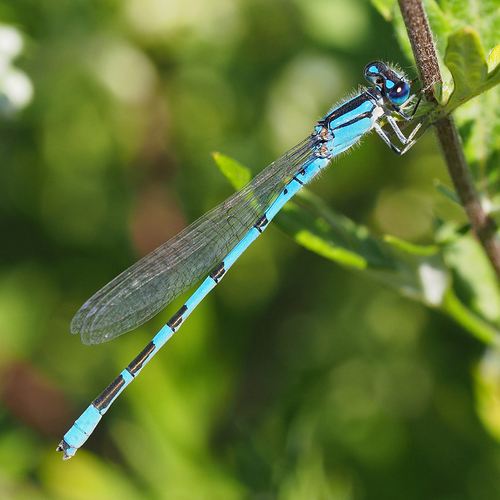
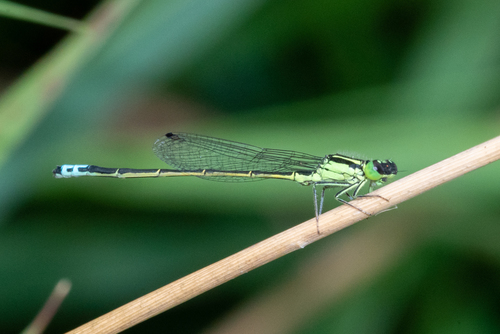
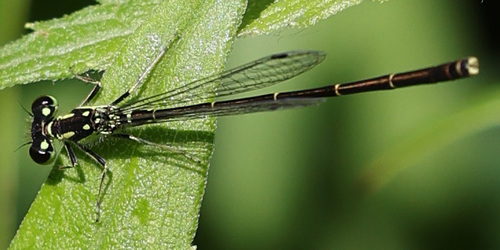
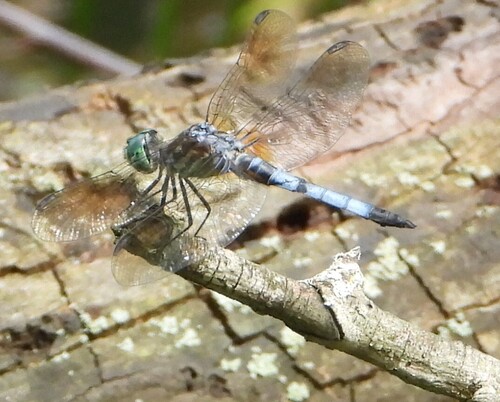
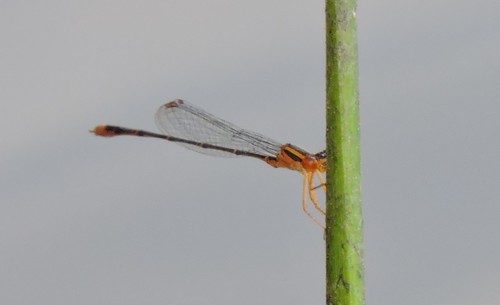
The orange bluet (Enallagma signatum) is a species of damselfly in the family Coenagrionidae. This species of bluet stands out from many other bluets because of its orange color. On male orange bluets, the thorax is orange with a thick, black stipe along the back and black shoulder stripes. His abdomen is mostly black with some orange rings, orange below, and orange near the tip. His large eyes are orange on a black head; small orange postocular spots are connected across the back of the head by an orange bar. On female orange bluets, the thorax is similar looking to the male thorax only the color is dull yellow instead of orange. Her abdomen is mostly black above and dull yellow below. Her large eyes are yellow-brown with small yellow postocular spots connected by a thin, yellow bar. The female can also be one of three forms. The first remains blue throughout life, one becomes green and the third becomes orange.

This bluet is often found near streams, ponds, pools with still waters, slow moving streams, and rivers. Mexico: Tamaulipas United States: (Colorado • Georgia • Massachusetts • New Jersey • Ohio • Vermont) Canada: (New Brunswick... Wikipedia →
Global Distribution

Parks Where Found

# Park Country Daily sighting probability
1 Point Pelee National Park 🇨🇦 Canada
~10%
2 Shenandoah National Park 🇺🇸 United States
<5%

Cities Where Found

# City Country Daily sighting probability
1 New York City 🇺🇸 United States
<5%
2 Washington 🇺🇸 United States
<5%
3 Toronto 🇨🇦 Canada
<5%
4 Minneapolis [Saint Paul] 🇺🇸 United States
<5%
5 Austin 🇺🇸 United States
<5%
6 Orlando 🇺🇸 United States
<5%
7 Boston 🇺🇸 United States
<5%
8 Philadelphia 🇺🇸 United States
<5%
9 Houston 🇺🇸 United States
<5%
10 Dallas 🇺🇸 United States
<5%

Before you go

What are the chances of seeing an Orange Bluet in Point Pelee National Park?

With luck

About 10% of wildlife watchers report an Orange Bluet sighting in Point Pelee National Park on a given day, based on 7 verified sightings from GBIF citizen-science data from 2019 to 2026. It is the 130th most-seen of the 196 insects we can rate there. Over three days the chance rises to about 20%, and over a week to about 40%, if each day is a fresh chance.

When is the best time to see an Orange Bluet in Point Pelee National Park?

June to September

In those months about 10% of wildlife watchers report an Orange Bluet in Point Pelee National Park on a given day, against under 5% in October to May, the lowest months.

What time of day is best to see an Orange Bluet?

Between 2 and 5 pm

Across all the parks we cover, that three-hour window holds the most Orange Bluet sightings with a recorded time, and about 7 in 10 of them come between 6 am and 6 pm: it is seen both by day and at night.

Is Point Pelee National Park the best place to see an Orange Bluet?

Yes

Of the 2 parks where we can rate Orange Bluet sightings, Point Pelee National Park has the highest daily chance: about 10%. Next come Shenandoah National Park (United States, under 5%).

Where does the Orange Bluet sighting chance come from?

GBIF citizen-science records

It is estimated from how often the Orange Bluet is recorded against all the insects logged in Point Pelee National Park (7 verified sightings from 2019 to 2026), calibrated against known sighting rates. Figures are rounded to the nearest 10% because citizen-science data supports honest approximations, not decimals, and months with records from fewer than five people show "—". How it works.

← Back to Point Pelee National Park