Penitent Underwing

Penitent Underwing

Catocala piatrix

Daily sighting probability ~10% · With luck
at Point Pelee National Park

In 3 days ~20% in a week ~40%

5 Verified sightings at Point Pelee National Park From 2019 to 2026
5 In 1 park
September Best month
☀️ Diurnal When it's spotted

About the Penitent Underwing

Catocala piatrix, the penitent underwing, is a moth from North America. The species was first described by Augustus Radcliffe Grote in 1864. It is placed in subfamily Catocalinae, either of the family Noctuidae, or – if the Noctuidae are circumscribed more strictly – of family Erebidae. Within the Catocalinae, it belongs to tribe Catocalini and – if the Noctuidae are circumscribed widely – subtribe Catocalina.

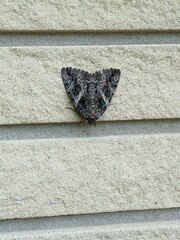
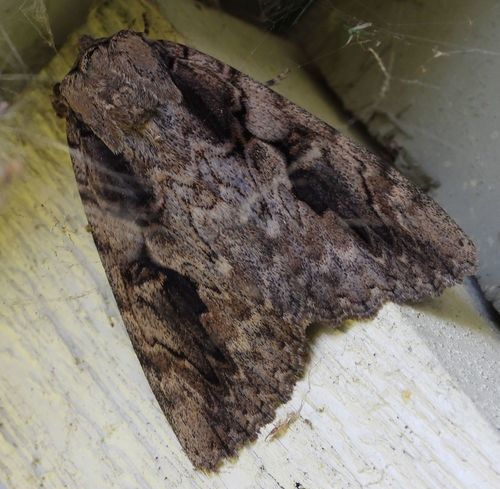
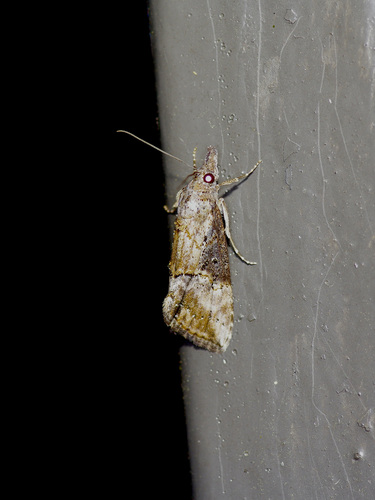
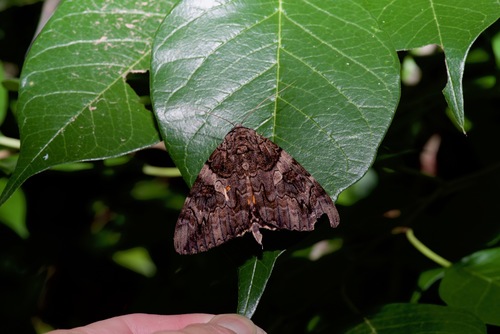
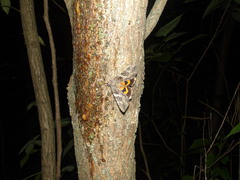
The wingspan of adults is about 70–80 mm. The forewings are dark brownish gray, darkest at the base, and with an oblique lighter band extending from the midwing to the leading edge near the wing base. The hindwings are yellow orange with dark hairs at the base (though these are not especially prominent) and two concentric black bands. The yellow zone separating the black bands is wide, with a relatively smooth edge; the outer edge of the hindwings is light yellow with some black bars extending from the outer band. As typical for hickory-feeding Catocala, both foreleg and hindleg tibiae of this species are spiny, and the tarsi carry four rows of irregular rows of spines each.

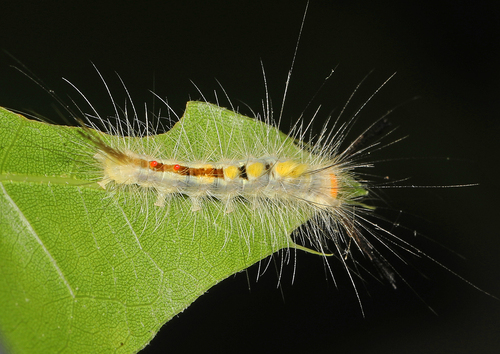
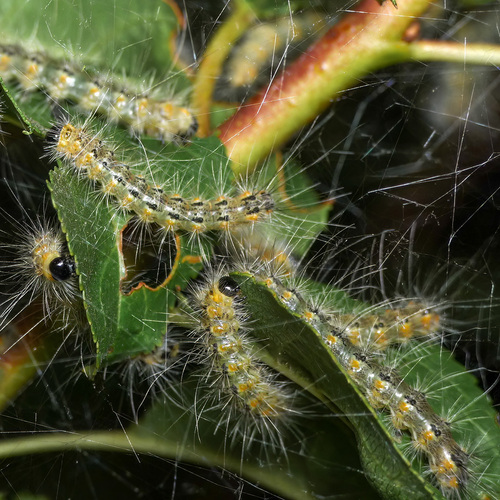
The moths fly from July to November depending on the location. The larvae feed on ash, butternut, hickory, pecan, persimmon, and walnut trees. The nominate subspecies can be found in the eastern part of the United States, and the subspecies Catocala piatrix dionyza can be found in Arizona. Wikipedia →
Global Distribution

Parks Where Found

# Park Country Daily sighting probability
1 Point Pelee National Park 🇨🇦 Canada
~10%

More parks will be added in future updates.

Cities Where Found

# City Country Daily sighting probability
1 Detroit 🇺🇸 United States
<5%
2 Baltimore 🇺🇸 United States
<5%
3 Austin 🇺🇸 United States
<5%
4 Dallas 🇺🇸 United States
<5%
5 Toronto 🇨🇦 Canada
<5%
6 Sacramento 🇺🇸 United States
<5%
7 Chicago 🇺🇸 United States
<5%
8 Boston 🇺🇸 United States
<5%
9 Los Angeles 🇺🇸 United States
<5%
10 Washington 🇺🇸 United States
<5%

Before you go

What are the chances of seeing a Penitent Underwing in Point Pelee National Park?

With luck

About 10% of wildlife watchers report a Penitent Underwing sighting in Point Pelee National Park on a given day, based on 5 verified sightings from GBIF citizen-science data from 2019 to 2026. It is the 167th most-seen of the 196 insects we can rate there. Over three days the chance rises to about 20%, and over a week to about 40%, if each day is a fresh chance.

When is the best time to see a Penitent Underwing in Point Pelee National Park?

September

In that month about 20% of wildlife watchers report a Penitent Underwing in Point Pelee National Park on a given day, against under 5% in October to August, the lowest months.

What time of day is best to see a Penitent Underwing?

Between 4 and 7 am

Across all the parks we cover, that three-hour window holds the most Penitent Underwing sightings with a recorded time, and nearly all of them come between 6 am and 6 pm: it is a daytime animal.

Where else can you see a Penitent Underwing?

Only Point Pelee National Park, in our data

Point Pelee National Park is the only park on Wallace's Line with enough records to rate Penitent Underwing sightings: about 10% of wildlife watchers there report one on a given day.

Where does the Penitent Underwing sighting chance come from?

GBIF citizen-science records

It is estimated from how often the Penitent Underwing is recorded against all the insects logged in Point Pelee National Park (5 verified sightings from 2019 to 2026), calibrated against known sighting rates. Figures are rounded to the nearest 10% because citizen-science data supports honest approximations, not decimals, and months with records from fewer than five people show "—". How it works.

← Back to Point Pelee National Park