Plum Lappet

Plum Lappet

Odonestis pruni

Daily sighting probability <5% · Rare
at Pyrénées National Park

In 3 days ~10% in a week ~20%

5 Verified sightings at Pyrénées National Park From 2019 to 2026
5 In 1 park
August Best month
🌙 Nocturnal When it's spotted

About the Plum Lappet

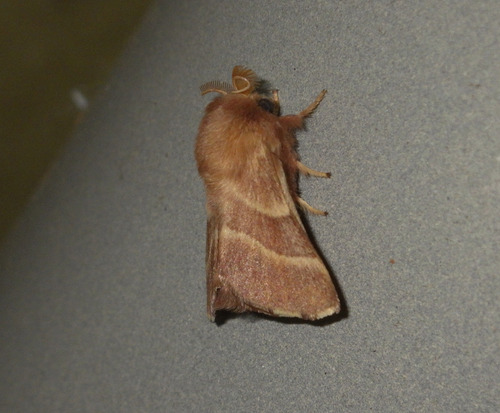
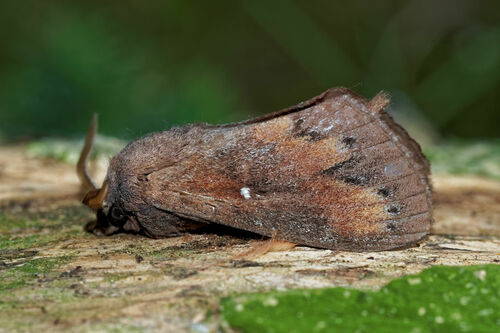
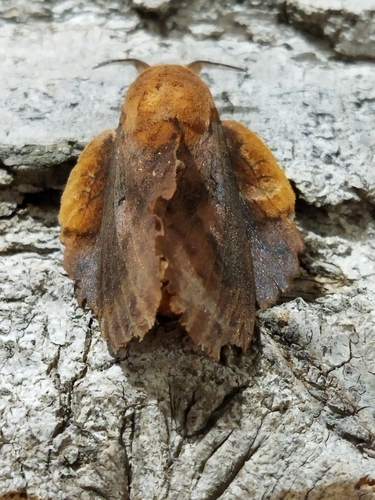
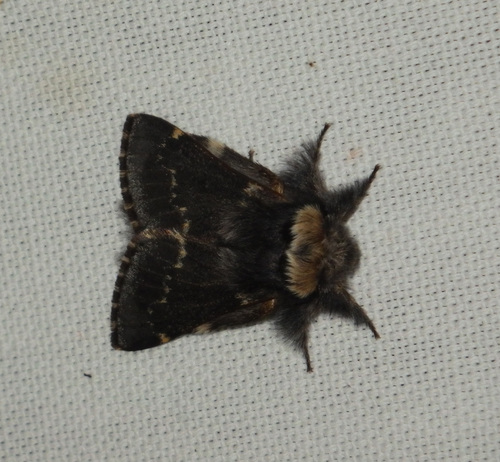
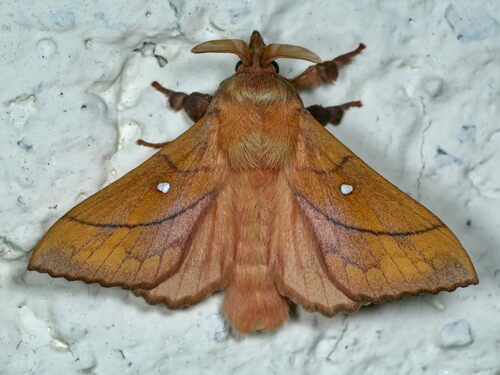
Odonestis pruni, also known as the plum lappet moth or the plum eggar, is a species of moth native to Eurasia. It was first described by Carl Linnaeus in 1758 and belongs to the family Lasiocampidae. The wing colour ranges between yellow and orange, with reddish and brownish markings. On each forewing, there is a distinct white dot in the centre, near which lie two darker bands. Its wingspan is variably described as between 20-30mm or 40-60 mm. Males are paler than females and, like other members of the genus, smaller.

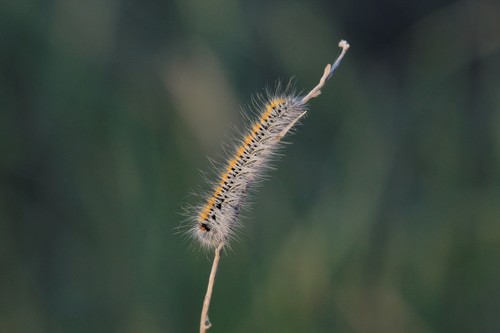
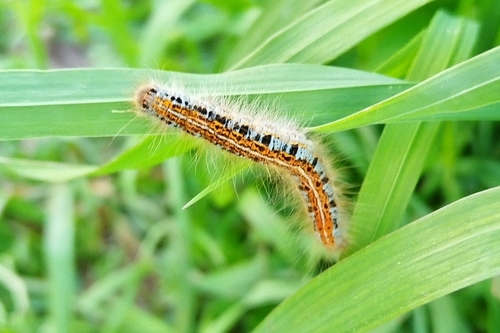
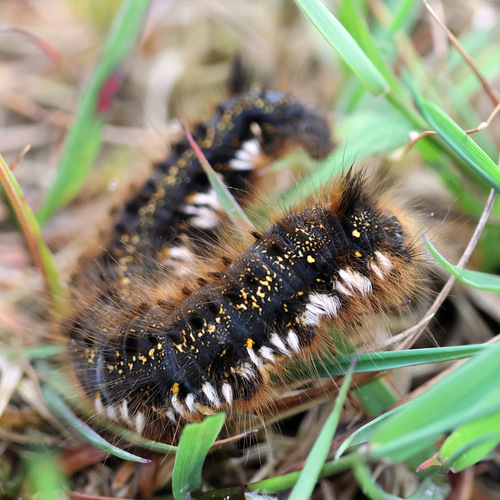
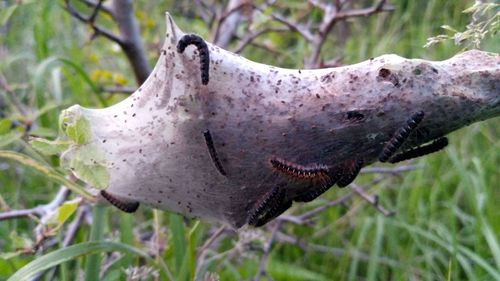
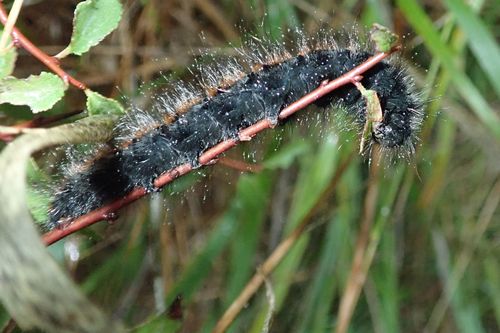
The caterpillar is between 45mm and 70mm long, with a blueish-grey body, brown head and golden lines running up the length of its body. It also may have grey or golden spots. The moth was first described in 1758 by Carl Linnaeus in his 10th edition of the Systema Naturae. It was originally described as bombyx pruni, though later reclassified in 1812 as the sole member and type species of the newly-constructed odonestis genus.

The plum lappet moth has been found across its native Eurasia, and is distributed across the continent from Japan to central Europe. It not found in South or Southeast Asia. Wikipedia →
Global Distribution

Parks Where Found

# Park Country Daily sighting probability
1 Pyrénées National Park 🇫🇷 France
<5%

More parks will be added in future updates.

Before you go

What are the chances of seeing a Plum Lappet in Pyrénées National Park?

Rare

Under 5% of wildlife watchers report a Plum Lappet sighting in Pyrénées National Park on a given day, based on 5 verified sightings from GBIF citizen-science data from 2019 to 2026. It is the 1144th most-seen of the 1277 insects we can rate there. Over three days the chance rises to about 10%, and over a week to about 20%, if each day is a fresh chance.

When is the best time to see a Plum Lappet in Pyrénées National Park?

August

In that month about 10% of wildlife watchers report a Plum Lappet in Pyrénées National Park on a given day, against under 5% in September to July, the lowest months.

What time of day is best to see a Plum Lappet?

Between 11 pm and 2 am

Across all the parks we cover, that three-hour window holds the most Plum Lappet sightings with a recorded time, and about 8 in 10 of them come between 6 pm and 6 am: it is mostly seen at night.

Where else can you see a Plum Lappet?

Only Pyrénées National Park, in our data

Pyrénées National Park is the only park on Wallace's Line with enough records to rate Plum Lappet sightings: under 5% of wildlife watchers there report one on a given day.

Which relatives of the Plum Lappet live in Pyrénées National Park?

Same family: Lasiocampidae

The closest relatives of the Plum Lappet that you can see in Pyrénées National Park (family Lasiocampidae, Lappet Moths) are Fox Moth (about 20%), Oak Eggar (about 20%) and Grass Eggar (about 10%), with each one's daily chance of a sighting.

Where does the Plum Lappet sighting chance come from?

GBIF citizen-science records

It is estimated from how often the Plum Lappet is recorded against all the insects logged in Pyrénées National Park (5 verified sightings from 2019 to 2026), calibrated against known sighting rates. Figures are rounded to the nearest 10% because citizen-science data supports honest approximations, not decimals, and months with records from fewer than five people show "—". How it works.

← Back to Pyrénées National Park