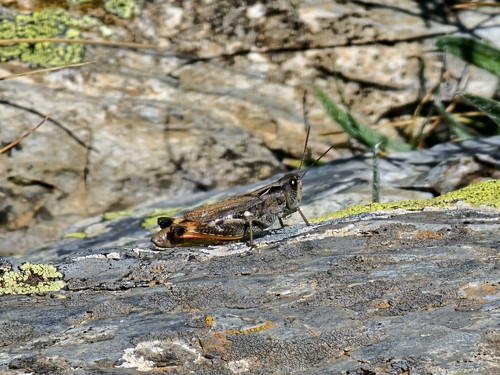
Rufous Grasshopper

Rufous Grasshopper

Gomphocerippus rufus

Daily sighting probability ~10% · With luck
at Pyrénées National Park

In 3 days ~20% in a week ~40%

34 Verified sightings at Pyrénées National Park From 2019 to 2026
94 In all 5 parks
September Best month
☀️ Diurnal When it's spotted

About the Rufous Grasshopper

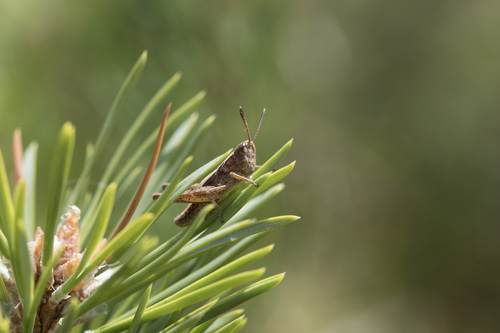
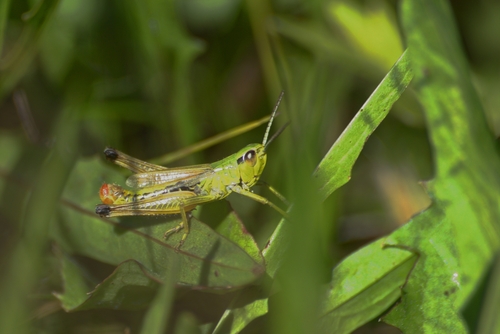
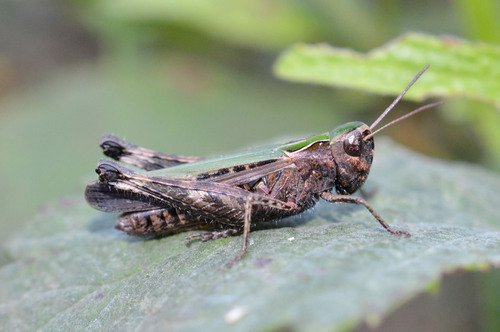
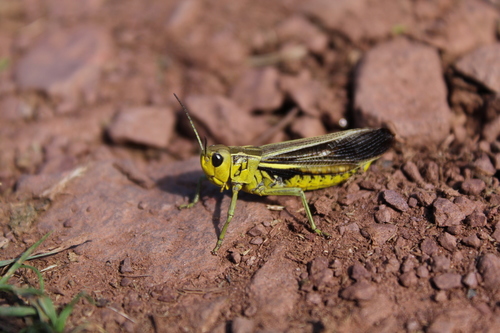
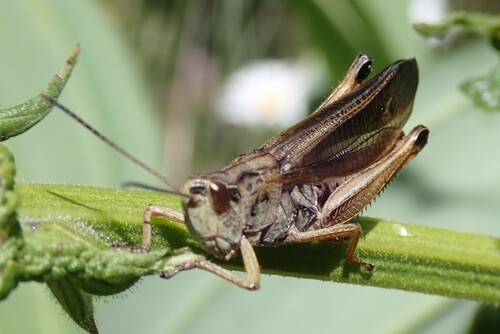
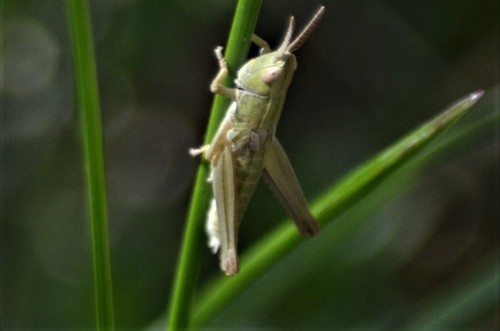
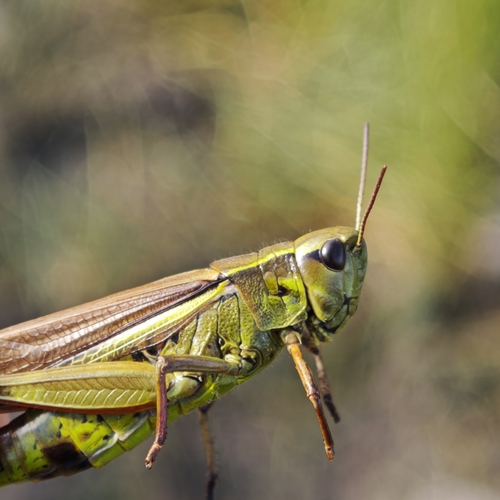
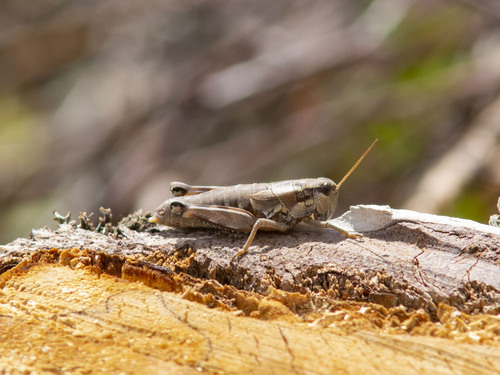
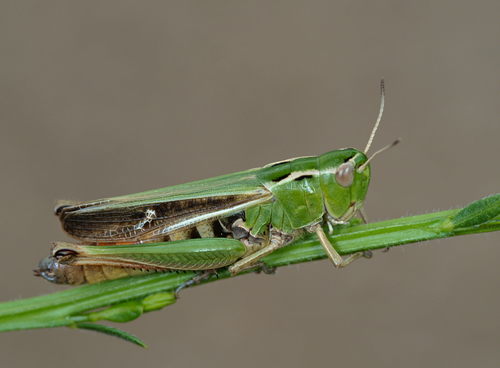
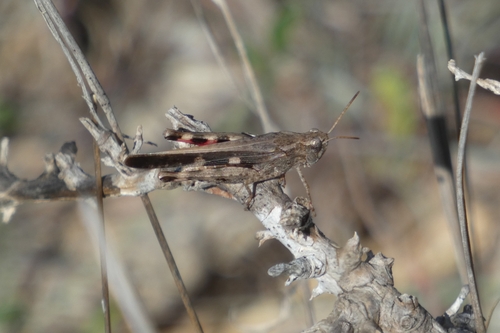
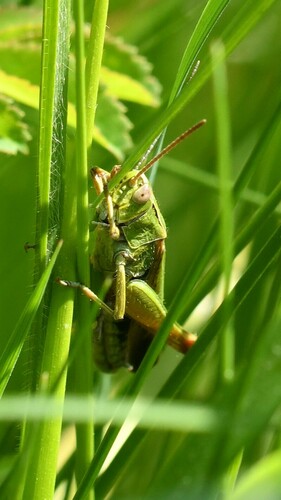
The rufous grasshopper (Gomphocerippus rufus) is a species of grasshopper. It is a medium-sized, broad, brown, short-horned grasshopper with clubbed antennae that are tipped with a conspicuous white or pale colour. It is fairly large, averaging 14 to 22 mm in length. It is of the subfamily Gomphocerinae in the family Acrididae, the predominant family of grasshoppers. This species is present in most of Europe, in the eastern Palearctic realm, and in the Near East. It can be encountered from late July through mid-December, usually in dry or slightly moist habitats. The environments in which it typically resides include dry grassland on calcareous soils, sheltered valleys with scrub, and the open borders of forests. It feeds on grasses and various herbaceous plants. It is known for its distinctive courtship song and accompanying display.

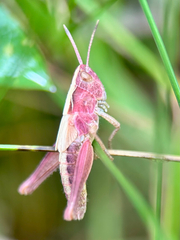
Males range from 14 to 16 mm, while females range from 17 to 22 mm. The coloration is usually shades of brown, but features some grey, yellow, and red. The mature male has an abdomen tipped with orange-red. The female has similar coloration, but it is much less pronounced than in males. Some females are reddish purple. The... Wikipedia →

Global Distribution

Parks Where Found

# Park Country Daily sighting probability
1 Tatra National Park 🇸🇰 Slovakia
~10%
2 Triglav National Park 🇸🇮 Slovenia
~10%
3 Mercantour National Park 🇫🇷 France
~10%
4 Bavarian Forest National Park 🇩🇪 Germany
~10%
5 Pyrénées National Park 🇫🇷 France
~10%

Cities Where Found

# City Country Daily sighting probability
1 Novosibirsk 🇷🇺 Russia
<5%
2 Paris 🇫🇷 France
<5%
3 Vienna 🇦🇹 Austria
<5%

Before you go

What are the chances of seeing a Rufous Grasshopper in Pyrénées National Park?

With luck

About 10% of wildlife watchers report a Rufous Grasshopper sighting in Pyrénées National Park on a given day, based on 34 verified sightings from GBIF citizen-science data from 2019 to 2026. It is the 350th most-seen of the 1277 insects we can rate there. Over three days the chance rises to about 20%, and over a week to about 40%, if each day is a fresh chance.

When is the best time to see a Rufous Grasshopper in Pyrénées National Park?

September

In that month about 20% of wildlife watchers report a Rufous Grasshopper in Pyrénées National Park on a given day, against under 5% in January to July, the lowest months.

What time of day is best to see a Rufous Grasshopper?

Between noon and 3 pm

Across all the parks we cover, that three-hour window holds the most Rufous Grasshopper sightings with a recorded time, and about 8 in 10 of them come between 6 am and 6 pm: it is a daytime animal.

Is Pyrénées National Park the best place to see a Rufous Grasshopper?

Among the best

Of the 5 parks where we can rate Rufous Grasshopper sightings, Pyrénées National Park ranks 5th at about 10%, level with the leaders once rounded. The best odds are in Tatra National Park (Slovakia, about 10%), Triglav National Park (Slovenia, about 10%) and Mercantour National Park (France, about 10%).

Which relatives of the Rufous Grasshopper live in Pyrénées National Park?

Same family: Acrididae

The closest relatives of the Rufous Grasshopper that you can see in Pyrénées National Park (family Acrididae, Short-horned Grasshoppers) are Meadow Grasshopper (about 20%), Cophopodisma pyrenaea (about 10%) and Woodland Grasshopper (about 10%), with each one's daily chance of a sighting.

Where does the Rufous Grasshopper sighting chance come from?

GBIF citizen-science records

It is estimated from how often the Rufous Grasshopper is recorded against all the insects logged in Pyrénées National Park (34 verified sightings from 2019 to 2026), calibrated against known sighting rates. Figures are rounded to the nearest 10% because citizen-science data supports honest approximations, not decimals, and months with records from fewer than five people show "—". How it works.

← Back to Pyrénées National Park