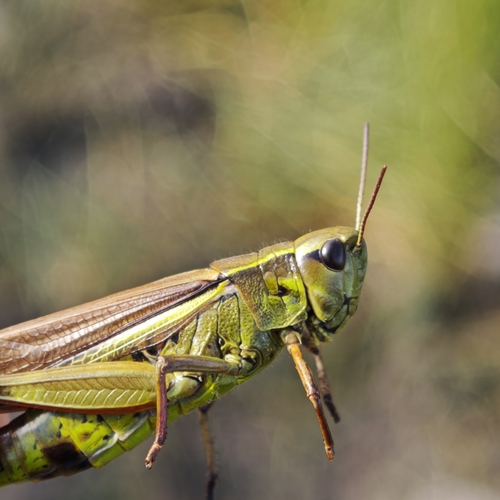
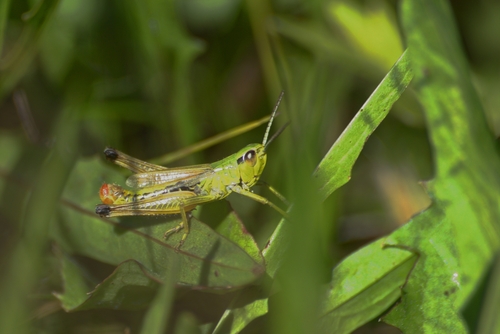
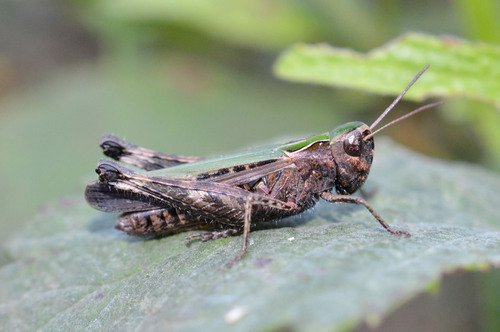
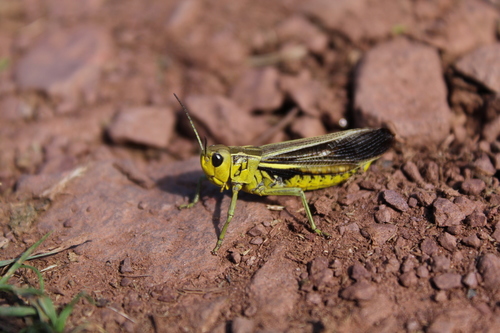
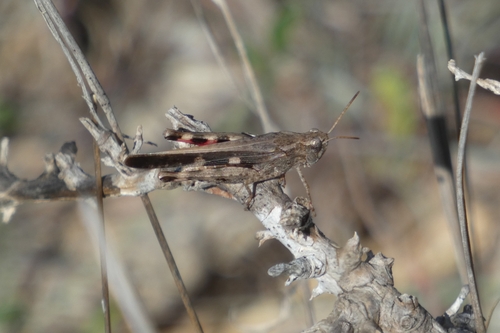
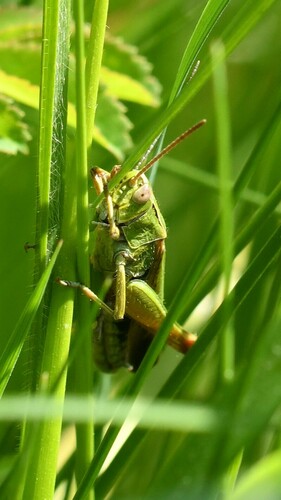
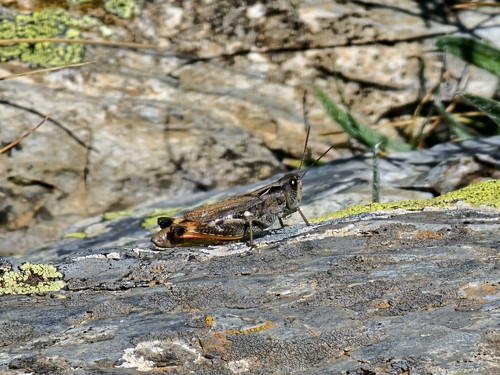
Large Marsh Grasshopper

Large Marsh Grasshopper

Stethophyma grossum

Daily sighting probability ~10% · With luck
at Pyrénées National Park

In 3 days ~30% in a week ~60%

79 Verified sightings at Pyrénées National Park From 2019 to 2026
147 In all 7 parks
September Best month
☀️ Diurnal When it's spotted

About the Large Marsh Grasshopper

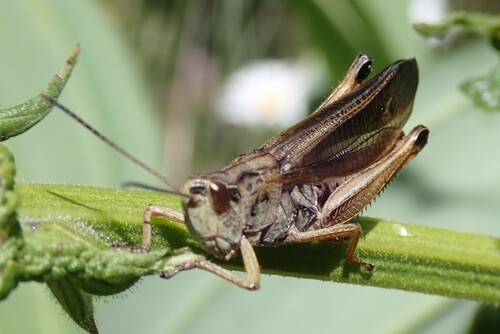
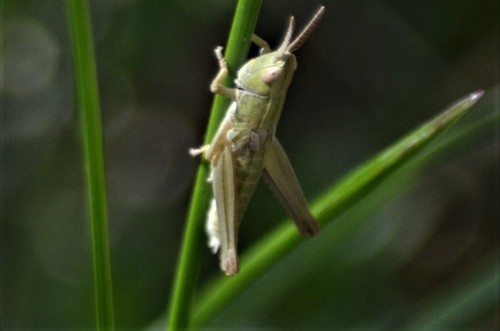
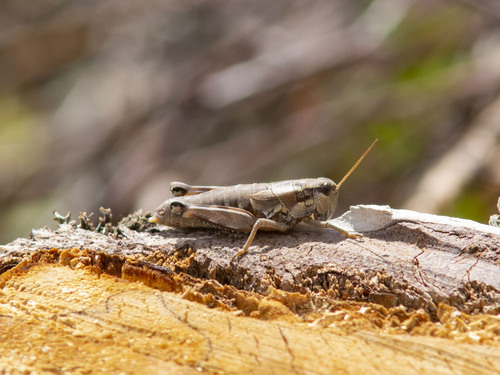
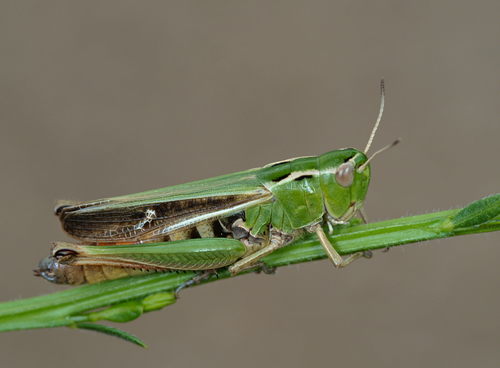
The large marsh grasshopper (Stethophyma grossum) is a species of grasshopper belonging to the family Acrididae. The large marsh grasshopper was first described in the 10th edition of Systema Naturae, which was written by Swedish biologist Carl Linnaeus in 1758. Linnaeus considered all orthopteran insects to be members of the genus Gryllus, and gave the scientific name Gryllus grossus to this species. Later authors split the orthopterans into multiple genera, and the large marsh grasshopper would therefore be reclassified. French zoologist Pierre André Latreille moved the species into Acrydium in 1804, renaming it as Acrydium grossum, while French entomologist Jean Guillaume Audinet-Serville assigned it to Oedipoda in 1839 under the name Oedipoda grossa, and German entomologist Franz Xaver Fieber considered it a member of Mecostethus which he renamed as Mecostethus grossus in 1853. Later that year, German zoologist Leopold Heinrich Fischer published a book reviewing the orthopterans of Europe in which he determines that the large marsh grasshopper cannot be assigned to any existing genus. He therefore established the genus Stethophyma, of which this species was designated... Wikipedia →

Global Distribution

Parks Where Found

# Park Country Daily sighting probability
1 Białowieża National Park 🇵🇱 Poland
~20%
2 Aigüestortes National Park 🇪🇸 Spain
~20%
3 Pyrénées National Park 🇫🇷 France
~10%
4 Mercantour National Park 🇫🇷 France
~10%
5 Ecrins National Park 🇫🇷 France
~10%
6 Cévennes National Park 🇫🇷 France
~10%
7 Bavarian Forest National Park 🇩🇪 Germany
~10%

Cities Where Found

# City Country Daily sighting probability
1 Hamburg 🇩🇪 Germany
~10%
2 Minsk 🇧🇾 Belarus
<5%
3 Berlin 🇩🇪 Germany
<5%
4 Brussels 🇧🇪 Belgium
<5%
5 Warsaw 🇵🇱 Poland
<5%
6 Moscow 🇷🇺 Russia
<5%

Before you go

What are the chances of seeing a Large Marsh Grasshopper in Pyrénées National Park?

With luck

About 10% of wildlife watchers report a Large Marsh Grasshopper sighting in Pyrénées National Park on a given day, based on 79 verified sightings from GBIF citizen-science data from 2019 to 2026. It is the 134th most-seen of the 1277 insects we can rate there. Over three days the chance rises to about 30%, and over a week to about 60%, if each day is a fresh chance.

When is the best time to see a Large Marsh Grasshopper in Pyrénées National Park?

August and September

In those months about 20% of wildlife watchers report a Large Marsh Grasshopper in Pyrénées National Park on a given day, against under 5% in November to May, the lowest months.

What time of day is best to see a Large Marsh Grasshopper?

Between 11 am and 2 pm

Across all the parks we cover, that three-hour window holds the most Large Marsh Grasshopper sightings with a recorded time, and about 9 in 10 of them come between 6 am and 6 pm: it is a daytime animal.

Is Pyrénées National Park the best place to see a Large Marsh Grasshopper?

3rd of 7

Of the 7 parks where we can rate Large Marsh Grasshopper sightings, Pyrénées National Park ranks 3rd at about 10%. The best odds are in Białowieża National Park (Poland, about 20%) and Aigüestortes National Park (Spain, about 20%).

Which relatives of the Large Marsh Grasshopper live in Pyrénées National Park?

Same family: Acrididae

The closest relatives of the Large Marsh Grasshopper that you can see in Pyrénées National Park (family Acrididae, Short-horned Grasshoppers) are Meadow Grasshopper (about 20%), Cophopodisma pyrenaea (about 10%) and Woodland Grasshopper (about 10%), with each one's daily chance of a sighting.

Where does the Large Marsh Grasshopper sighting chance come from?

GBIF citizen-science records

It is estimated from how often the Large Marsh Grasshopper is recorded against all the insects logged in Pyrénées National Park (79 verified sightings from 2019 to 2026), calibrated against known sighting rates. Figures are rounded to the nearest 10% because citizen-science data supports honest approximations, not decimals, and months with records from fewer than five people show "—". How it works.

← Back to Pyrénées National Park