Stripe-Backed Brusheye

Stripe-Backed Brusheye

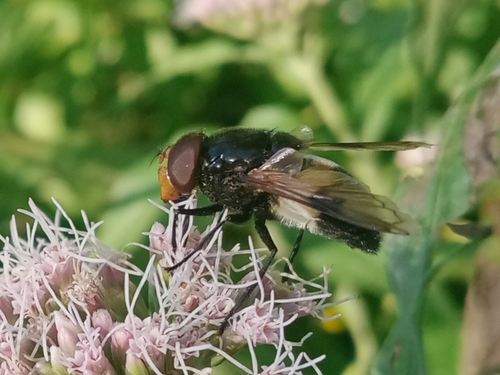
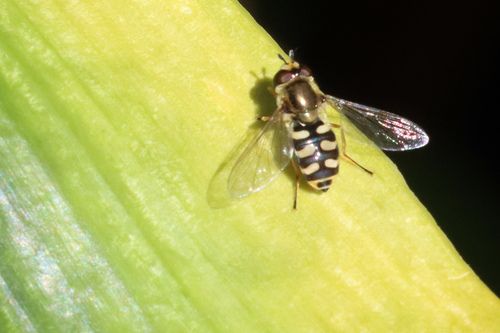
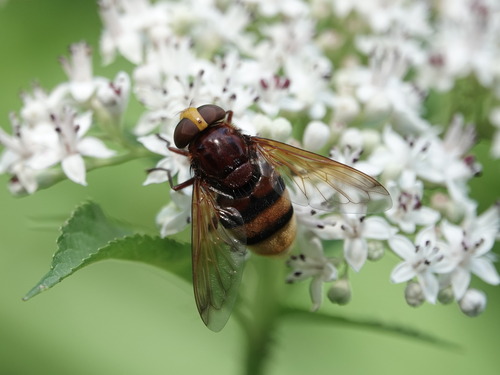
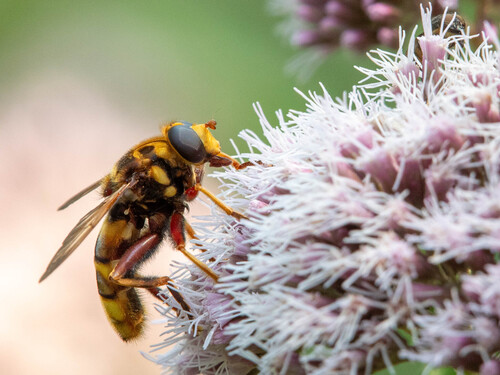
Dasysyrphus albostriatus

Daily sighting probability <5% · Rare
at Pyrénées National Park

In 3 days ~10% in a week ~20%

6 Verified sightings at Pyrénées National Park From 2019 to 2026
11 In all 2 parks
November Best month
☀️ Diurnal When it's spotted

About the Stripe-Backed Brusheye

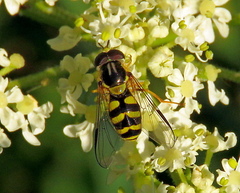
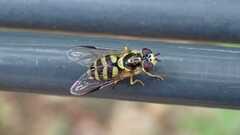
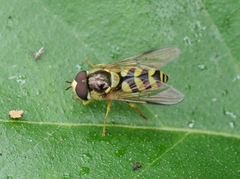
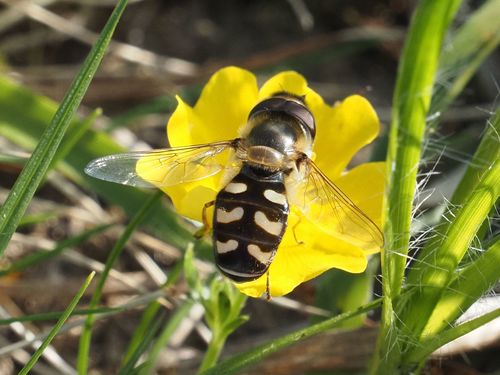
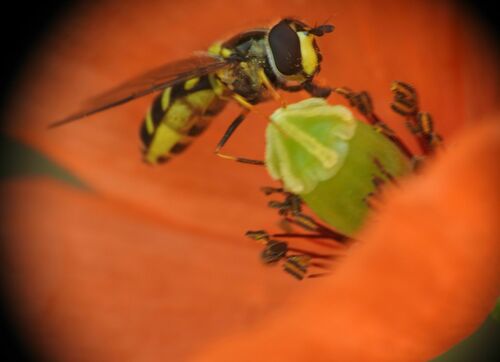
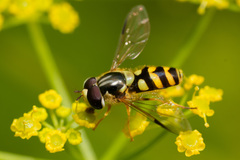
Dasysyrphus albostriatus is a Palearctic species of hoverfly. External images For terms see Morphology of Diptera Wing length 6·25–9·5 mm. Thorax dorsum with two median stripes of white dust. The thorax is otherwise shining black. Tergites with linear yellow spots which sometimes connect on tergites 3 and 4.

The larva is figured by Dusek and Laska (1962). Palaearctic. Fennoscandia South to Iberia and north Africa. Ireland eastwards through Central and Southern Europe (Italy, Yugoslavia) to Greece, Turkey and European parts of Russia (South to Crimea and the Caucasus). East into Central Asia and Japan.

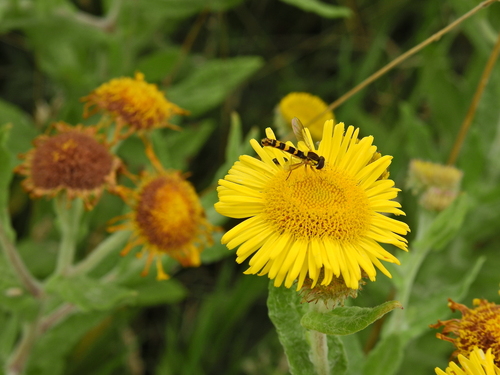
Habitat coniferous and deciduous woodland and conifer plantation, up to the alpine zone, tracksides, clearings, parks, gardens. Flowers visited include yellow composites, white umbellifers, Acer pseudoplatanus, Calluna, Crataegus, Euphorbia, Lonicera xylosteum, Papaver, Ranunculus, Rubus, Salix, Sorbus, Stellaria, Succisa pratensis, and Viburnum opulus.

The flight period is from the end of April (early April in southern Europe) to September. The larva is predominantly aphid-feeding, but also predatory on a wide range of soft-bodied... Wikipedia →
Global Distribution

Parks Where Found

# Park Country Daily sighting probability
1 Sierra Nevada National Park 🇪🇸 Spain
~10%
2 Pyrénées National Park 🇫🇷 France
<5%

Cities Where Found

# City Country Daily sighting probability
1 Birmingham 🇬🇧 United Kingdom
~10%
2 Liverpool 🇬🇧 United Kingdom
~10%
3 London 🇬🇧 United Kingdom
~10%
4 Brussels 🇧🇪 Belgium
~10%
5 Warsaw 🇵🇱 Poland
~10%
6 Manchester 🇬🇧 United Kingdom
~10%
7 Leeds 🇬🇧 United Kingdom
~10%
8 Stockholm 🇸🇪 Sweden
~10%
9 Paris 🇫🇷 France
<5%
10 Berlin 🇩🇪 Germany
<5%

Before you go

What are the chances of seeing a Stripe-Backed Brusheye in Pyrénées National Park?

Rare

Under 5% of wildlife watchers report a Stripe-Backed Brusheye sighting in Pyrénées National Park on a given day, based on 6 verified sightings from GBIF citizen-science data from 2019 to 2026. It is the 1026th most-seen of the 1277 insects we can rate there. Over three days the chance rises to about 10%, and over a week to about 20%, if each day is a fresh chance.

When is the best time to see a Stripe-Backed Brusheye in Pyrénées National Park?

August and November

In those months about 10% of wildlife watchers report a Stripe-Backed Brusheye in Pyrénées National Park on a given day, against under 5% in September–October and December–July, the lowest months.

What time of day is best to see a Stripe-Backed Brusheye?

Between 8 and 11 am

Across all the parks we cover, that three-hour window holds the most Stripe-Backed Brusheye sightings with a recorded time, and nearly all of them come between 6 am and 6 pm: it is a daytime animal.

Is Pyrénées National Park the best place to see a Stripe-Backed Brusheye?

2nd of 2

Of the 2 parks where we can rate Stripe-Backed Brusheye sightings, Pyrénées National Park ranks 2nd at under 5%. The best odds are in Sierra Nevada National Park (Spain, about 10%).

Which relatives of the Stripe-Backed Brusheye live in Pyrénées National Park?

Same family: Syrphidae

The closest relatives of the Stripe-Backed Brusheye that you can see in Pyrénées National Park (family Syrphidae, Hover Flies) are Common Drone Fly (about 10%), Tapered Drone Fly (about 10%) and Marmalade Hover Fly (about 10%), with each one's daily chance of a sighting.

Where does the Stripe-Backed Brusheye sighting chance come from?

GBIF citizen-science records

It is estimated from how often the Stripe-Backed Brusheye is recorded against all the insects logged in Pyrénées National Park (6 verified sightings from 2019 to 2026), calibrated against known sighting rates. Figures are rounded to the nearest 10% because citizen-science data supports honest approximations, not decimals, and months with records from fewer than five people show "—". How it works.

← Back to Pyrénées National Park