Pellucid Hover Fly

Pellucid Hover Fly

Volucella pellucens

Daily sighting probability ~10% · With luck
at Pyrénées National Park

In 3 days ~30% in a week ~50%

56 Verified sightings at Pyrénées National Park From 2019 to 2026
341 In all 16 parks
July Best month
☀️ Diurnal When it's spotted

About the Pellucid Hover Fly

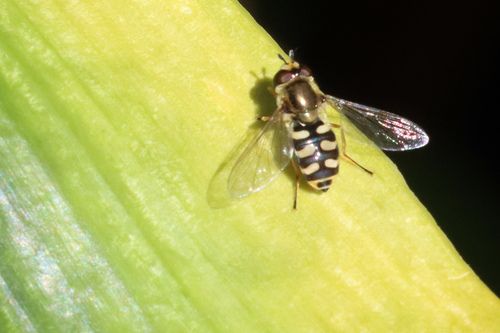
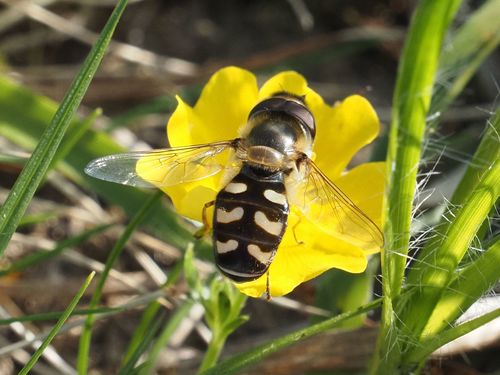
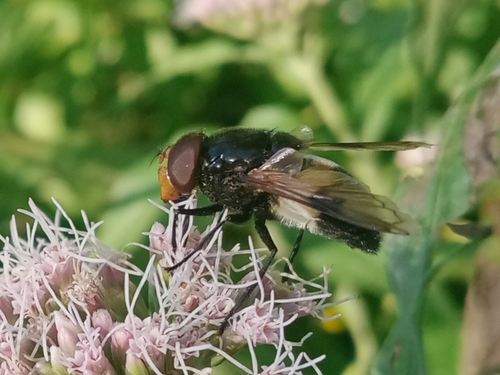
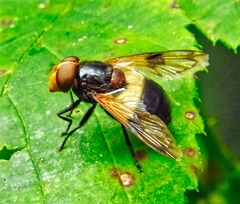
Volucella pellucens, the pellucid fly, is a hoverfly. This species occurs in much of Europe, from Ireland and across the Palearctic to Japan. The adult V. pellucens is usually found in woodlands and wooded hedgerows, but will enter gardens.

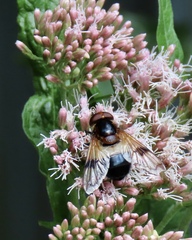
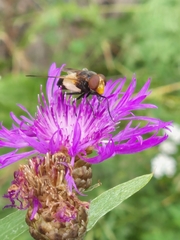
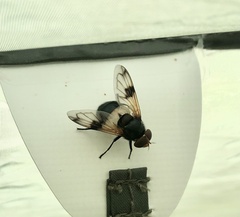
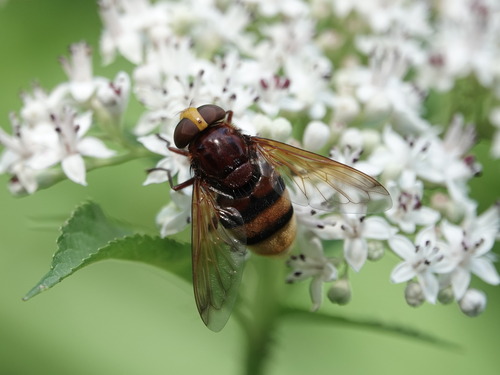
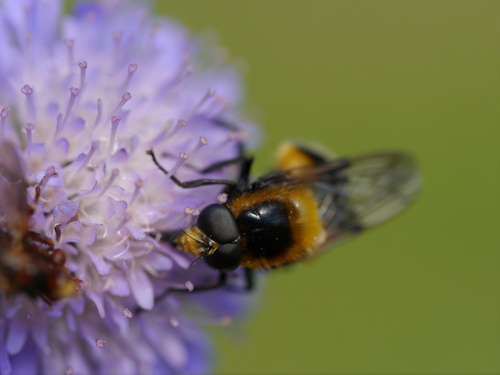
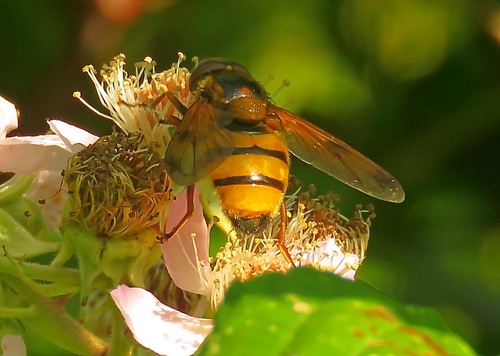
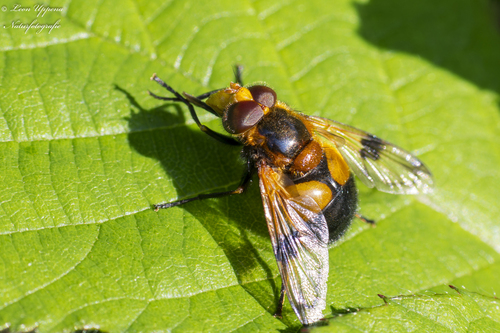
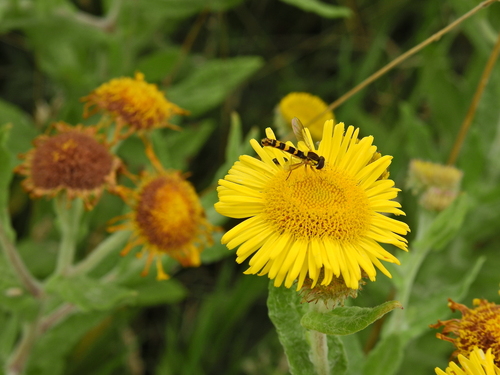
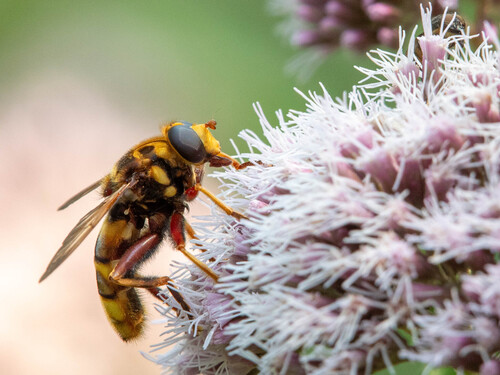
Volucella pellucens is about 13–17 mm in length, with a wing length about 10–15.5 mm. This hoverfly has a broad, mainly black body, but the front part of the abdomen has a broad, yellow band, giving it the appearance of a bee or wasp. The two wings are transparent, as with most flies, but the leading edge is amber, with a brown patch on each wing.

The mimicry of bees or wasps in shape and colouration is shown by other hoverflies, which is thought to protect against falling prey to birds and other insectivores that avoid eating true wasps because of their stings. However, the difference between hoverflies and wasps or bees is hoverflies have two wings, and the Hymenoptera species have four.

Adults live on nectar and pollen, as with most hoverflies, and visits a large range of flowers from May to October, showing a distinct preference for white flowers, such as Sambucus, Cornus, Ligustrum... Wikipedia →
Global Distribution

Parks Where Found

# Park Country Daily sighting probability
1 Mercantour National Park 🇫🇷 France
~30%
2 Aigüestortes National Park 🇪🇸 Spain
~30%
3 Triglav National Park 🇸🇮 Slovenia
~30%
4 Plitvice Lakes National Park 🇭🇷 Croatia
~20%
5 Cairngorms National Park 🇬🇧 United Kingdom
~20%
6 Hohe Tauern National Park 🇦🇹 Austria
~20%
7 Tatra National Park 🇸🇰 Slovakia
~20%
8 Białowieża National Park 🇵🇱 Poland
~20%
9 Ecrins National Park 🇫🇷 France
~10%
10 Bavarian Forest National Park 🇩🇪 Germany
~10%
11 Vanoise National Park 🇫🇷 France
~10%
12 Snowdonia National Park 🇬🇧 United Kingdom
~10%
13 Pyrénées National Park 🇫🇷 France
~10%
14 Cévennes National Park 🇫🇷 France
<5%
15 Wadden Sea National Park 🇩🇪 Germany
<5%
16 Sierra de Guadarrama National Park 🇪🇸 Spain
<5%

Cities Where Found

# City Country Daily sighting probability
1 Manchester 🇬🇧 United Kingdom
~10%
2 Birmingham 🇬🇧 United Kingdom
~10%
3 Helsinki 🇫🇮 Finland
~10%
4 Liverpool 🇬🇧 United Kingdom
~10%
5 Dublin 🇮🇪 Ireland
~10%
6 London 🇬🇧 United Kingdom
~10%
7 Warsaw 🇵🇱 Poland
~10%
8 Leeds 🇬🇧 United Kingdom
~10%
9 Copenhagen 🇩🇰 Denmark
~10%
10 Hamburg 🇩🇪 Germany
~10%

Before you go

What are the chances of seeing a Pellucid Hover Fly in Pyrénées National Park?

With luck

About 10% of wildlife watchers report a Pellucid Hover Fly sighting in Pyrénées National Park on a given day, based on 56 verified sightings from GBIF citizen-science data from 2019 to 2026. It is the 161st most-seen of the 1277 insects we can rate there. Over three days the chance rises to about 30%, and over a week to about 50%, if each day is a fresh chance.

When is the best time to see a Pellucid Hover Fly in Pyrénées National Park?

July

In that month about 20% of wildlife watchers report a Pellucid Hover Fly in Pyrénées National Park on a given day, against under 5% in October to May, the lowest months.

What time of day is best to see a Pellucid Hover Fly?

Between 2 and 5 pm

Across all the parks we cover, that three-hour window holds the most Pellucid Hover Fly sightings with a recorded time, and about 9 in 10 of them come between 6 am and 6 pm: it is a daytime animal.

Which relatives of the Pellucid Hover Fly live in Pyrénées National Park?

Same genus: Volucella

The closest relatives of the Pellucid Hover Fly that you can see in Pyrénées National Park (genus Volucella, Plumehorns) are Hornet Mimic Hover Fly (about 10%), Bumble Bee Hover Fly (about 10%) and Lesser Hornet Hoverfly (about 10%), with each one's daily chance of a sighting.

Where does the Pellucid Hover Fly sighting chance come from?

GBIF citizen-science records

It is estimated from how often the Pellucid Hover Fly is recorded against all the insects logged in Pyrénées National Park (56 verified sightings from 2019 to 2026), calibrated against known sighting rates. Figures are rounded to the nearest 10% because citizen-science data supports honest approximations, not decimals, and months with records from fewer than five people show "—". How it works.

← Back to Pyrénées National Park