Vespillo Burying Beetle

Vespillo Burying Beetle

Nicrophorus vespillo

Daily sighting probability ~10% · With luck
at Pyrénées National Park

In 3 days ~10% in a week ~30%

15 Verified sightings at Pyrénées National Park From 2019 to 2026
54 In all 3 parks
July Best month
☀️🌙 Day & Night When it's spotted

About the Vespillo Burying Beetle

Nicrophorus vespillo is a burying beetle described by Carl Linnaeus in his landmark 1758 10th edition of Systema Naturae. It has a paleartic distribution and is commonly found across Europe and Asia, extending from Western Europe to Mongolia.

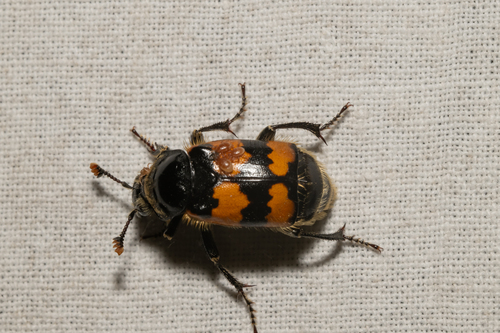
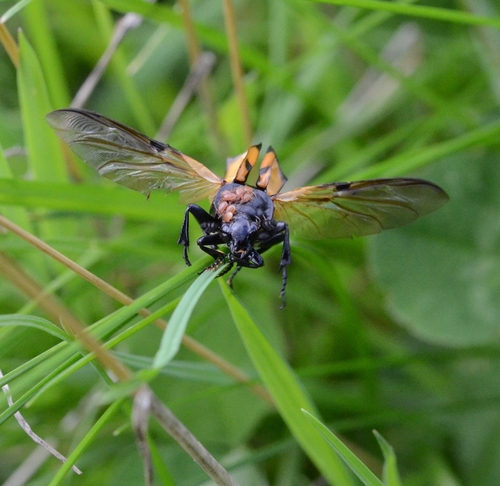
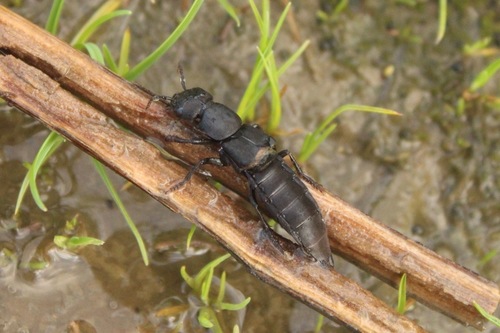
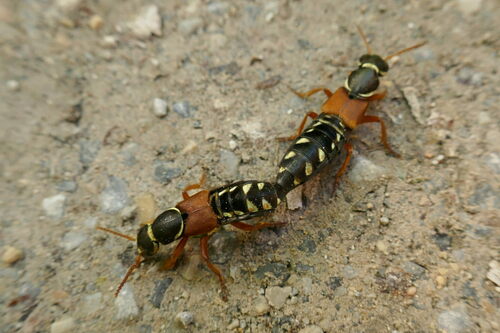
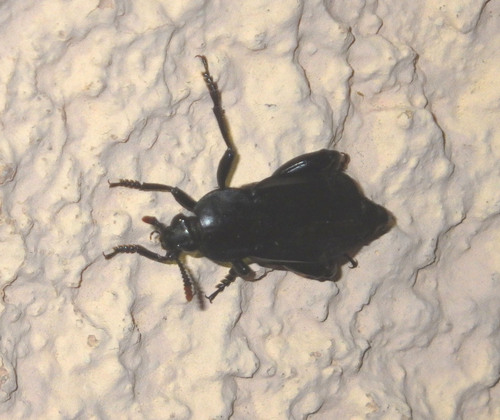
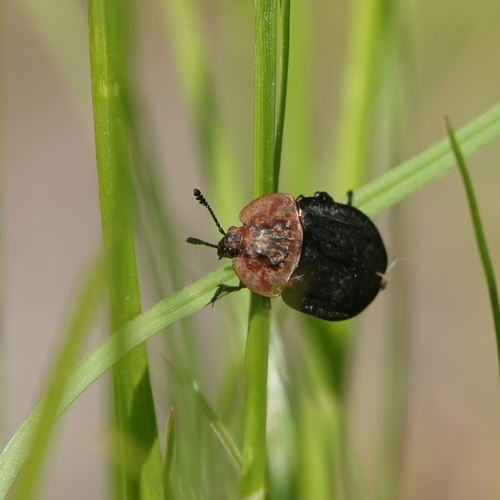
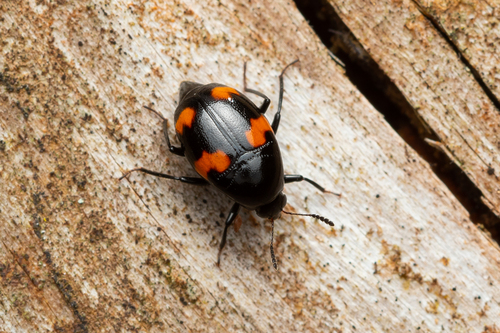
These are large beetles, from 12 to 25 mm in length and fly strongly. The beetles have two striking orange-yellow bands on the wing-cases. They are distinguished from others in the genus by the long golden hairs on the body and wing-cases as well as the orange club-shaped ends of the antennae and the shape of the hind legs.

They live on and lay eggs near carrion. The beetles reproduce from May to September, with both parents participating in preparations and care of the offspring. The parents will excavate beneath suitable small animal corpses, also covering it with the soil, so that it becomes buried and ready for the female to lay eggs. They may move the body to a more suitable location prior to burial. Burial can take place within a day for a small animal like a mouse. After burial they remove hair or feathers and shape the carcass into a ball within a small underground space. Eggs are laid in the soil around... Wikipedia →

Global Distribution

Parks Where Found

# Park Country Daily sighting probability
1 Wadden Sea National Park 🇩🇪 Germany
~10%
2 Bavarian Forest National Park 🇩🇪 Germany
~10%
3 Pyrénées National Park 🇫🇷 France
~10%

Cities Where Found

# City Country Daily sighting probability
1 Kyiv 🇺🇦 Ukraine
~10%
2 Nizhny Novgorod 🇷🇺 Russia
<5%
3 Novosibirsk 🇷🇺 Russia
<5%
4 Warsaw 🇵🇱 Poland
<5%
5 Moscow 🇷🇺 Russia
<5%
6 Munich 🇩🇪 Germany
<5%
7 Berlin 🇩🇪 Germany
<5%
8 Vienna 🇦🇹 Austria
<5%
9 Saint Petersburg 🇷🇺 Russia
<5%

Before you go

What are the chances of seeing a Vespillo Burying Beetle in Pyrénées National Park?

With luck

About 10% of wildlife watchers report a Vespillo Burying Beetle sighting in Pyrénées National Park on a given day, based on 15 verified sightings from GBIF citizen-science data from 2019 to 2026. It is the 547th most-seen of the 1277 insects we can rate there. Over three days the chance rises to about 10%, and over a week to about 30%, if each day is a fresh chance.

When is the best time to see a Vespillo Burying Beetle in Pyrénées National Park?

May and July–September

In those months about 10% of wildlife watchers report a Vespillo Burying Beetle in Pyrénées National Park on a given day, against under 5% in June and October–April, the lowest months.

What time of day is best to see a Vespillo Burying Beetle?

Between 2 and 5 pm

Across all the parks we cover, that three-hour window holds the most Vespillo Burying Beetle sightings with a recorded time, and about 6 in 10 of them come between 6 am and 6 pm: it is seen both by day and at night.

Is Pyrénées National Park the best place to see a Vespillo Burying Beetle?

Among the best

Of the 3 parks where we can rate Vespillo Burying Beetle sightings, Pyrénées National Park ranks 3rd at about 10%, level with the leaders once rounded. The best odds are in Wadden Sea National Park (Germany, about 10%) and Bavarian Forest National Park (Germany, about 10%).

Where does the Vespillo Burying Beetle sighting chance come from?

GBIF citizen-science records

It is estimated from how often the Vespillo Burying Beetle is recorded against all the insects logged in Pyrénées National Park (15 verified sightings from 2019 to 2026), calibrated against known sighting rates. Figures are rounded to the nearest 10% because citizen-science data supports honest approximations, not decimals, and months with records from fewer than five people show "—". How it works.

← Back to Pyrénées National Park