Weaver's Fritillary

Weaver's Fritillary

Boloria dia

Daily sighting probability ~20% · Possible
at Pyrénées National Park

In 3 days ~40% in a week ~70%

120 Verified sightings at Pyrénées National Park From 2019 to 2026
244 In all 8 parks
April Best month
☀️ Diurnal When it's spotted

About the Weaver's Fritillary

Boloria dia, the Weaver's fritillary or violet fritillary, is a butterfly in the family Nymphalidae. The name Weaver's fritillary is in honor of Richard Weaver, an English insect collector who claimed to have obtained the specimen within ten miles of Birmingham around 1820. However, B. dia is very rare in England and the few specimens known from there are thought to be from possibly accidental introductions.

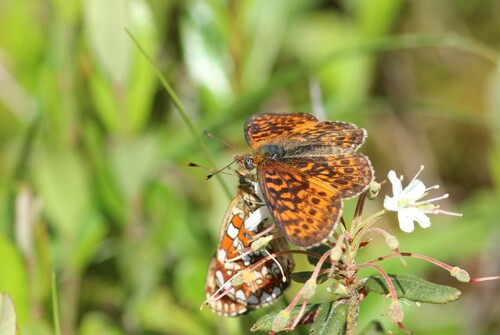
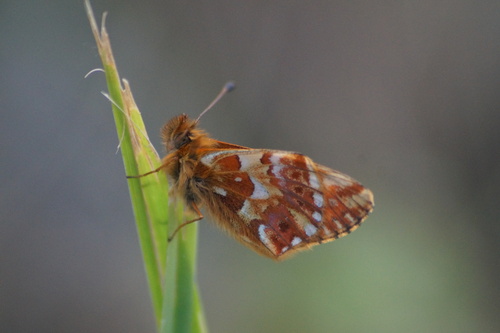
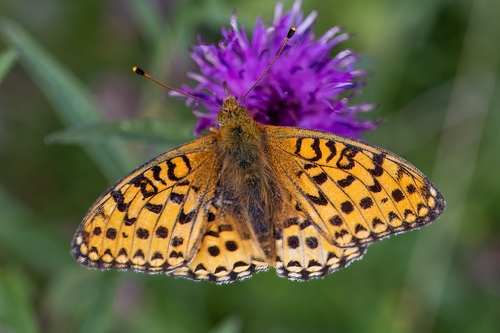
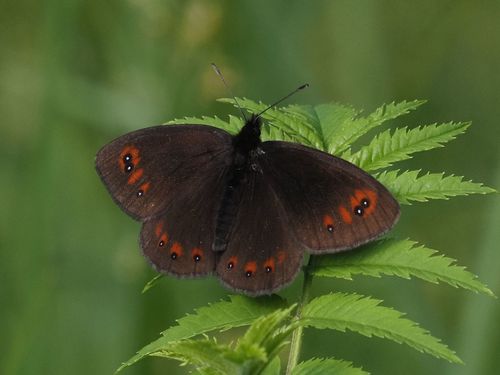
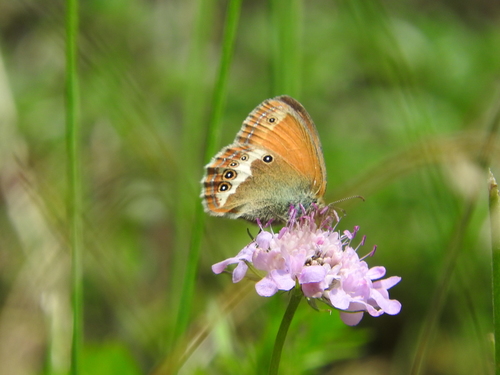
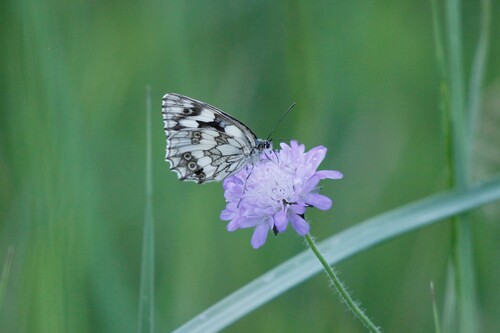
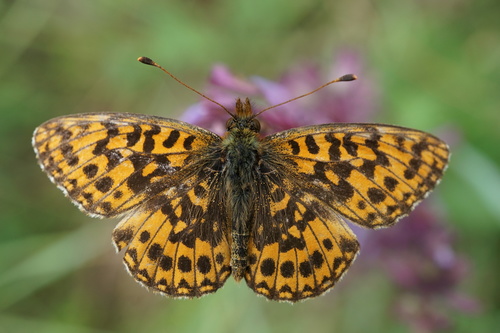
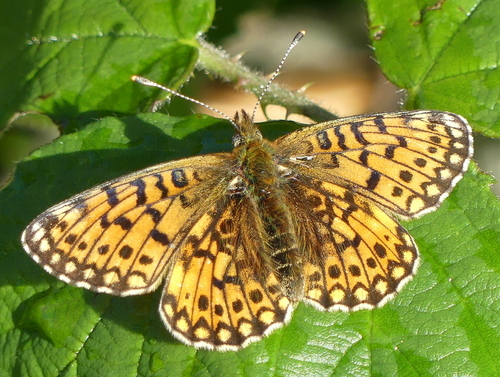
The adult is a small fritillary with typically chequered orange-brown upperside and a submarginal row of triangles and dots. The forewing is 16–17 mm long. The underside of the hindwing has a distinctive purplish band. A. dia L. (68f) is the smallest Argynnis. Above usually more extended black than the other species; the basal area of the hindwing as a rule quite dark, the marginal area with a row of heavy black dots. The hindwing beneath variegated with purple and bearing silvery spots at the margin, in the median band and at the base.

Throughout Central, North and East Europe, also in Anterior Asia eastwards to Mongolia. Specimens with a broad confluent median band are ab. vittata Spul. (= mediofasciata Schultz). In ab. hudaki Aign... Wikipedia →
Global Distribution

Parks Where Found

# Park Country Daily sighting probability
1 Picos de Europa National Park 🇪🇸 Spain
~20%
2 Aigüestortes National Park 🇪🇸 Spain
~20%
3 Pyrénées National Park 🇫🇷 France
~20%
4 Cévennes National Park 🇫🇷 France
~10%
5 Ecrins National Park 🇫🇷 France
~10%
6 Triglav National Park 🇸🇮 Slovenia
~10%
7 Mercantour National Park 🇫🇷 France
~10%
8 Bavarian Forest National Park 🇩🇪 Germany
~10%

Cities Where Found

# City Country Daily sighting probability
1 Prague 🇨🇿 Czechia
~10%
2 Vienna 🇦🇹 Austria
~10%
3 Moscow 🇷🇺 Russia
<5%

Before you go

What are the chances of seeing a Weaver's Fritillary in Pyrénées National Park?

Possible

About 20% of wildlife watchers report a Weaver's Fritillary sighting in Pyrénées National Park on a given day, based on 120 verified sightings from GBIF citizen-science data from 2019 to 2026. It is the 53rd most-seen of the 1277 insects we can rate there. Over three days the chance rises to about 40%, and over a week to about 70%, if each day is a fresh chance.

When is the best time to see a Weaver's Fritillary in Pyrénées National Park?

April

In that month about 30% of wildlife watchers report a Weaver's Fritillary in Pyrénées National Park on a given day, against under 5% in November to February, the lowest months.

What time of day is best to see a Weaver's Fritillary?

Between 2 and 5 pm

Across all the parks we cover, that three-hour window holds the most Weaver's Fritillary sightings with a recorded time, and about 9 in 10 of them come between 6 am and 6 pm: it is a daytime animal.

Is Pyrénées National Park the best place to see a Weaver's Fritillary?

Among the best

Of the 8 parks where we can rate Weaver's Fritillary sightings, Pyrénées National Park ranks 3rd at about 20%, level with the leaders once rounded. The best odds are in Picos de Europa National Park (Spain, about 20%) and Aigüestortes National Park (Spain, about 20%).

Which relatives of the Weaver's Fritillary live in Pyrénées National Park?

Same genus: Boloria

The closest relatives of the Weaver's Fritillary that you can see in Pyrénées National Park (genus Boloria, Lesser Fritillaries) are Eurasian Silver-Bordered Fritillary (about 10%), Bog Fritillary (about 10%) and Shepherd's Fritillary (about 10%), with each one's daily chance of a sighting.

Where does the Weaver's Fritillary sighting chance come from?

GBIF citizen-science records

It is estimated from how often the Weaver's Fritillary is recorded against all the insects logged in Pyrénées National Park (120 verified sightings from 2019 to 2026), calibrated against known sighting rates. Figures are rounded to the nearest 10% because citizen-science data supports honest approximations, not decimals, and months with records from fewer than five people show "—". How it works.

← Back to Pyrénées National Park