
Western Nicator

Western Nicator

Nicator chloris

Silhouette: Sheatherius · PhyloPic

LCLeast ConcernNTVUENCR
Daily sighting probability <5% · Rare
at Queen Elizabeth National Park

In 3 days <5% in a week ~10%

11 Verified sightings at Queen Elizabeth National Park From 2019 to 2026
929 In all 5 parks
December Best month
☀️ Diurnal When it's spotted

About the Western Nicator

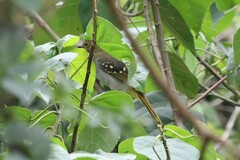
The western nicator (Nicator chloris) is a species of songbird in the family Nicatoridae. It is very similar to the eastern nicator, but the sides of the face and crown are olive green. It is best identified by its range and some of its vocalizations.

It is mainly native to the African tropical rainforest. It inhabits subtropical or tropical moist lowland forest and subtropical or tropical swamps. It prefers well-established secondary growth forest from 700 to 1,850 metres (2,300 to 6,070 ft).

Media related to Nicator chloris at Wikimedia Commons Wikipedia →

Sounds

Song1:03

Ivory Coast · 2026

© Étienne Leroy · XC1186885 · CC BY-NC-SA 4.0

Recording0:37

Gabon · 2022

© BurBenj · XC1133129 · CC BY-NC-SA 4.0

Call0:45

Ghana · 2023

© Alain Verneau · XC792636 · CC BY-NC-SA 4.0

Global Distribution

Parks Where Found

# Park Country Daily sighting probability
1 Semuliki National Park 🇺🇬 Uganda
~60%
2 Kibale National Park 🇺🇬 Uganda
~40%
3 Taï National Park 🇨🇮 Ivory Coast
~10%
4 Queen Elizabeth National Park 🇺🇬 Uganda
<5%
5 Bwindi Impenetrable National Park 🇺🇬 Uganda
<5%

Cities Where Found

# City Country Daily sighting probability
1 Kampala 🇺🇬 Uganda
<5%

Before you go

What are the chances of seeing a Western Nicator in Queen Elizabeth National Park?

Rare

Under 5% of wildlife watchers report a Western Nicator sighting in Queen Elizabeth National Park on a given day, based on 11 verified sightings from GBIF citizen-science data from 2019 to 2026. It is the 357th most-seen of the 434 birds we can rate there. Over three days the chance rises to under 5%, and over a week to about 10%, if each day is a fresh chance.

When is the best time to see a Western Nicator in Queen Elizabeth National Park?

Any time of year

In every month with enough records, under 5% of wildlife watchers report a Western Nicator in Queen Elizabeth National Park on a given day, so our monthly data shows no clear season.

What time of day is best to see a Western Nicator?

Between 7 and 10 am

Across all the parks we cover, that three-hour window holds the most Western Nicator sightings with a recorded time, and about 9 in 10 of them come between 6 am and 6 pm: it is a daytime animal.

Is Queen Elizabeth National Park the best place to see a Western Nicator?

4th of 5

Of the 5 parks where we can rate Western Nicator sightings, Queen Elizabeth National Park ranks 4th at under 5%. The best odds are in Semuliki National Park (Uganda, about 60%), Kibale National Park (Uganda, about 40%) and Taï National Park (Ivory Coast, about 10%).

Which relatives of the Western Nicator live in Queen Elizabeth National Park?

Same order: Passeriformes

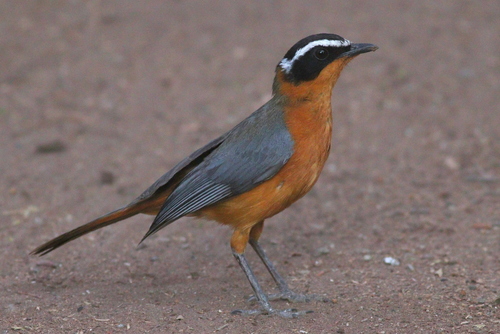
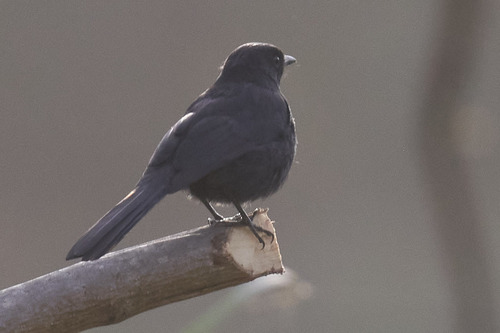
The closest relatives of the Western Nicator that you can see in Queen Elizabeth National Park (order Passeriformes, Perching Birds) are Rüppell's Glossy-starling (about 70%), Black-headed Gonolek (about 70%) and Common Bulbul (about 70%), with each one's daily chance of a sighting.

Where does the Western Nicator sighting chance come from?

GBIF citizen-science records

It is estimated from how often the Western Nicator is recorded against all the birds logged in Queen Elizabeth National Park (11 verified sightings from 2019 to 2026), calibrated against known sighting rates. Figures are rounded to the nearest 10% because citizen-science data supports honest approximations, not decimals, and months with records from fewer than five people show "—". How it works.

← Back to Queen Elizabeth National Park