
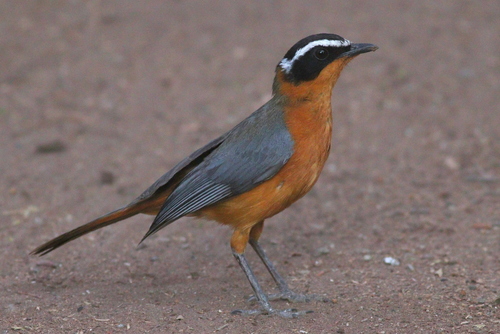
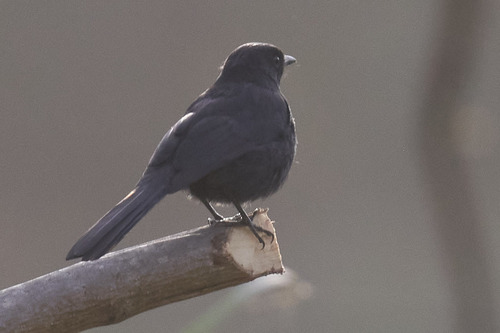
Yellow-billed Oxpecker

Yellow-billed Oxpecker

Buphagus africanus

Silhouette: Sheatherius · PhyloPic

LCLeast ConcernNTVUENCR
Daily sighting probability ~40% · Likely
at Queen Elizabeth National Park

In 3 days ~80% in a week >90%

739 Verified sightings at Queen Elizabeth National Park From 2019 to 2026
8,726 In all 33 parks
February Best month
☀️ Diurnal When it's spotted

About the Yellow-billed Oxpecker

The yellow-billed oxpecker (Buphagus africanus) is a passerine bird in the family Buphagidae. It was previously placed in the starling and myna family, Sturnidae. It is native to the savannah of Sub-Saharan Africa from Senegal east to Sudan. It is least common in the extreme east of its range where it overlaps with the red-billed oxpecker, despite always dominating that species when feeding.

In 1760 the French zoologist Mathurin Jacques Brisson included a description of the yellow-billed oxpecker in his Ornithologie based on a specimen collected in Senegal. He used the French name Le pique-boeuf and the Latin Buphagus. Although Brisson coined Latin names, these do not conform to the binomial system and are not recognised by the International Commission on Zoological Nomenclature. When in 1766 the Swedish naturalist Carl Linnaeus updated his Systema Naturae for the twelfth edition, he added 240 species that had been previously described by Brisson. One of these was the yellow-billed oxpecker. Linnaeus included a brief description, coined the binomial name Buphaga africana and cited Brisson's work. This species is placed in the genus Buphagus that was introduced by Brisson... Wikipedia →

Sounds

Call0:20

Tanzania · 2017

© Frank Lambert · XC429639 · CC BY-NC-ND 4.0

Recording0:25

Gabon · 2023

© BurBenj · XC1120056 · CC BY-NC-SA 4.0

Bill-snap0:20

South Africa · 2021

© Guy Hausler · XC756259 · CC BY-NC-SA 4.0

Global Distribution

Parks Where Found

# Park Country Daily sighting probability
1 Queen Elizabeth National Park 🇺🇬 Uganda
~40%
2 Masai Mara National Reserve 🇰🇪 Kenya
~40%
3 Akagera National Park 🇷🇼 Rwanda
~40%
4 Moremi Game Reserve 🇧🇼 Botswana
~40%
5 Murchison Falls National Park 🇺🇬 Uganda
~40%
6 Kidepo Valley National Park 🇺🇬 Uganda
~40%
7 Lake Mburo National Park 🇺🇬 Uganda
~30%
8 Odzala-Kokoua National Park 🇨🇬 Republic of the Congo
~30%
9 Chobe National Park 🇧🇼 Botswana
~30%
10 Serengeti National Park 🇹🇿 Tanzania
~30%
11 Tarangire National Park 🇹🇿 Tanzania
~30%
12 Mikumi National Park 🇹🇿 Tanzania
~20%
13 Ngorongoro Conservation Area 🇹🇿 Tanzania
~20%
14 South Luangwa National Park 🇿🇲 Zambia
~20%
15 Meru National Park 🇰🇪 Kenya
~20%
16 Hwange National Park 🇿🇼 Zimbabwe
~20%
17 Kruger National Park 🇿🇦 South Africa
~20%
18 Gonarezhou National Park 🇿🇼 Zimbabwe
~20%
19 Nairobi National Park 🇰🇪 Kenya
~20%
20 Tsavo West National Park 🇰🇪 Kenya
~20%
21 Kafue National Park 🇿🇲 Zambia
~20%
22 Ruaha National Park 🇹🇿 Tanzania
~10%
23 Tsavo East National Park 🇰🇪 Kenya
~10%
24 Mkomazi National Park 🇹🇿 Tanzania
~10%
25 Virunga National Park 🇨🇩 Democratic Republic of the Congo
~10%
26 Amboseli National Park 🇰🇪 Kenya
~10%
27 Aberdare National Park 🇰🇪 Kenya
~10%
28 Lake Nakuru National Park 🇰🇪 Kenya
<5%
29 Samburu National Reserve 🇰🇪 Kenya
<5%
30 Niokolo-Koba National Park 🇸🇳 Senegal
<5%
31 Arusha National Park 🇹🇿 Tanzania
<5%
32 Lake Manyara National Park 🇹🇿 Tanzania
<5%
33 iSimangaliso Wetland Park 🇿🇦 South Africa
<5%

Before you go

What are the chances of seeing a Yellow-billed Oxpecker in Queen Elizabeth National Park?

Likely

About 40% of wildlife watchers report a Yellow-billed Oxpecker sighting in Queen Elizabeth National Park on a given day, based on 739 verified sightings from GBIF citizen-science data from 2019 to 2026. It is the 30th most-seen of the 434 birds we can rate there. Over three days the chance rises to about 80%, and over a week to over 90%, if each day is a fresh chance.

When is the best time to see a Yellow-billed Oxpecker in Queen Elizabeth National Park?

February

In that month about 60% of wildlife watchers report a Yellow-billed Oxpecker in Queen Elizabeth National Park on a given day, against about 10% in April, the lowest month. That is one of Queen Elizabeth National Park's driest months, with about 25 mm of rain against 150 mm in April.

What time of day is best to see a Yellow-billed Oxpecker?

Between 3 and 6 pm

Across all the parks we cover, that three-hour window holds the most Yellow-billed Oxpecker sightings with a recorded time, and about 9 in 10 of them come between 6 am and 6 pm: it is a daytime animal.

Is Queen Elizabeth National Park the best place to see a Yellow-billed Oxpecker?

Yes

Of the 33 parks where we can rate Yellow-billed Oxpecker sightings, Queen Elizabeth National Park has the highest daily chance: about 40%. Next come Masai Mara National Reserve (Kenya, about 40%) and Akagera National Park (Rwanda, about 40%). All parks ranked.

Where does the Yellow-billed Oxpecker sighting chance come from?

GBIF citizen-science records

It is estimated from how often the Yellow-billed Oxpecker is recorded against all the birds logged in Queen Elizabeth National Park (739 verified sightings from 2019 to 2026), calibrated against known sighting rates. Figures are rounded to the nearest 10% because citizen-science data supports honest approximations, not decimals, and months with records from fewer than five people show "—". How it works.

← Back to Queen Elizabeth National Park