Black-Spotted Flash

Black-Spotted Flash

Hypolycaena phorbas

Daily sighting probability ~10% · With luck
at Raja Ampat

In 3 days ~30% in a week ~60%

5 Verified sightings at Raja Ampat From 2019 to 2026
30 In all 3 parks
November Best month
☀️ Diurnal When it's spotted

About the Black-Spotted Flash

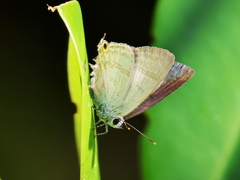
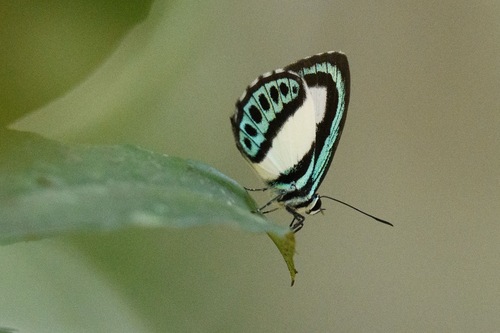
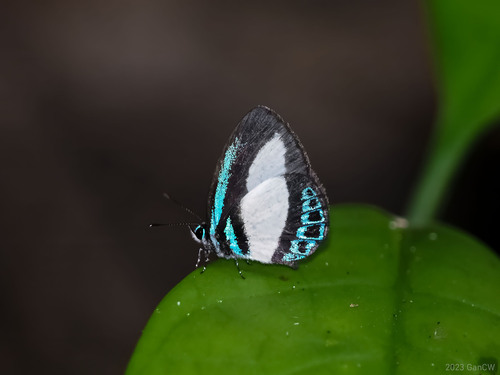
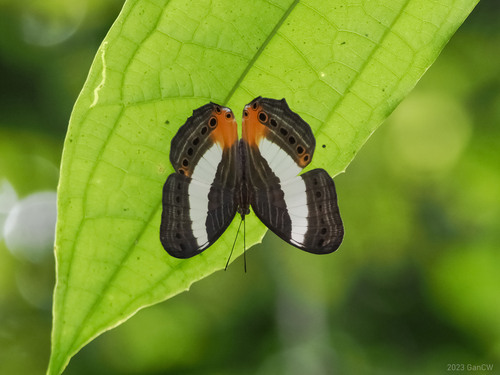
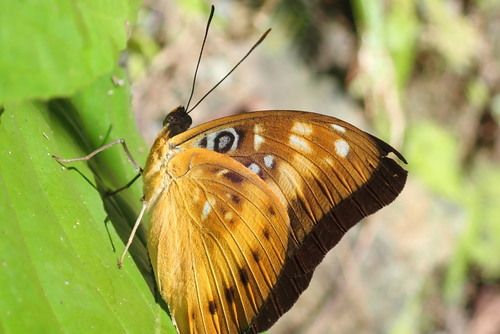
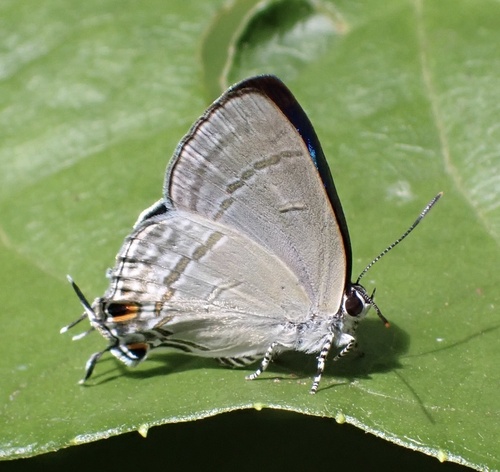
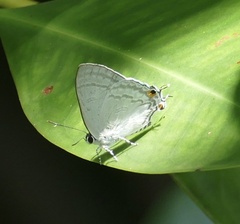
Hypolycaena phorbas is a butterfly of the family Lycaenidae. It is found in Waigeo, Biak, Roon Island, mainland New Guinea and various outlying islands as well as Australia. The wingspan is about 30 mm. Adults are brown on top. The forewings of the males have a blue sheen and a large dark patch in the middle, while females have a white patch with a blue edge. The hindwings of both males and females have two tails beside a large black and white eyespot. The underside is fawn, with two rows of darker spots parallel to the wing margins. There are two small orange and black eyespots on the underside of the hindwings.

The larvae have been recorded feeding on the leaves, young shoots, buds, and flowers of a wide range of plants, including Flagellaria indica, Dendrophthoe vitellina, Cassia alata, Cassia fistula, Cupaniopsis anacardioides, Acmena, Eugenia, Suzygium wilsoni, Planchonia careya, Ceriops tagal, Lumnitzera racemosa, Terminalia melanocarpa, Aegiceras corniculatum, Clerodendrum floribundum, Clerodendrum inerme and Oxera splendida. They are green or brown, with a white-edged dorsal line. They are attended by Oecophylla smaragdina ants. They usually hide under a leaf during the day.

Pupation takes place on the stem of the food plant, often in groups. The pupa is green or brown with dark flecks and mottling. Wikipedia →
Global Distribution

Parks Where Found

# Park Country Daily sighting probability
1 Kakadu National Park 🇦🇺 Australia
~10%
2 Raja Ampat 🇮🇩 Indonesia
~10%
3 Daintree National Park 🇦🇺 Australia
~10%

Before you go

What are the chances of seeing a Black-Spotted Flash in Raja Ampat?

With luck

About 10% of wildlife watchers report a Black-Spotted Flash sighting in Raja Ampat on a given day, based on 5 verified sightings from GBIF citizen-science data from 2019 to 2026. It is the 39th most-seen of the 46 insects we can rate there. Over three days the chance rises to about 30%, and over a week to about 60%, if each day is a fresh chance.

When is the best time to see a Black-Spotted Flash in Raja Ampat?

November

In that month about 30% of wildlife watchers report a Black-Spotted Flash in Raja Ampat on a given day, against under 5% in September and December–July, the lowest months.

What time of day is best to see a Black-Spotted Flash?

Between 9 am and noon

Across all the parks we cover, that three-hour window holds the most Black-Spotted Flash sightings with a recorded time, and nearly all of them come between 6 am and 6 pm: it is a daytime animal.

Is Raja Ampat the best place to see a Black-Spotted Flash?

Among the best

Of the 3 parks where we can rate Black-Spotted Flash sightings, Raja Ampat ranks 2nd at about 10%, level with the leaders once rounded. The best odds are in Kakadu National Park (Australia, about 10%).

Which relatives of the Black-Spotted Flash live in Raja Ampat?

Same family: Lycaenidae

The closest relatives of the Black-Spotted Flash that you can see in Raja Ampat (family Lycaenidae, Gossamer-winged Butterflies) are Large Green-Banded Blue (about 20%) and Small Green Banded Blue (about 10%), with each one's daily chance of a sighting.

Where does the Black-Spotted Flash sighting chance come from?

GBIF citizen-science records

It is estimated from how often the Black-Spotted Flash is recorded against all the insects logged in Raja Ampat (5 verified sightings from 2019 to 2026), calibrated against known sighting rates. Figures are rounded to the nearest 10% because citizen-science data supports honest approximations, not decimals, and months with records from fewer than five people show "—". How it works.

← Back to Raja Ampat