


Completed


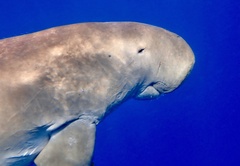
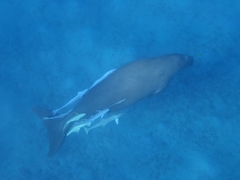


Dugong
Dugong dugon
Silhouette: Scott Hartman · PhyloPic
- KingdomAnimalia (Animals)
- PhylumChordata (Chordates)
- ClassMammalia (Mammals)
- OrderSirenia (Sirenians)
- FamilyDugongidae (Dugongs)
- GenusDugong
- SpeciesDugong dugon (Dugong)
In 3 days ~30% in a week ~60%
7 Verified sightings at Raja Ampat From 2019 to 2026
24 In all 2 parks
February Best month
☀️ Diurnal When it's spotted
About the Dugong
The dugong (Dugong dugon) is a marine mammal. It is one of four living species of the order Sirenia, which also includes three species of manatees. It is the only living representative of the once-diverse family Dugongidae; its closest modern relative, Steller's sea cow (Hydrodamalis gigas), was hunted to extinction in the 18th century.
The dugong is the only sirenian in its range, which spans the waters of some 40 countries and territories throughout the Indo-West Pacific. The dugong is largely dependent on seagrass communities for subsistence and is thus restricted to the coastal habitats that support seagrass meadows, with the largest dugong concentrations typically occurring in wide, shallow, protected areas, such as bays, mangrove channels, the waters of large inshore islands, and inter-reefal waters. The northern waters of Australia between Shark Bay and Moreton Bay are believed to be the dugong's contemporary stronghold.
Like all modern sirenians, the dugong has a fusiform body with no dorsal fin or hind limbs. The forelimbs or flippers are paddle-like. The dugong is easily distinguishable from the manatees by its fluked, dolphin-like tail; it also possesses a unique skull and teeth. Its snout is sharply downturned, an adaptation for feeding in benthic seagrass communities. The molar teeth are simple and peg-like, unlike the more elaborate molar dentition of manatees.
The dugong has been hunted for thousands of years for its meat and oil. Traditional hunting still has great cultural significance in several parts of its modern range, particularly northern Australia and the Pacific Islands. The dugong's current distribution is fragmented, and many populations are believed to be close to extinction. The IUCN lists the dugong as a species vulnerable to extinction, while the Convention on International Trade in Endangered Species limits or bans the trade of derived products. Despite it being legally protected in many countries, the main causes of population decline remain anthropogenic and include fishing-related fatalities, habitat degradation, and hunting. With its long lifespan of 70 years or more and slow rate of reproduction, the dugong is especially vulnerable to extinction. Wikipedia →
Recent sightings of Dugong in Raja Ampat
LIVEiNaturalistGlobal Distribution
Parks Where Found
| # | Park | Country | Daily sighting probability |
|---|---|---|---|
| 1 | Ningaloo Marine Park | 🇦🇺 Australia | |
| 2 | Raja Ampat | 🇮🇩 Indonesia |
Zoos & Centres Where Found
| # | Zoo / Centre | Country | |
|---|---|---|---|
| 1 | SeaWorld Abu Dhabi | 🇦🇪 United Arab Emirates | |
| 2 | Toba Aquarium | 🇯🇵 Japan | |
| 3 | Safari World | 🇹🇭 Thailand | |
| 4 | National Zoo & Aquarium | 🇦🇺 Australia | |
| 5 | Sea World | 🇦🇺 Australia | |
| 6 | Penang Bird Park | 🇲🇾 Malaysia | |
| 7 | A.Y. Reyes Zoological and Botanical Garden | 🇵🇭 Philippines | |
| 8 | Sea Life Sydney Aquarium | 🇦🇺 Australia | |
| 9 | Sea World Indonesia | 🇮🇩 Indonesia | |
| 10 | Wild Life Sydney | 🇦🇺 Australia | |
| 11 | Bangsaen Aquarium | 🇹🇭 Thailand | |
| 12 | Faiyum Zoo | 🇪🇬 Egypt | |
| 13 | Manly Sea Life Sanctuary | 🇦🇺 Australia |
Closest Relatives at Raja Ampat
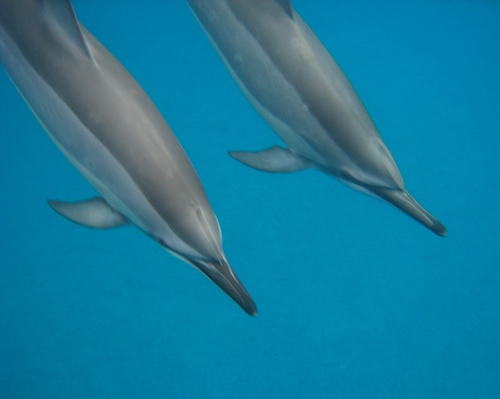
No species of the same family or order lives in Raja Ampat, so these are its closest relatives here: other mammals.





Before you go
What are the chances of seeing a Dugong in Raja Ampat?
With luck
About 10% of wildlife watchers report a Dugong sighting in Raja Ampat on a given day, based on 7 verified sightings from GBIF citizen-science data from 2019 to 2026. It is the 7th most-seen of the 13 mammals we can rate there. Over three days the chance rises to about 30%, and over a week to about 60%, if each day is a fresh chance.
When is the best time to see a Dugong in Raja Ampat?
February
In that month about 30% of wildlife watchers report a Dugong in Raja Ampat on a given day, against under 5% in May–June, August–September and November–January, the lowest months.
What time of day is best to see a Dugong?
Between 9 am and noon
Across all the parks we cover, that three-hour window holds the most Dugong sightings with a recorded time, and about 9 in 10 of them come between 6 am and 6 pm: it is a daytime animal.
Is Raja Ampat the best place to see a Dugong?
2nd of 2
Of the 2 parks where we can rate Dugong sightings, Raja Ampat ranks 2nd at about 10%. The best odds are in Ningaloo Marine Park (Australia, about 20%).
Where does the Dugong sighting chance come from?
GBIF citizen-science records
It is estimated from how often the Dugong is recorded against all the mammals logged in Raja Ampat (7 verified sightings from 2019 to 2026), calibrated against known sighting rates. Figures are rounded to the nearest 10% because citizen-science data supports honest approximations, not decimals, and months with records from fewer than five people show "—". How it works.
