Gray Crow

Gray Crow

Corvus tristis

Silhouette: Peileppe · PhyloPic

LCLeast ConcernNTVUENCR
Daily sighting probability <5% · Rare
at Raja Ampat

In 3 days <5% in a week ~10%

13 Verified sightings at Raja Ampat From 2019 to 2026
13 In 1 park
June Best month
☀️ Diurnal When it's spotted

About the Gray Crow

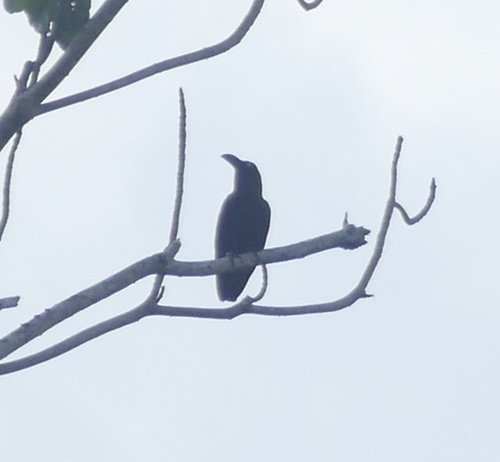
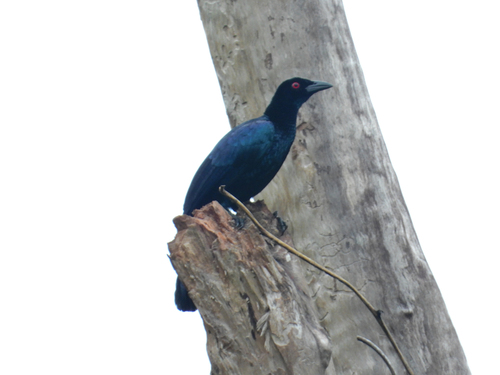
The gray crow (Corvus tristis), formerly known as the bare-faced crow, is about the same size (42–45 cm or 17–18 in in length) as the Eurasian carrion crow (Corvus corone) but has somewhat different proportions and quite atypical feather pigmentation during the juvenile phase for a member of this genus.

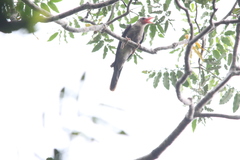
The tail feathers are relatively long and graduated and the legs are relatively short. The overall colouring of the adult bird is black with randomly bleached wing and tail feathers. A large region around the eye is quite bare of feathering and shows pinkish-white skin with the eyes a bluish-white. The bill is unusual too in being very variable, bluish on upper mandible and pinkish-white on the lower in some specimens, while on others the whole bill is pinkish white with a darker tip. The forward pointing nasal bristles so often prominent in other Corvus species are very reduced also.

The juvenile bird by comparison has remarkably pale plumage being light brown to cream, the wings, tail and primaries showing blackish-brown and fawn and the head and underparts often almost white. The species occurs all over the huge island of New Guinea and associated offshore islands in both primary and secondary forest in both lowland and hill forest up to 1,350 m (4,430 ft).

Feeding is both on the ground and in trees taking a very wide range of items. Fruit seems to be very important making up a large percentage of the intake though small animals such as frogs and aquatic insect larvae are taken from shallow water on sand or shingle beds in rivers. When foraging through the trees the birds keep loose, noisy contact with each other and usually number between 4–8 individuals.

The voice is described as a weak sounding 'ka' or a whining 'caw' with other hoarse sounding notes added when excited. Wikipedia →

Sounds

Alarm call0:21

Papua New Guinea · 2025

© Jan-Uwe Schmidt · XC987760 · CC BY-NC-SA 4.0

Call1:15

Papua New Guinea · 2016

© Phil Gregory · XC605483 · CC BY-NC-SA 4.0

Flight call0:13

Papua New Guinea · 2008

© Frank Lambert · XC24663 · CC BY-NC-ND 4.0

Global Distribution

Parks Where Found

# Park Country Daily sighting probability
1 Raja Ampat 🇮🇩 Indonesia
<5%

More parks will be added in future updates.

Before you go

What are the chances of seeing a Gray Crow in Raja Ampat?

Rare

Under 5% of wildlife watchers report a Gray Crow sighting in Raja Ampat on a given day, based on 13 verified sightings from GBIF citizen-science data from 2019 to 2026. It is the 170th most-seen of the 200 birds we can rate there. Over three days the chance rises to under 5%, and over a week to about 10%, if each day is a fresh chance.

When is the best time to see a Gray Crow in Raja Ampat?

June

In that month about 10% of wildlife watchers report a Gray Crow in Raja Ampat on a given day, against under 5% in July to May, the lowest months.

What time of day is best to see a Gray Crow?

Between 6 and 9 am

Across all the parks we cover, that three-hour window holds the most Gray Crow sightings with a recorded time, and about 9 in 10 of them come between 6 am and 6 pm: it is a daytime animal.

Where else can you see a Gray Crow?

Only Raja Ampat, in our data

Raja Ampat is the only park on Wallace's Line with enough records to rate Gray Crow sightings: under 5% of wildlife watchers there report one on a given day.

Which relatives of the Gray Crow live in Raja Ampat?

Same genus: Corvus

The closest relatives of the Gray Crow that you can see in Raja Ampat (genus Corvus, Crows and Ravens) are Torresian Crow (about 50%) and Brown-headed Crow (about 30%), with each one's daily chance of a sighting.

Where does the Gray Crow sighting chance come from?

GBIF citizen-science records

It is estimated from how often the Gray Crow is recorded against all the birds logged in Raja Ampat (13 verified sightings from 2019 to 2026), calibrated against known sighting rates. Figures are rounded to the nearest 10% because citizen-science data supports honest approximations, not decimals, and months with records from fewer than five people show "—". How it works.

← Back to Raja Ampat