




Completed

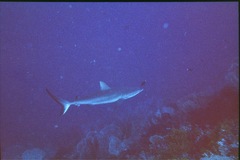
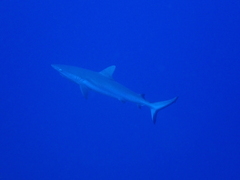
Gray Reef Shark
Carcharhinus amblyrhynchos
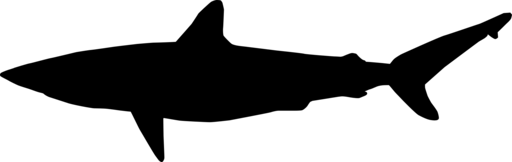
Silhouette: Margot Michaud · PhyloPic
- KingdomAnimalia (Animals)
- PhylumChordata (Chordates)
- ClassElasmobranchii
- OrderCarcharhiniformes (Ground Sharks)
- FamilyCarcharhinidae (Requiem Sharks)
- GenusCarcharhinus (Typical Requiem Sharks)
- SpeciesCarcharhinus amblyrhynchos (Gray Reef Shark)
In 3 days ~70% in a week ~90%
15 Verified sightings at Raja Ampat From 2019 to 2026
39 In all 2 parks
November Best month
☀️ Diurnal When it's spotted
About the Gray Reef Shark
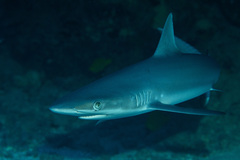
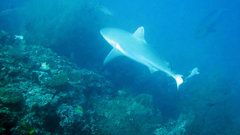
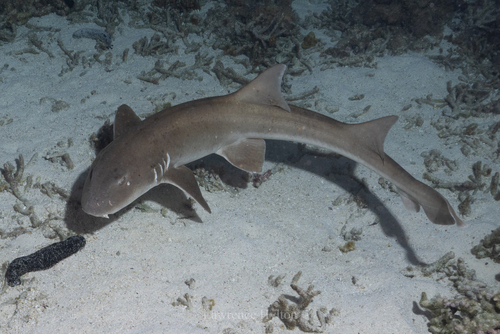
The grey reef shark or gray reef shark (Carcharhinus amblyrhynchos, sometimes misspelled amblyrhynchus or amblyrhinchos) is a species of requiem shark, in the family Carcharhinidae. One of the most common reef sharks in the Indo-Pacific, it is found as far east as Easter Island and as far west as South Africa. This species is most often seen in shallow water near the drop-offs of coral reefs. It has the typical "reef shark" shape, with a broad, round snout and large eyes. It can be distinguished from similar species by the plain or white-tipped first dorsal fin, the dark tips on the other fins, the broad, black rear margin on the tail fin, and the lack of a ridge between the dorsal fins. Most individuals are less than 1.88 m (6.2 ft) long.
The grey reef shark is a fast-swimming, agile predator that feeds primarily on free-swimming bony fishes and cephalopods. Its aggressive demeanor enables it to dominate many other shark species on the reef, despite its moderate size. Many grey reef sharks have a home range on a specific area of the reef, to which they continually return. However, they are social rather than territorial. During the day, these sharks often form groups of five to 20 individuals near coral reef drop-offs, splitting up in the evening as the sharks begin to hunt. Adult females also form groups in very shallow water, where the higher water temperature may accelerate their growth or that of their unborn young. Like other members of its family, the grey reef shark is viviparous, meaning the mother nourishes her embryos through a placental connection. Litters of one to six pups are born every other year.
The grey reef shark was the first shark species known to perform a threat display, a stereotypical behavior warning that it is prepared to attack. The display involves a "hunched" posture with characteristically dropped pectoral fins, and an exaggerated, side-to-side swimming motion. Grey reef sharks often do so if they are followed or cornered by divers to indicate they perceive a threat. This species has been responsible for a number of attacks on humans, and should be treated with caution, especially if it begins to display. It has been caught in many fisheries and is susceptible to local population depletion due to its low reproduction rate and limited dispersal. As a result, the International Union for Conservation of Nature has assessed this species as endangered. Wikipedia →
Recent sightings of Gray Reef Shark in Raja Ampat
LIVEiNaturalistGlobal Distribution
Parks Where Found
| # | Park | Country | Daily sighting probability |
|---|---|---|---|
| 1 | Ningaloo Marine Park | 🇦🇺 Australia | |
| 2 | Raja Ampat | 🇮🇩 Indonesia |
Zoos & Centres Where Found
| # | Zoo / Centre | Country | |
|---|---|---|---|
| 1 | Pairi Daiza | 🇧🇪 Belgium | |
| 2 | Burgers' Ocean | 🇳🇱 Netherlands | |
| 3 | London Zoo | 🇬🇧 United Kingdom | |
| 4 | The Living Planet Aquarium | 🇺🇸 United States | |
| 5 | Oceanopolis | 🇫🇷 France | |
| 6 | Aquarium of the Pacific | 🇺🇸 United States | |
| 7 | Battersea Park Children's Zoo | 🇬🇧 United Kingdom | |
| 8 | Mitchell Park Zoo | 🇿🇦 South Africa | |
| 9 | Marine Life Park | 🇸🇬 Singapore | |
| 10 | North Carolina Aquarium on Roanoke Island | 🇺🇸 United States | |
| 11 | Cairns Aquarium | 🇦🇺 Australia | |
| 12 | Sea Life Sunshine Coast | 🇦🇺 Australia | |
| 13 | Seaquarium du Grau-du-Roi | 🇫🇷 France | |
| 14 | The Deep | 🇬🇧 United Kingdom | |
| 15 | Sea Life Aquarium | 🇺🇸 United States | |
| 16 | Shark Reef at Mandalay Bay | 🇺🇸 United States | |
| 17 | Free Rein Foundation | 🇺🇸 United States | |
| 18 | Maui Ocean Center | 🇺🇸 United States | |
| 19 | Sea Life London Aquarium | 🇬🇧 United Kingdom | |
| 20 | The Lost Chambers aquarium | 🇦🇪 United Arab Emirates |
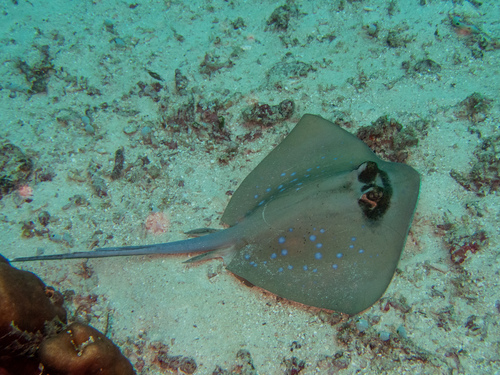
Closest Relatives at Raja Ampat






Before you go
What are the chances of seeing a Gray Reef Shark in Raja Ampat?
Possible
About 30% of wildlife watchers report a Gray Reef Shark sighting in Raja Ampat on a given day, based on 15 verified sightings from GBIF citizen-science data from 2019 to 2026. It is the 10th most-seen of the 12 sharks and rays we can rate there. Over three days the chance rises to about 70%, and over a week to about 90%, if each day is a fresh chance.
When is the best time to see a Gray Reef Shark in Raja Ampat?
July–August and November
In those months about 60% of wildlife watchers report a Gray Reef Shark in Raja Ampat on a given day, against under 5% in February and September–October, the lowest months.
What time of day is best to see a Gray Reef Shark?
Between 8 and 11 am
Across all the parks we cover, that three-hour window holds the most Gray Reef Shark sightings with a recorded time, and about 8 in 10 of them come between 6 am and 6 pm: it is a daytime animal.
Is Raja Ampat the best place to see a Gray Reef Shark?
Among the best
Of the 2 parks where we can rate Gray Reef Shark sightings, Raja Ampat ranks 2nd at about 30%, level with the leaders once rounded. The best odds are in Ningaloo Marine Park (Australia, about 30%).
Where does the Gray Reef Shark sighting chance come from?
GBIF citizen-science records
It is estimated from how often the Gray Reef Shark is recorded against all the sharks and rays logged in Raja Ampat (15 verified sightings from 2019 to 2026), calibrated against known sighting rates. Figures are rounded to the nearest 10% because citizen-science data supports honest approximations, not decimals, and months with records from fewer than five people show "—". How it works.
