



Completed

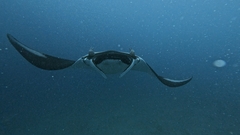
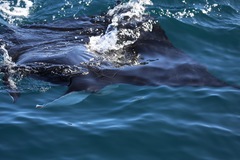
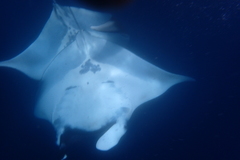

Oceanic Manta Ray
Mobula birostris
Silhouette: Margot Michaud · PhyloPic
- KingdomAnimalia (Animals)
- PhylumChordata (Chordates)
- ClassElasmobranchii
- OrderMyliobatiformes (Stingrays)
- FamilyMyliobatidae (Eagle Rays)
- GenusMobula (Devil Rays)
- SpeciesMobula birostris (Oceanic Manta Ray)
In 3 days ~80% in a week >90%
36 Verified sightings at Raja Ampat From 2019 to 2026
94 In all 2 parks
March Best month
☀️ Diurnal When it's spotted


Completed
About the Oceanic Manta Ray
The giant oceanic manta ray, giant manta ray, oceanic manta ray, or pelagic manta ray (Mobula birostris) is a species of ray in the family Mobulidae and the largest type of ray in the world. It is circumglobal and is typically found in tropical and subtropical waters but can also be found in temperate waters. Until 2017, the species was classified in the genus Manta, along with the smaller reef manta ray (Mobula alfredi). DNA testing revealed that both mantas are closer related to some Mobula species than these are to other Mobula, being claded together. As a result, the two Manta species were absorbed into Mobula to reflect the new classification.
The giant oceanic manta ray has a widespread distribution in tropical and temperate waters worldwide. In the Northern Hemisphere, it has been recorded as far north as southern California and New Jersey in the United States, Aomori Prefecture in Japan, the Sinai Peninsula in Egypt, and the Azores in the northern Atlantic. In the Southern Hemisphere, it occurs as far south as Peru, Uruguay, South Africa, and New Zealand.
It is an ocean-going species and spends most of its life far from land, travelling with the... Wikipedia →
Recent sightings of Oceanic Manta Ray in Raja Ampat
LIVEiNaturalistGlobal Distribution
Parks Where Found
| # | Park | Country | Daily sighting probability |
|---|---|---|---|
| 1 | Raja Ampat | 🇮🇩 Indonesia | |
| 2 | Galápagos Islands | 🇪🇨 Ecuador |
Zoos & Centres Where Found
| # | Zoo / Centre | Country | |
|---|---|---|---|
| 1 | Nausicaà Centre National de la Mer | 🇫🇷 France | |
| 2 | Zoo Atlanta | 🇺🇸 United States | |
| 3 | Georgia Aquarium | 🇺🇸 United States | |
| 4 | Dolphin Encounters | 🇧🇸 Bahamas | |
| 5 | The Dig | 🇧🇸 Bahamas |
Closest Relatives at Raja Ampat






Before you go
What are the chances of seeing an Oceanic Manta Ray in Raja Ampat?
Likely
About 40% of wildlife watchers report an Oceanic Manta Ray sighting in Raja Ampat on a given day, based on 36 verified sightings from GBIF citizen-science data from 2019 to 2026. It is the 7th most-seen of the 12 sharks and rays we can rate there. Over three days the chance rises to about 80%, and over a week to over 90%, if each day is a fresh chance.
When is the best time to see an Oceanic Manta Ray in Raja Ampat?
January and March
In those months about 80% of wildlife watchers report an Oceanic Manta Ray in Raja Ampat on a given day, against about 10% in May to September, the lowest months.
What time of day is best to see an Oceanic Manta Ray?
Between 9 am and noon
Across all the parks we cover, that three-hour window holds the most Oceanic Manta Ray sightings with a recorded time, and about 8 in 10 of them come between 6 am and 6 pm: it is a daytime animal.
Is Raja Ampat the best place to see an Oceanic Manta Ray?
Yes
Of the 2 parks where we can rate Oceanic Manta Ray sightings, Raja Ampat has the highest daily chance: about 40%. Next come Galápagos Islands (Ecuador, about 30%).
Which relatives of the Oceanic Manta Ray live in Raja Ampat?
Same genus: Mobula
The closest relatives of the Oceanic Manta Ray that you can see in Raja Ampat (genus Mobula, Devil Rays) are Reef Manta Ray (about 70%) and Ox Ray (about 20%), with each one's daily chance of a sighting.
Where does the Oceanic Manta Ray sighting chance come from?
GBIF citizen-science records
It is estimated from how often the Oceanic Manta Ray is recorded against all the sharks and rays logged in Raja Ampat (36 verified sightings from 2019 to 2026), calibrated against known sighting rates. Figures are rounded to the nearest 10% because citizen-science data supports honest approximations, not decimals, and months with records from fewer than five people show "—". How it works.
