Salvin's Albatross

Salvin's Albatross

Thalassarche salvini

Silhouette: Edwin Price · PhyloPic

LCNTVUVulnerableENCR
Daily sighting probability <5% · Rare
at Rakiura National Park

In 3 days ~10% in a week ~30%

94 Verified sightings at Rakiura National Park From 2019 to 2026
109 In all 2 parks
November Best month
☀️ Diurnal When it's spotted

About the Salvin's Albatross

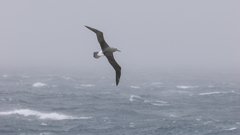
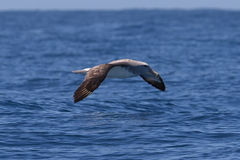
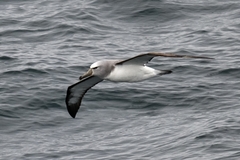
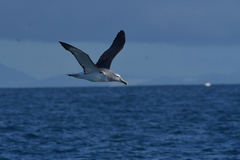
Salvin's albatross (Thalassarche salvini) or Salvin's mollymawk, is a large seabird that breeds mainly on the Bounty Islands of New Zealand, with scant amounts on islands across the Southern Ocean. A medium-sized mollymawk, it was long considered to be a subspecies of the shy albatross.

Mollymawks are a type of albatross that belong to the family Diomedeidae in the order Procellariiformes, along with shearwaters, fulmars, storm petrels, and diving petrels. They share certain identifying features. First, they have nasal passages that attach to the upper bill called naricorns. Although the nostrils on the albatross are on the sides of the bill, unlike other tubenosed seabirds. The bills of Procellariiformes are also unique in that they are split into between seven and nine horny plates. They produce a stomach oil made up of wax esters and triglycerides that is stored in the proventriculus. This is used against predators as well as an energy rich food source for chicks and for the adults during their long flights. Finally, they have a salt gland that is situated above the nasal passage and helps desalinate their bodies, due to the high amount of ocean water that they imbibe... Wikipedia →

Sounds

Call0:12

New Zealand · 2016

© Dan Lane · XC345386 · CC BY-NC-SA 4.0

Global Distribution

Parks Where Found

# Park Country Daily sighting probability
1 Rakiura National Park 🇳🇿 New Zealand
<5%
2 Fiordland National Park 🇳🇿 New Zealand
<5%

Before you go

What are the chances of seeing a Salvin's Albatross in Rakiura National Park?

Rare

Under 5% of wildlife watchers report a Salvin's Albatross sighting in Rakiura National Park on a given day, based on 94 verified sightings from GBIF citizen-science data from 2019 to 2026. It is the 51st most-seen of the 80 birds we can rate there. Over three days the chance rises to about 10%, and over a week to about 30%, if each day is a fresh chance.

When is the best time to see a Salvin's Albatross in Rakiura National Park?

January and November

In those months about 10% of wildlife watchers report a Salvin's Albatross in Rakiura National Park on a given day, against under 5% in February–October and December, the lowest months.

What time of day is best to see a Salvin's Albatross?

Between 8 and 11 am

Across all the parks we cover, that three-hour window holds the most Salvin's Albatross sightings with a recorded time, and about 9 in 10 of them come between 6 am and 6 pm: it is a daytime animal.

Is Rakiura National Park the best place to see a Salvin's Albatross?

Yes

Of the 2 parks where we can rate Salvin's Albatross sightings, Rakiura National Park has the highest daily chance: under 5%. Next come Fiordland National Park (New Zealand, under 5%).

Which relatives of the Salvin's Albatross live in Rakiura National Park?

Same genus: Thalassarche

The closest relatives of the Salvin's Albatross that you can see in Rakiura National Park (genus Thalassarche, Mollymawks) are Shy Mollymawk (about 40%) and Buller's Mollymawk (about 10%), with each one's daily chance of a sighting.

Where does the Salvin's Albatross sighting chance come from?

GBIF citizen-science records

It is estimated from how often the Salvin's Albatross is recorded against all the birds logged in Rakiura National Park (94 verified sightings from 2019 to 2026), calibrated against known sighting rates. Figures are rounded to the nearest 10% because citizen-science data supports honest approximations, not decimals, and months with records from fewer than five people show "—". How it works.

← Back to Rakiura National Park