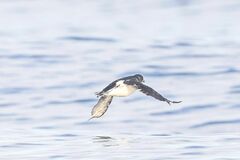
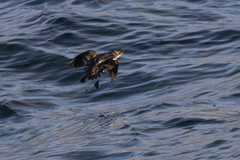
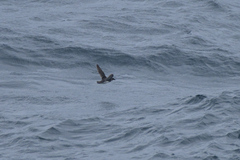
Common Diving-Petrel

Common Diving-Petrel

Pelecanoides urinatrix

Silhouette: Louis Ranjard · PhyloPic

LCLeast ConcernNTVUENCR
Daily sighting probability ~10% · With luck
at Rakiura National Park

In 3 days ~20% in a week ~30%

86 Verified sightings at Rakiura National Park From 2019 to 2026
100 In all 3 parks
November Best month
☀️ Diurnal When it's spotted

About the Common Diving-Petrel

The common diving petrel (Pelecanoides urinatrix), also known as the smaller diving petrel or simply the diving petrel, is a diving petrel, one of four very similar auk-like small petrels of the southern oceans. It is native to South Atlantic islands and islands of the subantarctic southern Indian Ocean, islands and islets off New Zealand and south-eastern Australian islands.

The common diving petrel was formally described in 1777 by the German naturalist Johann Reinhold Forster. He placed it with the other petrels in the genus Procellaria and coined the binomial name Procellaria tridactyla. Gmelin based his description on the "diving petrel" that had been described in 1785 by the English ornithologist John Latham in the second volume of his A General Synopsis of Birds. Latham reported that they were found in great numbers in Queen Charlotte Sound at the northern end of South Island, New Zealand. The common diving petrel is now one of four petrels placed in the genus Pelecanoides that was introduced in 1799 by the French naturalist Bernard Germain de Lacépède. The genus name, Pelecanoides, means "Pelican-resembling", which was assigned to the diving petrels on account... Wikipedia →

Sounds

Call0:08

New Zealand · 2015

© Johannes Fischer · XC295663 · CC BY-NC-SA 4.0

Flight call0:32

New Zealand · 2024

© David Boyle · XC956324 · CC BY-NC-SA 4.0

Song0:57

France · 2020

© Hichem MACHOUK · XC622687 · CC BY-NC-SA 4.0

Global Distribution

Parks Where Found

# Park Country Daily sighting probability
1 Rakiura National Park 🇳🇿 New Zealand
~10%
2 Wilsons Promontory National Park 🇦🇺 Australia
<5%
3 Fiordland National Park 🇳🇿 New Zealand
<5%

Before you go

What are the chances of seeing a Common Diving-Petrel in Rakiura National Park?

With luck

About 10% of wildlife watchers report a Common Diving-Petrel sighting in Rakiura National Park on a given day, based on 86 verified sightings from GBIF citizen-science data from 2019 to 2026. It is the 49th most-seen of the 80 birds we can rate there. Over three days the chance rises to about 20%, and over a week to about 30%, if each day is a fresh chance.

When is the best time to see a Common Diving-Petrel in Rakiura National Park?

November and December

In those months about 10% of wildlife watchers report a Common Diving-Petrel in Rakiura National Park on a given day, against under 5% in January to October, the lowest months.

What time of day is best to see a Common Diving-Petrel?

Between 10 am and 1 pm

Across all the parks we cover, that three-hour window holds the most Common Diving-Petrel sightings with a recorded time, and about 8 in 10 of them come between 6 am and 6 pm: it is a daytime animal.

Is Rakiura National Park the best place to see a Common Diving-Petrel?

Yes

Of the 3 parks where we can rate Common Diving-Petrel sightings, Rakiura National Park has the highest daily chance: about 10%. Next come Wilsons Promontory National Park (Australia, under 5%) and Fiordland National Park (New Zealand, under 5%).

Which relatives of the Common Diving-Petrel live in Rakiura National Park?

Same order: Procellariiformes

The closest relatives of the Common Diving-Petrel that you can see in Rakiura National Park (order Procellariiformes, Tubenoses) are Shy Mollymawk (about 40%), Sooty Shearwater (about 10%) and Buller's Mollymawk (about 10%), with each one's daily chance of a sighting.

Where does the Common Diving-Petrel sighting chance come from?

GBIF citizen-science records

It is estimated from how often the Common Diving-Petrel is recorded against all the birds logged in Rakiura National Park (86 verified sightings from 2019 to 2026), calibrated against known sighting rates. Figures are rounded to the nearest 10% because citizen-science data supports honest approximations, not decimals, and months with records from fewer than five people show "—". How it works.

← Back to Rakiura National Park