
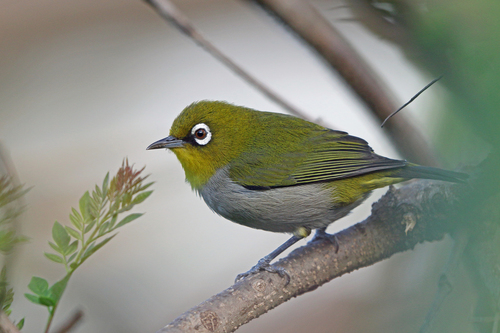
Collared Nightjar

Collared Nightjar

Gactornis enarratus

Silhouette: Sheatherius · PhyloPic

LCNTNear ThreatenedVUENCR Endemic
Daily sighting probability ~10% · With luck
at Ranomafana National Park

In 3 days ~20% in a week ~40%

57 Verified sightings at Ranomafana National Park From 2019 to 2026
83 In all 2 parks
July Best month
☀️ Diurnal When it's spotted

About the Collared Nightjar

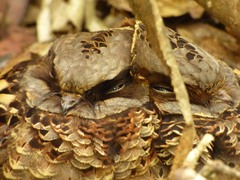
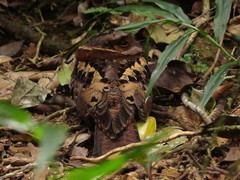
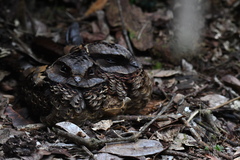
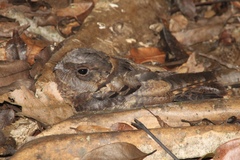
The collared nightjar (Gactornis enarratus) is a species of nightjar in the family Caprimulgidae. It is endemic to Madagascar. Its natural habitats are subtropical or tropical moist lowland forest. The collared nightjar was formally described in 1871 by the English zoologist George Gray with the binomial name Caprimulgus enarratus based on a specimen collected in Madagascar. The specific epithet is Latin meaning "explained in detail".

A molecular phylogenetic study by Kin-Lan Han and collaborators published in 2010 found that the collared nightjar was not closely related to any other species of nightjar. The authors therefore introduced a new genus Gactornis to accommodate the species. The genus name combines the four single letter abbreviations for the DNA nucleotides (G, A, C, T for guanine, adenine, cytosine, thymine) and the Ancient Greek word ornis meaning "bird". The species is monotypic: no subspecies are recognised.

Collared nightjars are 24cm long, with females weighing around 57 g (2.0 oz) and males around 48 g (1.7 oz). Otherwise sexes are similar. Forages for insects by hawking both above and below forest canopy... Wikipedia →

Global Distribution

Parks Where Found

# Park Country Daily sighting probability
1 Ranomafana National Park 🇲🇬 Madagascar
~10%
2 Mantadia National Park 🇲🇬 Madagascar
<5%

Closest Relatives at Ranomafana National Park

No species of the same family or order lives in Ranomafana National Park, so these are its closest relatives here: other birds.

Before you go

What are the chances of seeing a Collared Nightjar in Ranomafana National Park?

With luck

About 10% of wildlife watchers report a Collared Nightjar sighting in Ranomafana National Park on a given day, based on 57 verified sightings from GBIF citizen-science data from 2019 to 2026. It is the 67th most-seen of the 102 birds we can rate there. Over three days the chance rises to about 20%, and over a week to about 40%, if each day is a fresh chance.

When is the best time to see a Collared Nightjar in Ranomafana National Park?

July and October–November

In those months about 10% of wildlife watchers report a Collared Nightjar in Ranomafana National Park on a given day, against under 5% in February–May, August–September and December, the lowest months. January and June have too few records to rate.

What time of day is best to see a Collared Nightjar?

Between 9 am and noon

Across all the parks we cover, that three-hour window holds the most Collared Nightjar sightings with a recorded time, and about 8 in 10 of them come between 6 am and 6 pm: it is a daytime animal.

Is Ranomafana National Park the best place to see a Collared Nightjar?

Yes

Of the 2 parks where we can rate Collared Nightjar sightings, Ranomafana National Park has the highest daily chance: about 10%. Next come Mantadia National Park (Madagascar, under 5%).

Where does the Collared Nightjar sighting chance come from?

GBIF citizen-science records

It is estimated from how often the Collared Nightjar is recorded against all the birds logged in Ranomafana National Park (57 verified sightings from 2019 to 2026), calibrated against known sighting rates. Figures are rounded to the nearest 10% because citizen-science data supports honest approximations, not decimals, and months with records from fewer than five people show "—". How it works.

← Back to Ranomafana National Park