
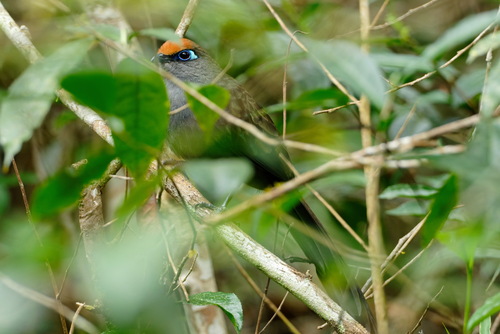
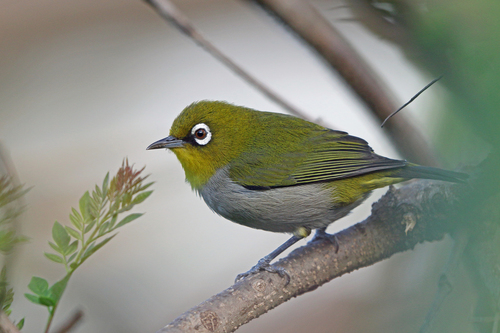
Madagascar Coucal

Madagascar Coucal

Centropus toulou

Silhouette: Nicolas Huet le Jeune and Jean-Gabriel Prêtre (vectorized by T. Michael Keesey) · PhyloPic

LCLeast ConcernNTVUENCR
Daily sighting probability ~40% · Likely
at Ranomafana National Park

In 3 days ~70% in a week >90%

307 Verified sightings at Ranomafana National Park From 2019 to 2026
1,178 In all 4 parks
October Best month
☀️ Diurnal When it's spotted

About the Madagascar Coucal

The Malagasy coucal or Madagascar coucal (Centropus toulou) is a species of cuckoo in the family Cuculidae. It is found in Madagascar and in the Seychelles, where it occurs on Aldabra and was formerly present on Assumption Island and Cosmoledo. Its natural habitats are dense vegetation in subtropical or tropical moist lowland forests, mangrove forests, rough grassland, marshes and reedbeds.

The Malagasy coucal is a medium-sized bird with the adult length being in the range 40 to 50 cm (16 to 20 in). The male is smaller than the female, weighing about 140 g (5 oz) to the female's 190 g (7 oz), but otherwise the sexes are similar in appearance. In breeding plumage the bird is black, glossed with green, except for the tips of its wings which are brown and its mid and lower back which are reddish brown. In non-breeding plumage the head, neck and throat are brown streaked with cream, the wings reddish brown, the uppertail coverts black with some pale barring, the tail blackish brown with faint barring and the belly blackish brown. The iris is red, the bill black in breeding plumage and pale in non-breeding plumage, and the feet are grey to black. The call is a descending... Wikipedia →

Sounds

Duet1:18

Madagascar · 2025

© Joost van Bruggen · XC1079463 · CC BY-NC-ND 4.0

Call0:18

Madagascar · 2021

© Ken Behrens · XC625285 · CC BY-NC-SA 4.0

Song0:07

Madagascar · 2017

© Ross Gallardy · XC418942 · CC BY-NC-SA 4.0

Global Distribution

Parks Where Found

# Park Country Daily sighting probability
1 Berenty Reserve 🇲🇬 Madagascar
~80%
2 Ankarafantsika National Park 🇲🇬 Madagascar
~60%
3 Mantadia National Park 🇲🇬 Madagascar
~50%
4 Ranomafana National Park 🇲🇬 Madagascar
~40%

Cities Where Found

# City Country Daily sighting probability
1 Antananarivo 🇲🇬 Madagascar
~40%

Before you go

What are the chances of seeing a Madagascar Coucal in Ranomafana National Park?

Likely

About 40% of wildlife watchers report a Madagascar Coucal sighting in Ranomafana National Park on a given day, based on 307 verified sightings from GBIF citizen-science data from 2019 to 2026. It is the 33rd most-seen of the 102 birds we can rate there. Over three days the chance rises to about 70%, and over a week to over 90%, if each day is a fresh chance.

When is the best time to see a Madagascar Coucal in Ranomafana National Park?

October

In that month about 50% of wildlife watchers report a Madagascar Coucal in Ranomafana National Park on a given day, against about 10% in March, the lowest month. That is one of Ranomafana National Park's driest months, with about 130 mm of rain against 450 mm in January. January and June have too few records to rate.

What time of day is best to see a Madagascar Coucal?

Between 10 am and 1 pm

Across all the parks we cover, that three-hour window holds the most Madagascar Coucal sightings with a recorded time, and about 7 in 10 of them come between 6 am and 6 pm: it is a daytime animal.

Which relatives of the Madagascar Coucal live in Ranomafana National Park?

Same family: Cuculidae

The closest relatives of the Madagascar Coucal that you can see in Ranomafana National Park (family Cuculidae, Cuckoos) are Madagascar Cuckoo (about 70%), Blue Coua (about 60%) and Red-fronted Coua (about 40%), with each one's daily chance of a sighting.

Where does the Madagascar Coucal sighting chance come from?

GBIF citizen-science records

It is estimated from how often the Madagascar Coucal is recorded against all the birds logged in Ranomafana National Park (307 verified sightings from 2019 to 2026), calibrated against known sighting rates. Figures are rounded to the nearest 10% because citizen-science data supports honest approximations, not decimals, and months with records from fewer than five people show "—". How it works.

← Back to Ranomafana National Park