

Madagascar Wagtail

Madagascar Wagtail

Motacilla flaviventris

Silhouette: Martin Bulla, based on Ren Hathway's illustration · PhyloPic

LCLeast ConcernNTVUENCR Endemic
Daily sighting probability ~60% · Likely
at Ranomafana National Park

In 3 days ~90% in a week >90%

567 Verified sightings at Ranomafana National Park From 2019 to 2026
862 In all 2 parks
May Best month
☀️ Diurnal When it's spotted

About the Madagascar Wagtail

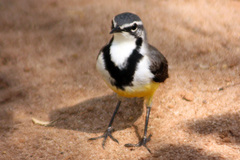
The Madagascar wagtail (Motacilla flaviventris) is a species of wagtail in the family Motacillidae. It is endemic to Madagascar. The Madagascar wagtail is a large, elegant and slender wagtail which has grey upperparts, a white breast and a yellow belly. There is a black band across the breast and the long tail has a dark centre and white outer tail feathers. There is short white supercilium. Juveniles have a less conspicuous breast band and a fainter supercilium. The body length is 19 cm (7.5 in).

The Madagascar wagtail is endemic to Madagascar where it is found throughout the island. It is common and widespread and most common in the east of the island and on the central plateau; it is less numerous in the north and west, and rare in the south.

The Madagascar wagtail is typically found around water, such as rivers, lakes and seashores, also in open areas such a rice paddies and gardens. It is found from sea level up to 2,500 metres (8,200 ft) above sea level. The diet of the Madagascar wagtail mainly consists of small invertebrates, notably insects and spiders. It forages by walking or running on the ground... Wikipedia →

Sounds

Song0:52

Madagascar · 2013

© Albert Lastukhin · XC978992 · CC BY-NC-ND 4.0

Call0:19

Madagascar · 2018

© Toby Esplin · XC445762 · CC BY-NC-SA 4.0

Song0:35

Madagascar · 2012

© Peter Boesman · XC762835 · CC BY-NC-ND 4.0

Global Distribution

Parks Where Found

# Park Country Daily sighting probability
1 Ranomafana National Park 🇲🇬 Madagascar
~60%
2 Mantadia National Park 🇲🇬 Madagascar
~60%

Cities Where Found

# City Country Daily sighting probability
1 Antananarivo 🇲🇬 Madagascar
~40%

Before you go

What are the chances of seeing a Madagascar Wagtail in Ranomafana National Park?

Likely

About 60% of wildlife watchers report a Madagascar Wagtail sighting in Ranomafana National Park on a given day, based on 567 verified sightings from GBIF citizen-science data from 2019 to 2026. It is the 14th most-seen of the 102 birds we can rate there. Over three days the chance rises to about 90%, and over a week to over 90%, if each day is a fresh chance.

When is the best time to see a Madagascar Wagtail in Ranomafana National Park?

May

In that month about 70% of wildlife watchers report a Madagascar Wagtail in Ranomafana National Park on a given day, against about 40% in February, the lowest month. That is one of Ranomafana National Park's driest months, with about 120 mm of rain against 450 mm in January. January and June have too few records to rate.

What time of day is best to see a Madagascar Wagtail?

Between 11 am and 2 pm

Across all the parks we cover, that three-hour window holds the most Madagascar Wagtail sightings with a recorded time, and about 8 in 10 of them come between 6 am and 6 pm: it is a daytime animal.

Is Ranomafana National Park the best place to see a Madagascar Wagtail?

Yes

Of the 2 parks where we can rate Madagascar Wagtail sightings, Ranomafana National Park has the highest daily chance: about 60%. Next come Mantadia National Park (Madagascar, about 60%).

Which relatives of the Madagascar Wagtail live in Ranomafana National Park?

Same order: Passeriformes

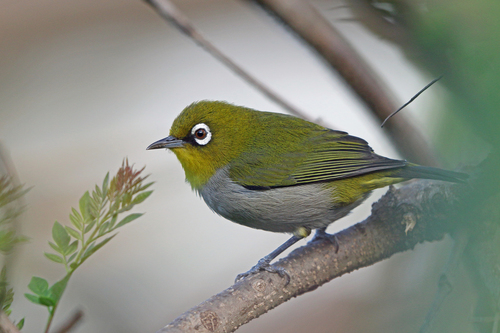
The closest relatives of the Madagascar Wagtail that you can see in Ranomafana National Park (order Passeriformes, Perching Birds) are Madagascar Bulbul (about 80%), Souimanga Sunbird (about 70%) and Madagascar White-eye (about 70%), with each one's daily chance of a sighting.

Where does the Madagascar Wagtail sighting chance come from?

GBIF citizen-science records

It is estimated from how often the Madagascar Wagtail is recorded against all the birds logged in Ranomafana National Park (567 verified sightings from 2019 to 2026), calibrated against known sighting rates. Figures are rounded to the nearest 10% because citizen-science data supports honest approximations, not decimals, and months with records from fewer than five people show "—". How it works.

← Back to Ranomafana National Park