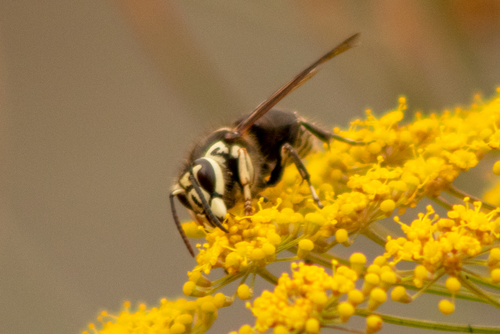
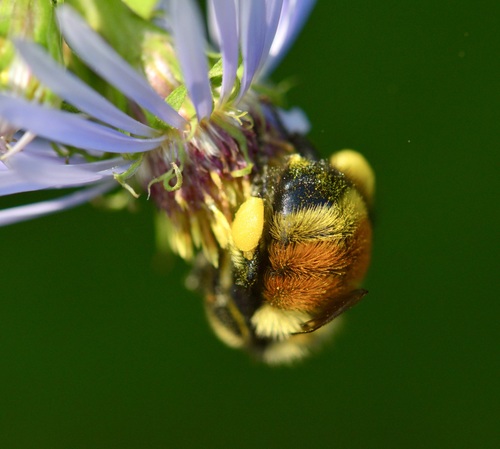
Tricolored Bumble Bee

Tricolored Bumble Bee

Bombus ternarius

Daily sighting probability ~30% · Possible
at Riding Mountain National Park

In 3 days ~70% in a week ~90%

98 Verified sightings at Riding Mountain National Park From 2019 to 2026
854 In all 7 parks
August Best month
☀️ Diurnal When it's spotted

About the Tricolored Bumble Bee

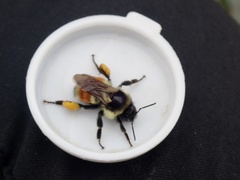
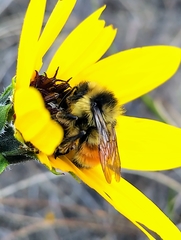
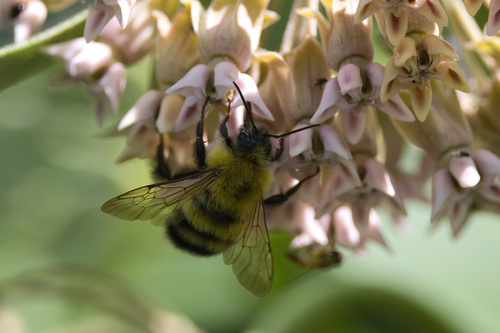
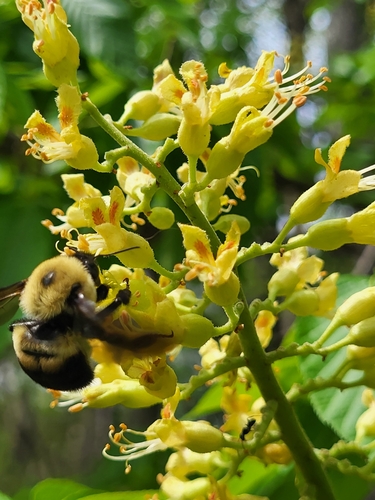
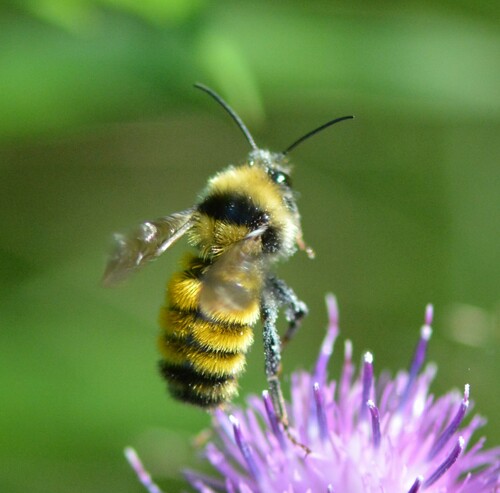
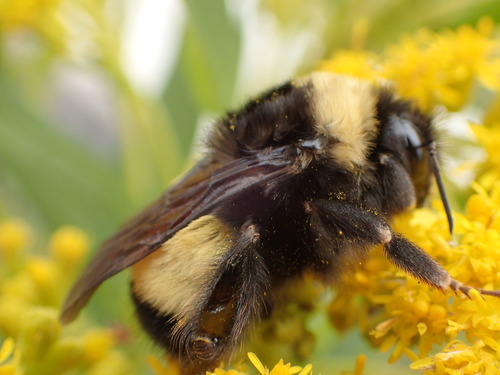
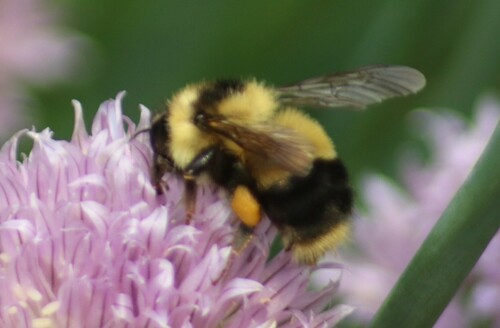
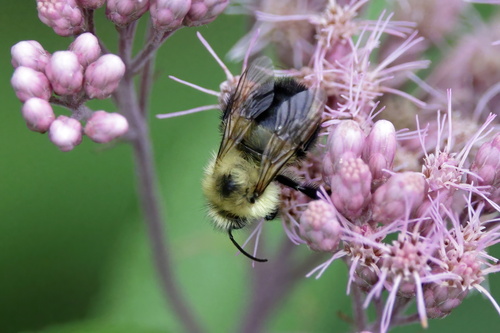
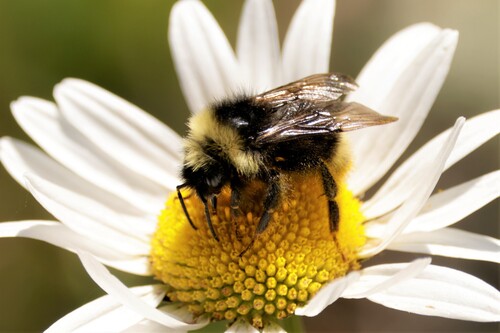
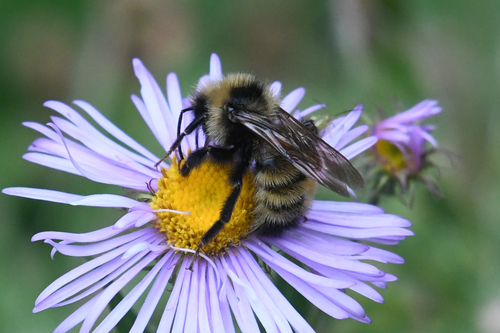
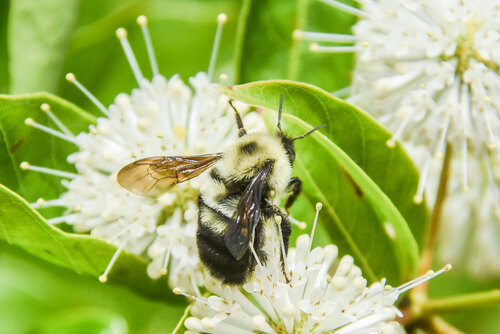
Bombus ternarius, commonly known as the orange-belted bumblebee or tricolored bumblebee, is a yellow, orange and black bumblebee. It is a ground-nesting social insect whose colony cycle lasts only one season, common throughout the northeastern United States and much of Canada. The orange-belted bumblebee forages on Rubus, goldenrods, Vaccinium, and milkweeds found throughout the colony's range. Like many other members of the genus, Bombus ternarius exhibits complex social structure with a reproductive queen caste and a multitude of sister workers with labor such as foraging, nursing, and nest maintenance divided among the subordinates.

B. ternarius is a small, fairly slender bumblebee. The queen is 17–19 mm (0.67–0.75 in) long and the breadth of the abdomen is 8.5–9 mm (0.33–0.35 in). The workers are 8–13 mm (0.31–0.51 in), and the drones are 9.5–13 mm (0.37–0.51 in) in length. Both the worker and the drone have abdomens about 4.5–5.5 mm (0.18–0.22 in) in breadth.

The queen and workers have black heads, with a few pale yellow hairs. The anterior and posterior thorax and the first and fourth abdominal segments are yellow, abdominal segments 2 to 3 are orange, and the... Wikipedia →
Global Distribution

Parks Where Found

# Park Country Daily sighting probability
1 Cape Breton Highlands National Park 🇨🇦 Canada
~50%
2 Acadia National Park 🇺🇸 United States
~40%
3 Voyageurs National Park 🇺🇸 United States
~40%
4 Riding Mountain National Park 🇨🇦 Canada
~30%
5 Elk Island National Park 🇨🇦 Canada
~30%
6 Gros Morne National Park 🇨🇦 Canada
~30%
7 Jasper National Park 🇨🇦 Canada
~10%

Cities Where Found

# City Country Daily sighting probability
1 Edmonton 🇨🇦 Canada
~20%
2 Calgary 🇨🇦 Canada
~10%
3 Montreal 🇨🇦 Canada
~10%
4 Minneapolis [Saint Paul] 🇺🇸 United States
<5%

Before you go

What are the chances of seeing a Tricolored Bumble Bee in Riding Mountain National Park?

Possible

About 30% of wildlife watchers report a Tricolored Bumble Bee sighting in Riding Mountain National Park on a given day, based on 98 verified sightings from GBIF citizen-science data from 2019 to 2026. It is the most-seen of the 104 insects we can rate there. Over three days the chance rises to about 70%, and over a week to about 90%, if each day is a fresh chance.

When is the best time to see a Tricolored Bumble Bee in Riding Mountain National Park?

July to September

In those months about 40% of wildlife watchers report a Tricolored Bumble Bee in Riding Mountain National Park on a given day, against under 5% in February–March and November–December, the lowest months.

What time of day is best to see a Tricolored Bumble Bee?

Between 11 am and 2 pm

Across all the parks we cover, that three-hour window holds the most Tricolored Bumble Bee sightings with a recorded time, and about 9 in 10 of them come between 6 am and 6 pm: it is a daytime animal.

Which relatives of the Tricolored Bumble Bee live in Riding Mountain National Park?

Same genus: Bombus

The closest relatives of the Tricolored Bumble Bee that you can see in Riding Mountain National Park (genus Bombus, Bumble Bees) are Perplexing Bumble Bee (about 20%), Nevada Bumble Bee (about 20%) and Brown-Belted Bumble Bee (about 20%), with each one's daily chance of a sighting.

Where does the Tricolored Bumble Bee sighting chance come from?

GBIF citizen-science records

It is estimated from how often the Tricolored Bumble Bee is recorded against all the insects logged in Riding Mountain National Park (98 verified sightings from 2019 to 2026), calibrated against known sighting rates. Figures are rounded to the nearest 10% because citizen-science data supports honest approximations, not decimals, and months with records from fewer than five people show "—". How it works.

← Back to Riding Mountain National Park