Teddy Bear Bee
Daily sighting probability ~10% · With luck
at Royal National Park

In 3 days ~20% in a week ~50%

10 Verified sightings at Royal National Park From 2019 to 2026
23 In all 3 parks
January Best month
☀️ Diurnal When it's spotted

About the Teddy Bear Bee

Amegilla bombiformis is an Australian native bee in the family Apidae. It is one of several hairy bee species generally referred to as teddy bear bees due to their fuzzy appearance. It was originally described by F. Smith in 1854 as Saropoda bombiformis from a collection near the Richmond River in New South Wales, before being reclassified in the genus Amegilla in 1965. Its specific epithet bombiformis is Latin for "form of a bumblebee".

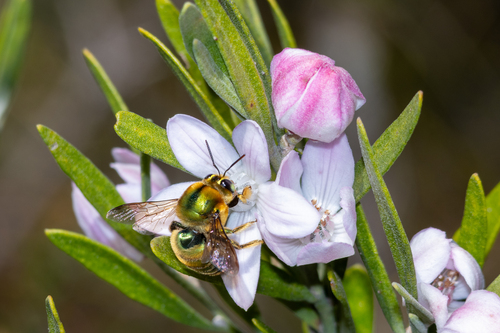
Amegilla bombiformis is a stocky bee which resembles a bumblebee in shape, and is covered in orange-brown fur. The abdomen has several dark hairless bands, seven in the case of males, six for females. It is similar in size to a European honeybee.

A. bombiformis has been recorded visiting Abelia, Buddleja, and blue flax lily (Dianella caerulea) flowers in the garden; males rest overnight attached to plant stems. They are found in eastern Australia, from Queensland through New South Wales and into Victoria, and as well as New Guinea and the Aru Islands to the north.

The nest consists of several urn-shaped cells at the end of a 10 cm (4 in) long burrow, located in soil or... Wikipedia →

Global Distribution

Parks Where Found

# Park Country Daily sighting probability
1 Royal National Park 🇦🇺 Australia
~10%
2 Springbrook National Park 🇦🇺 Australia
~10%
3 Blue Mountains National Park 🇦🇺 Australia
<5%

Cities Where Found

# City Country Daily sighting probability
1 Sydney 🇦🇺 Australia
~10%
2 Brisbane 🇦🇺 Australia
~10%

Before you go

What are the chances of seeing a Teddy Bear Bee in Royal National Park?

With luck

About 10% of wildlife watchers report a Teddy Bear Bee sighting in Royal National Park on a given day, based on 10 verified sightings from GBIF citizen-science data from 2019 to 2026. It is the 83rd most-seen of the 175 insects we can rate there. Over three days the chance rises to about 20%, and over a week to about 50%, if each day is a fresh chance.

When is the best time to see a Teddy Bear Bee in Royal National Park?

January

In that month about 20% of wildlife watchers report a Teddy Bear Bee in Royal National Park on a given day, against under 5% in May to December, the lowest months.

What time of day is best to see a Teddy Bear Bee?

Between 9 am and noon

Across all the parks we cover, that three-hour window holds the most Teddy Bear Bee sightings with a recorded time, and about 9 in 10 of them come between 6 am and 6 pm: it is a daytime animal.

Is Royal National Park the best place to see a Teddy Bear Bee?

Yes

Of the 3 parks where we can rate Teddy Bear Bee sightings, Royal National Park has the highest daily chance: about 10%. Next come Springbrook National Park (Australia, about 10%) and Blue Mountains National Park (Australia, under 5%).

Which relatives of the Teddy Bear Bee live in Royal National Park?

Same family: Apidae

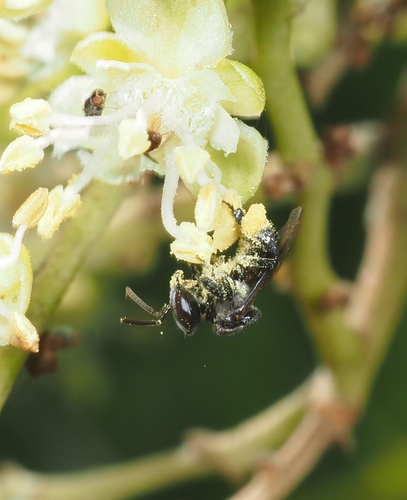
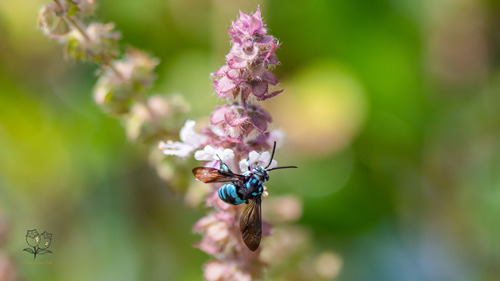
The closest relatives of the Teddy Bear Bee that you can see in Royal National Park (family Apidae, Honey Bees, Bumble Bees, and Allies) are Charcoal Stingless Bee (about 10%), Golden-Green Carpenter Bee (about 10%) and Neon Cuckoo Bee (about 10%), with each one's daily chance of a sighting.

Where does the Teddy Bear Bee sighting chance come from?

GBIF citizen-science records

It is estimated from how often the Teddy Bear Bee is recorded against all the insects logged in Royal National Park (10 verified sightings from 2019 to 2026), calibrated against known sighting rates. Figures are rounded to the nearest 10% because citizen-science data supports honest approximations, not decimals, and months with records from fewer than five people show "—". How it works.

← Back to Royal National Park