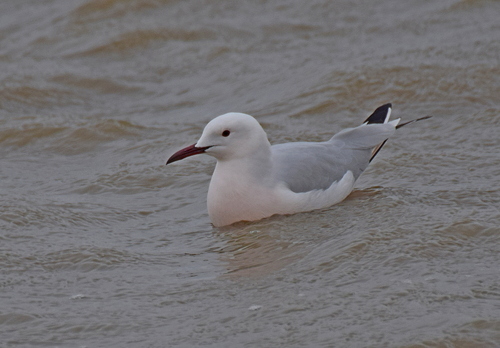
Senegal Thick-knee

Senegal Thick-knee

Burhinus senegalensis

Silhouette: Auckland Museum · PhyloPic

LCLeast ConcernNTVUENCR
Daily sighting probability ~30% · Possible
at Saloum Delta National Park

In 3 days ~70% in a week ~90%

15 Verified sightings at Saloum Delta National Park From 2019 to 2026
833 In all 10 parks
February Best month
☀️ Diurnal When it's spotted

About the Senegal Thick-knee

The Senegal thick-knee (Burhinus senegalensis) is a stone-curlew, a group of waders in the family Burhinidae. Their vernacular scientific name refers to the prominent joints in the long yellow or greenish legs. It is a resident breeder in Africa between the Sahara and the equator, and in the Nile valley.

Senegal thick-knees are medium-large waders with strong black and yellow black bills, large yellow eyes — which give them a reptilian appearance — and cryptic plumage. They are similar but slightly smaller than the Eurasian stone-curlew, which winters in Africa. The long dark bill, single black bar on the folded wing, and darker cheek stripe are distinctions from the European species. Senegal thick-knee is striking in flight, with a broad white wing bar.

This species has a preference for dry open habitats with some bare ground, preferably near water. It lays two blotchy light brown eggs on a ground scrape. It is most active at dawn and dusk. The song is a loud pi-pi-pi-pi-pi-pi-pi.

Food is insects, crustaceans and other invertebrates. It will also take other small prey. The field characters...

Wikipedia →

Sounds

Call0:16

Ethiopia · 2026

© He Wenjin/文进 · XC1073895 · CC BY-NC-SA 4.0

Song0:42

Senegal · 2024

© Frank Lambert · XC1041324 · CC BY-NC-ND 4.0

Nocturnal flight call0:09

Senegal · 2023

© Christian Kerihuel · XC780487 · CC BY-NC-SA 4.0

Global Distribution

Parks Where Found

# Park Country Daily sighting probability
1 Niokolo-Koba National Park 🇸🇳 Senegal
~50%
2 Mole National Park 🇬🇭 Ghana
~40%
3 Djoudj National Bird Sanctuary 🇸🇳 Senegal
~40%
4 Saloum Delta National Park 🇸🇳 Senegal
~30%
5 Chinko Conservation Area 🇨🇫 Central African Republic
~20%
6 Murchison Falls National Park 🇺🇬 Uganda
~20%
7 Awash National Park 🇪🇹 Ethiopia
~10%
8 Virunga National Park 🇨🇩 Democratic Republic of the Congo
<5%
9 Lake Mburo National Park 🇺🇬 Uganda
<5%
10 Queen Elizabeth National Park 🇺🇬 Uganda
<5%

Cities Where Found

# City Country Daily sighting probability
1 Accra 🇬🇭 Ghana
~40%
2 Serrekunda 🇬🇲 Gambia
~30%
3 Dakar 🇸🇳 Senegal
~30%
4 Cairo 🇪🇬 Egypt
~10%
5 Luxor 🇪🇬 Egypt
~10%
6 Lagos 🇳🇬 Nigeria
~10%
7 Abuja 🇳🇬 Nigeria
<5%

Before you go

What are the chances of seeing a Senegal Thick-knee in Saloum Delta National Park?

Possible

About 30% of wildlife watchers report a Senegal Thick-knee sighting in Saloum Delta National Park on a given day, based on 15 verified sightings from GBIF citizen-science data from 2019 to 2026. It is the 41st most-seen of the 70 birds we can rate there. Over three days the chance rises to about 70%, and over a week to about 90%, if each day is a fresh chance.

What time of day is best to see a Senegal Thick-knee?

Between 10 am and 1 pm

Across all the parks we cover, that three-hour window holds the most Senegal Thick-knee sightings with a recorded time, and about 8 in 10 of them come between 6 am and 6 pm: it is a daytime animal.

Which relatives of the Senegal Thick-knee live in Saloum Delta National Park?

Same order: Charadriiformes

The closest relatives of the Senegal Thick-knee that you can see in Saloum Delta National Park (order Charadriiformes, Shorebirds and Allies) are Caspian Tern (about 70%), Grey-hooded Gull (about 70%) and Whimbrel (about 70%), with each one's daily chance of a sighting.

Where does the Senegal Thick-knee sighting chance come from?

GBIF citizen-science records

It is estimated from how often the Senegal Thick-knee is recorded against all the birds logged in Saloum Delta National Park (15 verified sightings from 2019 to 2026), calibrated against known sighting rates. Figures are rounded to the nearest 10% because citizen-science data supports honest approximations, not decimals, and months with records from fewer than five people show "—". How it works.

← Back to Saloum Delta National Park