


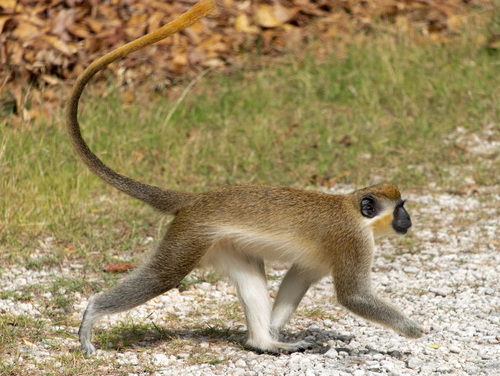


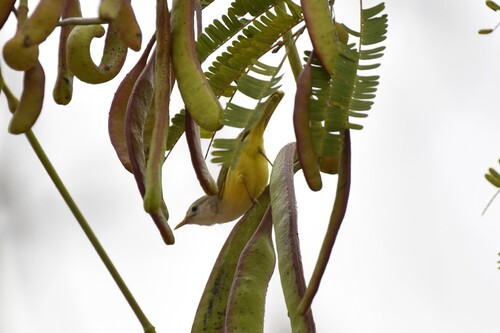







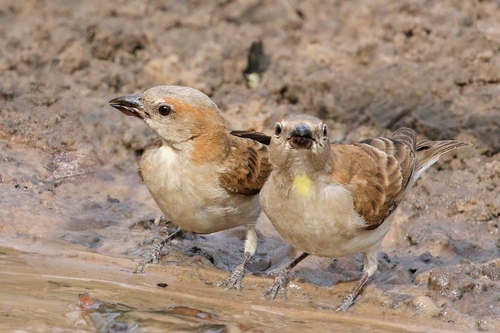

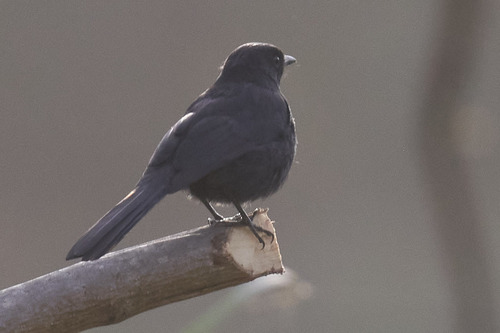


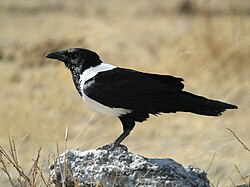

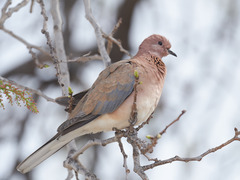


All 5 in 3 days here: ~40%
Mole National Park
🇬🇭 Ghana
West Africa, Ghana 927 spp. recorded
Mole National Park, one of Ghana's seven national parks, is the country's largest wildlife refuge. The park is located in the Savannah region of Ghana on savanna and riparian ecosystems at an elevation of 50 m, with a sharp escarpment forming the southern boundary of the park. The Park is 24 km from Damongo, the district capital, 146 km south east of Tamale, the Regional capital. The park is 700 km from Accra and 430 km from Kumasi. The park's entrance is reached through the nearby town of Larabanga. It covers an area of about 4,577 square kilometers of fairly undisturbed Guinea savannah in the northern part of Ghana. The Levi and Mole Rivers are ephemeral rivers flowing through the park, leaving behind only drinking holes during the long dry season. This area of Ghana receives over 10 mm per year of rainfall. A long-term study has been done on Mole National Park to understand the impact of human hunters on the animals in the preserve.
The park is also Ghana's most developed tourism site in terms of tourist amenities. The reserve has West Africa's first luxury safari lodge.
9.450° N 1.968° W
🦜 Nature

410 Species sighted
25,727 Verified sightings From 2019 to 2026
Apr Best month
⭐ Iconic Species
📊 Most Spotted
⭐ Iconic Species
📊 Most Spotted
📊 Most Spotted
📊 Most Spotted
📊 Most Spotted
📊 Most Spotted
🌙 Most active after dark
Challenges you can complete here
Recent sightings in Mole National Park
LIVEiNaturalistSighting Calendar
How many species you'd see in a dayavg 59 year-round
78
No data
Jan67
No data
Feb68
No data
Mar78
No data
Apr53
No data
May59
No data
Jun8.9
No data
Jul58
No data
Aug65
No data
Sep64
No data
Oct70
No data
Nov68
No data
DecSighting Zones
Warmer areas are where all species together are recorded most often.
-
Mole National Park Information Center
Daily sight. prob.vs avg -
9.294° N, 1.852° W
Daily sight. prob.vs avg -
Mole Rangers' Quarters Ranger Station
Daily sight. prob.vs avg




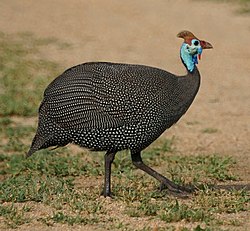

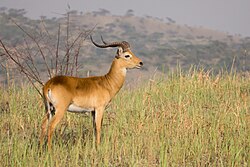


🏕️ Experience
Essentials
Entrance
Paid
Tourism
Low
Typical stay
4+
daysTrails
Easy
World Heritage
No
Climate
Temp °C Rain mm
-20°
0° 0
20° 300
40° 600 mm
Jan0Feb5Mar25Apr51May71Jun102Jul177Aug220Sep187Oct84Nov6Dec1
0.0 World-class
Wallace's Line Score
How good is this park for seeing wildlife? 🦜
Biodiversity
GoodHow rich is the wildlife?
4.0
Species by taxon
🦅 Birds 638
🐒 Mammals 158
🦎 Reptiles 94
🐸 Amphibians 37
927 Total Species
810 Global average across 340 parks
33 Threatened 1 Endemic
🔭
Sighting
ExcellentHow likely to see animals?
5.0
🎯
Top-12 Avg Probability
77% 📊
Coverage (260 species at ≥5% of 927 in the inventory)
28% 🔀
Taxon variety in top 12 (7 mammal, 3 bird, 2 reptile)
76% 🔭
Species per 10 outings (distinct species a visitor would meet over 10 outings — effort held equal across parks)
200 🌟
Iconic-group species (≥15%) (every species from the 19 iconic groups — monkeys, cats, toucans, macaws, sloths, crocodilians… — not just the 4 highlighted above)
28 ⭐
High-prob species (>40%)
60 🏕️
Experience
GoodHow easy and pleasant is the visit?
2.0
Climate Pleasant High
Entrance Paid Low
Tourism Low High
Trails Easy High
World Heritage No —
What visitors say
Your review
sunshinecoastbirds.blogspot.com Web excerpt · 2026
“On the way we encountered a party of Patas Monkeys, a Striped”
audubon.org Web excerpt · 2025
“As we went inland today, the landscape changed dramatically—instead of lush forests, we entered a tropical savanna (more like what most people picture when they think of Africa) and, by dusk, arrived at Mole National Park.”
Before you go
What animals can you see in Mole National Park?
927 species
Mole National Park has 927 recorded vertebrate species. The ones wildlife watchers report most often on a given day are Common Warthog (about 80%), Kob (about 80%), Olive Baboon (about 80%), African Five-lined Skink (about 80%) and Northern Bushbuck (about 80%). Among birds, the most-seen is Red-throated Bee-eater (about 80%).
When is the best time to visit Mole National Park for wildlife?
March, October and December–January
In those months the park's 12 most-seen species average about 80% on a given day, against about 50% in July. Those are among Mole National Park's driest months, with about 30 mm of rain a month against 220 mm in August.
Can you see an African Bush Elephant in Mole National Park?
Yes
About 80% of wildlife watchers report an African Bush Elephant sighting in Mole National Park on a given day, based on 53 verified sightings from GBIF citizen-science data from 2019 to 2026. The best time is January and September (about 90%).
Can you see a Common Warthog in Mole National Park?
Yes
About 80% of wildlife watchers report a Common Warthog sighting in Mole National Park on a given day, based on 76 verified sightings from GBIF citizen-science data from 2019 to 2026. The best time is February, June, September and December (about 90%).
Can you see a Kob in Mole National Park?
Yes
About 80% of wildlife watchers report a Kob sighting in Mole National Park on a given day, based on 86 verified sightings from GBIF citizen-science data from 2019 to 2026. The best time is January, March and September–October (about 90%).
Can you see an Olive Baboon in Mole National Park?
Yes
About 80% of wildlife watchers report an Olive Baboon sighting in Mole National Park on a given day, based on 63 verified sightings from GBIF citizen-science data from 2019 to 2026. The best time is June, September and December (about 90%).
Is Mole National Park good for wildlife watching?
4.7 out of 5
On the Wallace's Line Score, Mole National Park rates 4.7/5: 44th of 340 parks worldwide and 33rd in Africa. 75 of its species are reported by about 40% or more of wildlife watchers on a given day.


