
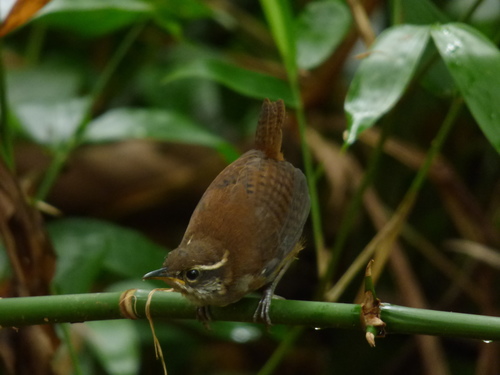
White-headed Wren

White-headed Wren

Campylorhynchus albobrunneus

Silhouette: Andy Wilson · PhyloPic

LCLeast ConcernNTVUENCR
Daily sighting probability ~10% · With luck
at San Lorenzo Protected Forest

In 3 days ~20% in a week ~40%

13 Verified sightings at San Lorenzo Protected Forest From 2019 to 2026
226 In all 3 parks
May Best month
☀️ Diurnal When it's spotted

About the White-headed Wren

The white-headed wren (Campylorhynchus albobrunneus) is a species of bird in the family Troglodytidae. It is found in Colombia and Panama. The white-headed wren has in the past been treated as conspecific with band-backed wren (Campylorhynchus zonatus) and with thrush-like wren (C. turdinus). Molecular analyses refuted that treatment and confirmed that it is a separator species.

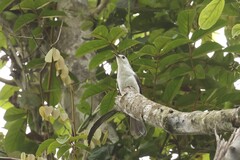
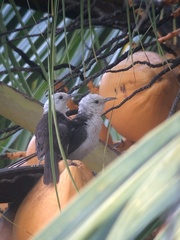
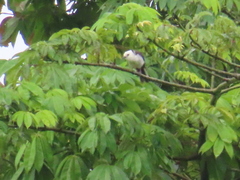
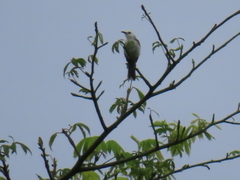
The white-headed wren is 18.5 cm (7.3 in) long and weighs 27.5 to 39 g (0.97 to 1.38 oz). It is unique among wrens, having essentially only two colors in large blocks. The sexes are alike. The nominate adult's entire head, nape, and underside from the throat through the lower belly are pure white. The rest of the body but for the vent area is dull blackish brown; the vent is gray-brown. C. a. harterti differs from the nominate only in having darker upperparts. The juvenile has a streaky gray-brown crown, a buffy face and underparts, and a pale cinnamon belly.

The nominate white-headed wren is found only in Panama, from the Canal... Wikipedia →

Sounds

Song0:47

Panama · 2020

© Nando Quiroz · XC561338 · CC BY-NC-SA 4.0

Call0:53

Panama · 2019

© Jerome Fischer · XC454100 · CC BY-NC-SA 4.0

Song0:17

Panama · 2019

© Kent Livezey · XC457162 · CC BY-NC-SA 4.0

Global Distribution

Parks Where Found

# Park Country Daily sighting probability
1 Darién National Park 🇵🇦 Panama
~10%
2 San Lorenzo Protected Forest 🇵🇦 Panama
~10%
3 Farallones de Cali National Natural Park 🇨🇴 Colombia
<5%

Before you go

What are the chances of seeing a White-headed Wren in San Lorenzo Protected Forest?

With luck

About 10% of wildlife watchers report a White-headed Wren sighting in San Lorenzo Protected Forest on a given day, based on 13 verified sightings from GBIF citizen-science data from 2019 to 2026. It is the 183rd most-seen of the 249 birds we can rate there. Over three days the chance rises to about 20%, and over a week to about 40%, if each day is a fresh chance.

When is the best time to see a White-headed Wren in San Lorenzo Protected Forest?

February–June and October

In those months about 10% of wildlife watchers report a White-headed Wren in San Lorenzo Protected Forest on a given day, against under 5% in July–September and November–January, the lowest months.

What time of day is best to see a White-headed Wren?

Between 10 am and 1 pm

Across all the parks we cover, that three-hour window holds the most White-headed Wren sightings with a recorded time, and about 9 in 10 of them come between 6 am and 6 pm: it is a daytime animal.

Is San Lorenzo Protected Forest the best place to see a White-headed Wren?

Among the best

Of the 3 parks where we can rate White-headed Wren sightings, San Lorenzo Protected Forest ranks 2nd at about 10%, level with the leaders once rounded. The best odds are in Darién National Park (Panama, about 10%).

Which relatives of the White-headed Wren live in San Lorenzo Protected Forest?

Same family: Troglodytidae

The closest relatives of the White-headed Wren that you can see in San Lorenzo Protected Forest (family Troglodytidae, Wrens) are Southern House Wren (about 30%), Bay Wren (about 30%) and Cabanis's Wren (about 20%), with each one's daily chance of a sighting.

Where does the White-headed Wren sighting chance come from?

GBIF citizen-science records

It is estimated from how often the White-headed Wren is recorded against all the birds logged in San Lorenzo Protected Forest (13 verified sightings from 2019 to 2026), calibrated against known sighting rates. Figures are rounded to the nearest 10% because citizen-science data supports honest approximations, not decimals, and months with records from fewer than five people show "—". How it works.

← Back to San Lorenzo Protected Forest