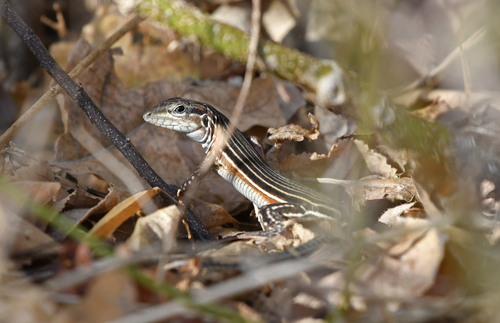
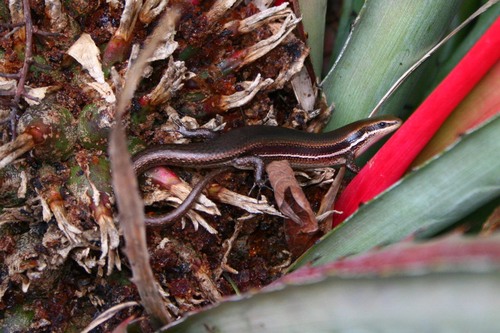
Central American Banded Gecko

Central American Banded Gecko

Coleonyx mitratus

Silhouette: Jose Carlos Arenas-Monroy · PhyloPic

LCLeast ConcernNTVUENCR
Daily sighting probability ~30% · Possible
at Santa Rosa National Park

In 3 days ~70% in a week ~90%

25 Verified sightings at Santa Rosa National Park From 2019 to 2026
40 In all 3 parks
April Best month
☀️🌙 Day & Night When it's spotted

About the Central American Banded Gecko

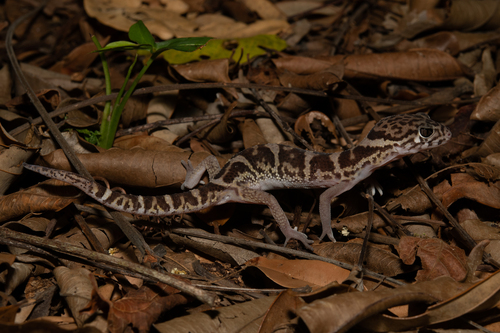
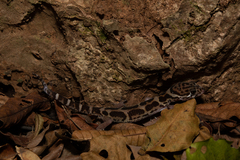
The Central American banded gecko (Coleonyx mitratus) is a species of moderately-sized gecko in the genus Coleonyx, native to Central America and first identified by Wilhelm Peters in 1863. It is a member of the eyelid geckos.

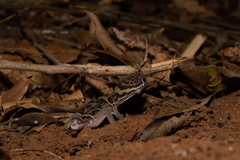
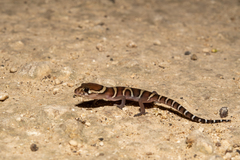
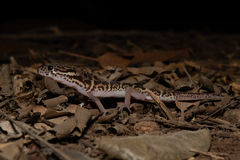
Length (including tail) reaches 190mm, with the tail encompassing 50-54% of the total. As indicated by their name, these geckos have brown, black and yellow horizontal bands on their dorsal surfaces. The Central American banded gecko is crepuscular and hides in a burrow in the soil during the day. It emerges at dusk to forage for insects. If threatened, like most geckos, it can lose its tail. Most will regenerate lost tails within a year.

These geckos are found from Guatemala south to Costa Rica. Central American banded geckos are popular as pets. Lizards of Laguna de Apoyo Nature Reserve, Nicaragua Wikipedia →

Global Distribution

Parks Where Found

# Park Country Daily sighting probability
1 Santa Rosa National Park 🇨🇷 Costa Rica
~30%
2 Carara National Park 🇨🇷 Costa Rica
~10%
3 Monteverde Cloud Forest Reserve 🇨🇷 Costa Rica
~10%

Closest Relatives at Santa Rosa National Park

No species of the same family or order lives in Santa Rosa National Park, so these are its closest relatives here: other reptiles.

Before you go

What are the chances of seeing a Central American Banded Gecko in Santa Rosa National Park?

Possible

About 30% of wildlife watchers report a Central American Banded Gecko sighting in Santa Rosa National Park on a given day, based on 25 verified sightings from GBIF citizen-science data from 2019 to 2026. It is the 8th most-seen of the 37 reptiles we can rate there. Over three days the chance rises to about 70%, and over a week to about 90%, if each day is a fresh chance.

When is the best time to see a Central American Banded Gecko in Santa Rosa National Park?

April and September

In those months about 50% of wildlife watchers report a Central American Banded Gecko in Santa Rosa National Park on a given day, against under 5% in January, the lowest month.

What time of day is best to see a Central American Banded Gecko?

Between 7 and 10 pm

Across all the parks we cover, that three-hour window holds the most Central American Banded Gecko sightings with a recorded time, and about 7 in 10 of them come between 6 pm and 6 am: it is seen both by day and at night.

Is Santa Rosa National Park the best place to see a Central American Banded Gecko?

Yes

Of the 3 parks where we can rate Central American Banded Gecko sightings, Santa Rosa National Park has the highest daily chance: about 30%. Next come Carara National Park (Costa Rica, about 10%) and Monteverde Cloud Forest Reserve (Costa Rica, about 10%).

Where does the Central American Banded Gecko sighting chance come from?

GBIF citizen-science records

It is estimated from how often the Central American Banded Gecko is recorded against all the reptiles logged in Santa Rosa National Park (25 verified sightings from 2019 to 2026), calibrated against known sighting rates. Figures are rounded to the nearest 10% because citizen-science data supports honest approximations, not decimals, and months with records from fewer than five people show "—". How it works.

← Back to Santa Rosa National Park