Bates's Nightjar

Bates's Nightjar

Caprimulgus batesi

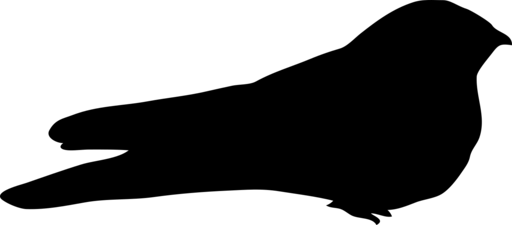
Silhouette: Ferran Sayol · PhyloPic

LCLeast ConcernNTVUENCR
Daily sighting probability <5% · Rare
at Semuliki National Park

In 3 days ~10% in a week ~30%

28 Verified sightings at Semuliki National Park From 2019 to 2026
28 In 1 park
January Best month
🌅 Crepuscular When it's spotted

About the Bates's Nightjar

Bates's nightjar (Caprimulgus batesi) or the forest nightjar, is a bird species of the family Caprimulgidae, native to the Congolian rainforests. Bates's nightjar is a large, dark nightjar. At rest looks large headed and long tailed. The upperparts and wing coverts are dark brown marked with black and buff streaks and spots, with a normally indistinct buff collar on the hindneck which may be more obvious on some individuals. The underparts are blackish brown with buff speckling on the breast, becoming barred on the belly, the throat is whitish. In flight the male shows a small white spot towards the wingtip and white tips to the two outer tail feathers. The female is paler and lack white spots on the wings or outer tail. They measure 29–31 cm in length and weigh 89–112g.

The song of Bates's nightjar is a loud "whow whowwhowwhowwhow" in which following the first note there is a pause then a repeated series of notes. Bates's nightjar has a fragmented distribution, one population is found in southern Cameroon, another in western Cameroon, Gabon, southern Central African Republic and western Congo, a third slightly separate in the western... Wikipedia →

Sounds

Song0:27

Gabon · 2024

© Étienne Leroy · XC878161 · CC BY-NC-SA 4.0

Song1:14

Uganda · 2022

© Peter Boesman · XC739481 · CC BY-NC-ND 4.0

Song0:07

Uganda · 2022

© Raphaël Jordan · XC736386 · CC BY-NC-SA 4.0

Global Distribution

Parks Where Found

# Park Country Daily sighting probability
1 Semuliki National Park 🇺🇬 Uganda
<5%

More parks will be added in future updates.

Before you go

What are the chances of seeing a Bates's Nightjar in Semuliki National Park?

Rare

Under 5% of wildlife watchers report a Bates's Nightjar sighting in Semuliki National Park on a given day, based on 28 verified sightings from GBIF citizen-science data from 2019 to 2026. It is the 186th most-seen of the 280 birds we can rate there. Over three days the chance rises to about 10%, and over a week to about 30%, if each day is a fresh chance.

When is the best time to see a Bates's Nightjar in Semuliki National Park?

January, July and November

In those months about 10% of wildlife watchers report a Bates's Nightjar in Semuliki National Park on a given day, against under 5% in February–June, August–October and December, the lowest months.

What time of day is best to see a Bates's Nightjar?

Between 6 and 9 pm

Across all the parks we cover, that three-hour window holds the most Bates's Nightjar sightings with a recorded time, and about 6 in 10 of them come between 6 pm and 6 am: it is most active around dawn and dusk.

Where else can you see a Bates's Nightjar?

Only Semuliki National Park, in our data

Semuliki National Park is the only park on Wallace's Line with enough records to rate Bates's Nightjar sightings: under 5% of wildlife watchers there report one on a given day.

Where does the Bates's Nightjar sighting chance come from?

GBIF citizen-science records

It is estimated from how often the Bates's Nightjar is recorded against all the birds logged in Semuliki National Park (28 verified sightings from 2019 to 2026), calibrated against known sighting rates. Figures are rounded to the nearest 10% because citizen-science data supports honest approximations, not decimals, and months with records from fewer than five people show "—". How it works.

← Back to Semuliki National Park