
Alpine Chipmunk

Alpine Chipmunk

Tamias alpinus

Silhouette: Chloé Schmidt · PhyloPic

Daily sighting probability ~10% · With luck
at Sequoia and Kings Canyon National Parks

In 3 days ~20% in a week ~40%

6 Verified sightings at Sequoia and Kings Canyon National Parks From 2019 to 2026
40 In all 2 parks
October Best month
☀️ Diurnal When it's spotted

About the Alpine Chipmunk

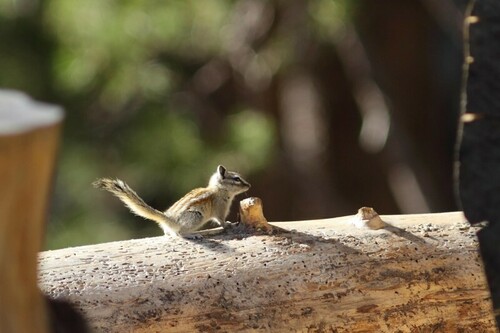
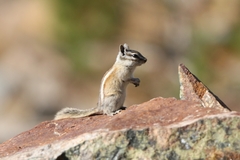
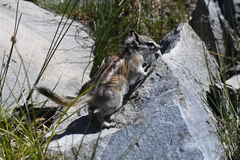
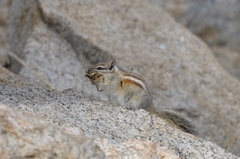
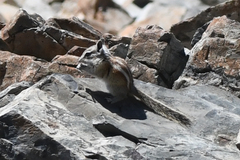
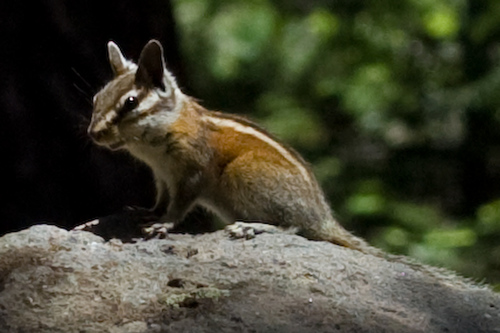
The alpine chipmunk (Neotamias alpinus) is a species of chipmunk native to the high elevations of the Sierra Nevada of California. No significant threats to the species are known. Alpine chipmunks share the typical pattern of genus Neotamias, being gray-brown overall and featuring three white stripes on the cheeks and four down the back. The flanks are muted orange. They weigh 27-45 grams and grow from 166 to 203 mm. Overall the alpine chipmunk is much paler and smaller compared to others in its genus. Their typical lifespan in the wild is up to 2-3 years.

Alpine chipmunks only live in high Sierra Nevada, from Yosemite National Park in the north, to Olancha Peak in the south. They have been observed at altitudes from around 2,300 meters (7,500 ft) to 3,900 meters (12,800 ft), though they rarely occur below 2,500 meters (8,200 ft). They primarily inhabit the talus slopes and sub-alpine forests, where there is a large accumulation of loose, rocky debris. During the summer, where the high-elevation environment becomes increasingly arid and warm, the alpine chipmunk utilize these rocks by retreating into the cool, deep crevices of boulders... Wikipedia →

Global Distribution

Parks Where Found

# Park Country Daily sighting probability
1 Yosemite National Park 🇺🇸 United States
~10%
2 Sequoia and Kings Canyon National Parks 🇺🇸 United States
~10%

Before you go

What are the chances of seeing an Alpine Chipmunk in Sequoia and Kings Canyon National Parks?

With luck

About 10% of wildlife watchers report an Alpine Chipmunk sighting in Sequoia and Kings Canyon National Parks on a given day, based on 6 verified sightings from GBIF citizen-science data from 2019 to 2026. It is the 17th most-seen of the 20 mammals we can rate there. Over three days the chance rises to about 20%, and over a week to about 40%, if each day is a fresh chance.

When is the best time to see an Alpine Chipmunk in Sequoia and Kings Canyon National Parks?

July and October

In those months about 20% of wildlife watchers report an Alpine Chipmunk in Sequoia and Kings Canyon National Parks on a given day, against under 5% in September and November–June, the lowest months. Those are among Sequoia and Kings Canyon National Parks's driest months, with about 20 mm of rain a month against 190 mm in January.

What time of day is best to see an Alpine Chipmunk?

Between 10 am and 1 pm

Across all the parks we cover, that three-hour window holds the most Alpine Chipmunk sightings with a recorded time, and about 8 in 10 of them come between 6 am and 6 pm: it is a daytime animal.

Is Sequoia and Kings Canyon National Parks the best place to see an Alpine Chipmunk?

Among the best

Of the 2 parks where we can rate Alpine Chipmunk sightings, Sequoia and Kings Canyon National Parks ranks 2nd at about 10%, level with the leaders once rounded. The best odds are in Yosemite National Park (United States, about 10%).

Where does the Alpine Chipmunk sighting chance come from?

GBIF citizen-science records

It is estimated from how often the Alpine Chipmunk is recorded against all the mammals logged in Sequoia and Kings Canyon National Parks (6 verified sightings from 2019 to 2026), calibrated against known sighting rates. Figures are rounded to the nearest 10% because citizen-science data supports honest approximations, not decimals, and months with records from fewer than five people show "—". How it works.

← Back to Sequoia and Kings Canyon National Parks