



Completed



American Pika
Ochotona princeps
Silhouette: Margot Michaud · PhyloPic
- KingdomAnimalia (Animals)
- PhylumChordata (Chordates)
- ClassMammalia (Mammals)
- OrderLagomorpha (Lagomorphs)
- FamilyOchotonidae (Pikas)
- GenusOchotona (Pikas)
- SpeciesOchotona princeps (American Pika)
In 3 days ~90% in a week >90%
225 Verified sightings at Sequoia and Kings Canyon National Parks From 2019 to 2026
2,065 In all 8 parks
September Best month
☀️ Diurnal When it's spotted
About the American Pika
The American pika (Ochotona princeps) is a small, herbivorous mammal of the family Ochotonidae, closely related to rabbits and hares (order Lagomorpha). It is native to the mountainous regions of western North America, typically inhabiting rocky slopes and talus fields at or above the tree line. Unlike most mammals of similar size, the American pika is diurnal, being active primarily during the day. It employs two distinct foraging strategies: directly consuming vegetation or gathering and storing plant materials in "haypiles" to sustain itself through the winter months, a behavior known as haying.
Pikas are vocal animals, using a variety of calls and songs both to warn of approaching predators and during the breeding season. Predators of the American pika include coyotes, martens, and hawks. Recent studies suggest that populations in the southwestern United States are declining due to habitat loss and global warming. Despite these regional declines, the American pika is overall assessed as a species of Least Concern by the IUCN and remains common in the northwestern United States and Canada.
The American pika was first described scientifically by the Scottish naturalist... Wikipedia →
Sounds
Recording0:06
United States · 2021
© wildlifer04 · iNaturalist · CC BY-NC 4.0
Recording0:15
United States · 2022
© Corey Brooke · iNaturalist · CC BY-NC 4.0
Recording0:14
United States · 2019
© Christine · iNaturalist · CC BY-NC 4.0
Recent sightings of American Pika in Sequoia and Kings Canyon National Parks
LIVEiNaturalistGlobal Distribution
Parks Where Found
| # | Park | Country | Daily sighting probability |
|---|---|---|---|
| 1 | Sequoia and Kings Canyon National Parks | 🇺🇸 United States | |
| 2 | Rocky Mountain National Park | 🇺🇸 United States | |
| 3 | Grand Teton National Park | 🇺🇸 United States | |
| 4 | Banff National Park | 🇨🇦 Canada | |
| 5 | Jasper National Park | 🇨🇦 Canada | |
| 6 | Yosemite National Park | 🇺🇸 United States | |
| 7 | Glacier National Park | 🇺🇸 United States | |
| 8 | Yellowstone National Park | 🇺🇸 United States |
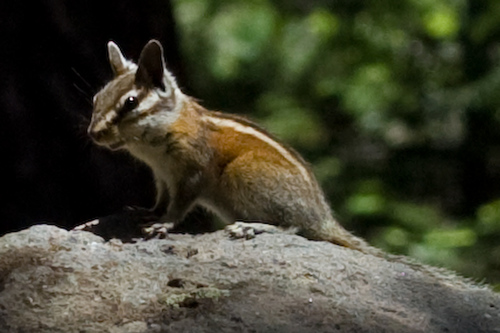
Closest Relatives at Sequoia and Kings Canyon National Parks




Before you go
What are the chances of seeing an American Pika in Sequoia and Kings Canyon National Parks?
Likely
About 50% of wildlife watchers report an American Pika sighting in Sequoia and Kings Canyon National Parks on a given day, based on 225 verified sightings from GBIF citizen-science data from 2019 to 2026. It is the 6th most-seen of the 20 mammals we can rate there. Over three days the chance rises to about 90%, and over a week to over 90%, if each day is a fresh chance.
When is the best time to see an American Pika in Sequoia and Kings Canyon National Parks?
August and September
In those months about 70% of wildlife watchers report an American Pika in Sequoia and Kings Canyon National Parks on a given day, against under 5% in February–March and November–December, the lowest months. Those are among Sequoia and Kings Canyon National Parks's driest months, with about 20 mm of rain a month against 190 mm in January.
What time of day is best to see an American Pika?
Between 10 am and 1 pm
Across all the parks we cover, that three-hour window holds the most American Pika sightings with a recorded time, and about 9 in 10 of them come between 6 am and 6 pm: it is a daytime animal.
Is Sequoia and Kings Canyon National Parks the best place to see an American Pika?
Yes
Of the 8 parks where we can rate American Pika sightings, Sequoia and Kings Canyon National Parks has the highest daily chance: about 50%. Next come Rocky Mountain National Park (United States, about 50%) and Grand Teton National Park (United States, about 50%). All parks ranked.
Where does the American Pika sighting chance come from?
GBIF citizen-science records
It is estimated from how often the American Pika is recorded against all the mammals logged in Sequoia and Kings Canyon National Parks (225 verified sightings from 2019 to 2026), calibrated against known sighting rates. Figures are rounded to the nearest 10% because citizen-science data supports honest approximations, not decimals, and months with records from fewer than five people show "—". How it works.
