



Completed


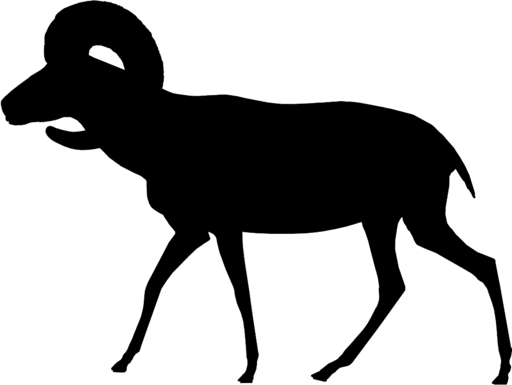
Bighorn Sheep
Ovis canadensis
Silhouette: Scott Hartman · PhyloPic
- KingdomAnimalia (Animals)
- PhylumChordata (Chordates)
- ClassMammalia (Mammals)
- OrderArtiodactyla (Even-toed Ungulates and Cetaceans)
- FamilyBovidae (Bovids)
- GenusOvis (Sheep)
- SpeciesOvis canadensis (Bighorn Sheep)
In 3 days ~30% in a week ~60%
39 Verified sightings at Sequoia and Kings Canyon National Parks From 2019 to 2026
8,295 In all 13 parks
October Best month
☀️ Diurnal When it's spotted
About the Bighorn Sheep
The bighorn sheep (Ovis canadensis) or bighorn is a species of sheep native to North America. It is named for its large horns. A pair of horns may weigh up to 14 kg (30 lb); the sheep typically weigh up to 143 kg (315 lb). Recent genetic testing indicates three distinct subspecies of Ovis canadensis, one of which is endangered: O. c. sierrae.
Sheep originally crossed to North America over the Bering Land Bridge from Siberia; the population in North America peaked in the millions, and the bighorn sheep entered into the mythology of Native Americans. By 1900, the population had crashed to several thousand due to diseases introduced through European livestock and overhunting.
Ovis canadensis is one of two species of mountain sheep in North America; the other species being O. dalli, the Dall sheep. Wild sheep crossed the Bering land bridge from Siberia into Alaska during the Pleistocene (about 750,000 years ago); subsequently, they spread through western North America as far south as Baja California and northwestern mainland Mexico. Divergence from their closest Asian ancestor (snow sheep) occurred about 600,000 years ago. In North America, wild sheep diverged... Wikipedia →
Recent sightings of Bighorn Sheep in Sequoia and Kings Canyon National Parks
LIVEiNaturalistGlobal Distribution
Parks Where Found
| # | Park | Country | Daily sighting probability |
|---|---|---|---|
| 1 | Badlands National Park | 🇺🇸 United States | |
| 2 | Jasper National Park | 🇨🇦 Canada | |
| 3 | Glacier National Park | 🇺🇸 United States | |
| 4 | Zion National Park | 🇺🇸 United States | |
| 5 | Banff National Park | 🇨🇦 Canada | |
| 6 | Grand Canyon National Park | 🇺🇸 United States | |
| 7 | Death Valley National Park | 🇺🇸 United States | |
| 8 | Yellowstone National Park | 🇺🇸 United States | |
| 9 | Rocky Mountain National Park | 🇺🇸 United States | |
| 10 | Joshua Tree National Park | 🇺🇸 United States | |
| 11 | Bahía de Loreto National Park | 🇲🇽 Mexico | |
| 12 | Grand Teton National Park | 🇺🇸 United States | |
| 13 | Sequoia and Kings Canyon National Parks | 🇺🇸 United States |
Zoos & Centres Where Found
| # | Zoo / Centre | Country | |
|---|---|---|---|
| 1 | San Diego Zoo | 🇺🇸 United States | |
| 2 | Denver Zoo | 🇺🇸 United States | |
| 3 | Zoo Pilsen | 🇨🇿 Czechia | |
| 4 | Parc Omega | 🇨🇦 Canada | |
| 5 | Northwest Trek Wildlife Park | 🇺🇸 United States | |
| 6 | Zoo sauvage Saint-Félicien | 🇨🇦 Canada | |
| 7 | San Diego Zoo Safari Park | 🇺🇸 United States | |
| 8 | Living Desert Zoo and Gardens | 🇺🇸 United States | |
| 9 | Ecological Center of Sonora | 🇲🇽 Mexico | |
| 10 | Shubenacadie Wildlife Park | 🇨🇦 Canada | |
| 11 | Los Angeles Zoo | 🇺🇸 United States | |
| 12 | Bearizona | 🇺🇸 United States | |
| 13 | Phoenix Zoo | 🇺🇸 United States | |
| 14 | Greater Vancouver Zoo | 🇨🇦 Canada | |
| 15 | Bear Country USA | 🇺🇸 United States | |
| 16 | Zoológico de San Juan de Aragón | 🇲🇽 Mexico | |
| 17 | Burgers' Ocean | 🇳🇱 Netherlands | |
| 18 | Royal Burgers' Zoo | 🇳🇱 Netherlands | |
| 19 | Calgary Zoo | 🇨🇦 Canada | |
| 20 | Zoológico la pastroa | 🇲🇽 Mexico | |
| 21 | Arizona-Sonora Desert Museum | 🇺🇸 United States | |
| 22 | Chapultepec Zoo | 🇲🇽 Mexico | |
| 23 | British Columbia Wildlife Park | 🇨🇦 Canada | |
| 24 | Kanazawa Zoo | 🇯🇵 Japan | |
| 25 | Buffalo Zoo | 🇺🇸 United States | |
| 26 | Reid Park Zoo | 🇺🇸 United States | |
| 27 | Elmwood Park Zoo | 🇺🇸 United States | |
| 28 | Heritage Park Zoological Sanctuary | 🇺🇸 United States | |
| 29 | OdySea Aquarium | 🇺🇸 United States | |
| 30 | Selig Zoo | 🇺🇸 United States | |
| 31 | Universal City Zoo | 🇺🇸 United States |
Closest Relatives at Sequoia and Kings Canyon National Parks




Before you go
What are the chances of seeing a Bighorn Sheep in Sequoia and Kings Canyon National Parks?
With luck
About 10% of wildlife watchers report a Bighorn Sheep sighting in Sequoia and Kings Canyon National Parks on a given day, based on 39 verified sightings from GBIF citizen-science data from 2019 to 2026. It is the 12th most-seen of the 20 mammals we can rate there. Over three days the chance rises to about 30%, and over a week to about 60%, if each day is a fresh chance.
When is the best time to see a Bighorn Sheep in Sequoia and Kings Canyon National Parks?
October
In that month about 30% of wildlife watchers report a Bighorn Sheep in Sequoia and Kings Canyon National Parks on a given day, against under 5% in December and January, the lowest months. That is one of Sequoia and Kings Canyon National Parks's driest months, with about 20 mm of rain against 190 mm in January.
What time of day is best to see a Bighorn Sheep?
Between 11 am and 2 pm
Across all the parks we cover, that three-hour window holds the most Bighorn Sheep sightings with a recorded time, and about 8 in 10 of them come between 6 am and 6 pm: it is a daytime animal.
Is Sequoia and Kings Canyon National Parks the best place to see a Bighorn Sheep?
13th of 13
Of the 13 parks where we can rate Bighorn Sheep sightings, Sequoia and Kings Canyon National Parks ranks 13th at about 10%. The best odds are in Badlands National Park (United States, about 90%), Jasper National Park (Canada, about 80%) and Glacier National Park (United States, about 80%). All parks ranked.
Where does the Bighorn Sheep sighting chance come from?
GBIF citizen-science records
It is estimated from how often the Bighorn Sheep is recorded against all the mammals logged in Sequoia and Kings Canyon National Parks (39 verified sightings from 2019 to 2026), calibrated against known sighting rates. Figures are rounded to the nearest 10% because citizen-science data supports honest approximations, not decimals, and months with records from fewer than five people show "—". How it works.
