Grease Moth

Grease Moth

Aglossa cuprina

Daily sighting probability <5% · Rare
at Shenandoah National Park

In 3 days ~10% in a week ~30%

5 Verified sightings at Shenandoah National Park From 2019 to 2026
5 In 1 park
August Best month
🌙 Nocturnal When it's spotted

About the Grease Moth

Aglossa cuprina, the grease moth, is a snout moth, family Pyralidae, described by Philipp Christoph Zeller in 1872. The grease moth is closely related to the genus Pyralis, and as a result, is usually associated with the meal moth, Pyralis farinalis.

Aglossa cuprina ingests grease produced by the bacteria that feed on decaying matter. A. cuprina was named by German entomologist Philipp Christoph Zeller in 1872. The specific epithet, A. pinguinalis, its other binomial name, is derived from the Latin, pinguinalis (greasy).

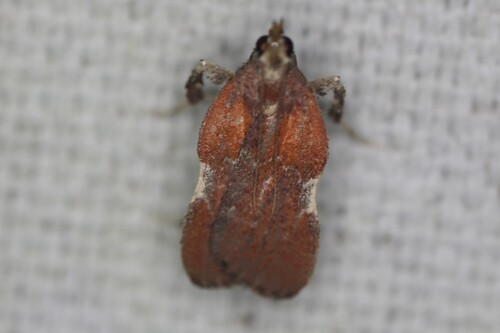
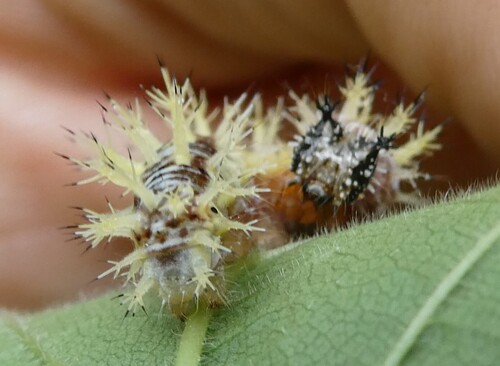
The egg of A. cuprina is an off white rounded oval. During the larval stage, A. cuprina has a brownish head and greyish body. The A. cuprina larvae also have black mandibles and a black peritreme (part of the integument of an insect which surrounds the spiracles). They can be distinguished from A. caprealis larvae by setal differences. The pupae are reddish brown with six curved, hooked setae.

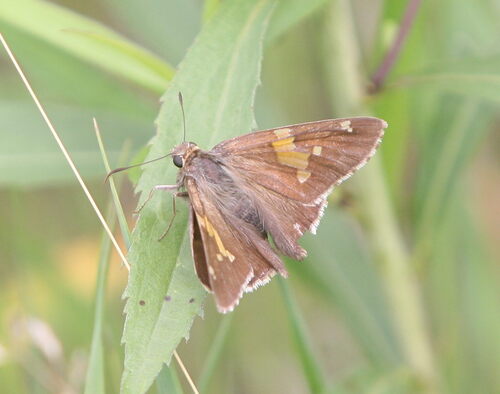
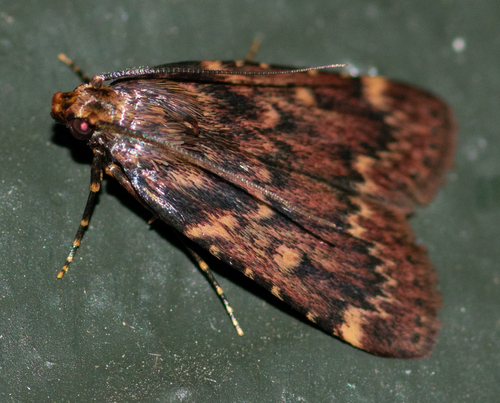
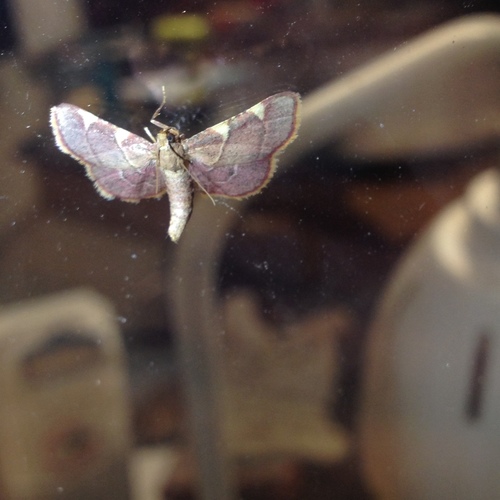
The moth has a wingspan that averages about 1.8–2.7 cm (18–27 mm), and exhibits an overall dark, greyish-brown colour. While the forewings are brownish grey with pale yellowish markings (much like those of a tabby cat, hence the lesser-used common... Wikipedia →
Global Distribution

Parks Where Found

# Park Country Daily sighting probability
1 Shenandoah National Park 🇺🇸 United States
<5%

More parks will be added in future updates.

Before you go

What are the chances of seeing a Grease Moth in Shenandoah National Park?

Rare

Under 5% of wildlife watchers report a Grease Moth sighting in Shenandoah National Park on a given day, based on 5 verified sightings from GBIF citizen-science data from 2019 to 2026. It is the 630th most-seen of the 723 insects we can rate there. Over three days the chance rises to about 10%, and over a week to about 30%, if each day is a fresh chance.

When is the best time to see a Grease Moth in Shenandoah National Park?

August

In that month about 10% of wildlife watchers report a Grease Moth in Shenandoah National Park on a given day, against under 5% in September to July, the lowest months.

What time of day is best to see a Grease Moth?

Between 9 pm and midnight

Across all the parks we cover, that three-hour window holds the most Grease Moth sightings with a recorded time, and nearly all of them come between 6 pm and 6 am: it is mostly seen at night.

Where else can you see a Grease Moth?

Only Shenandoah National Park, in our data

Shenandoah National Park is the only park on Wallace's Line with enough records to rate Grease Moth sightings: under 5% of wildlife watchers there report one on a given day.

Which relatives of the Grease Moth live in Shenandoah National Park?

Same family: Pyralidae

The closest relatives of the Grease Moth that you can see in Shenandoah National Park (family Pyralidae, Pyralid Snout Moths) are Yellow-Fringed Dolichomia Moth (about 10%) and Boxwood Leaftier Moth (about 10%), with each one's daily chance of a sighting.

Where does the Grease Moth sighting chance come from?

GBIF citizen-science records

It is estimated from how often the Grease Moth is recorded against all the insects logged in Shenandoah National Park (5 verified sightings from 2019 to 2026), calibrated against known sighting rates. Figures are rounded to the nearest 10% because citizen-science data supports honest approximations, not decimals, and months with records from fewer than five people show "—". How it works.

← Back to Shenandoah National Park