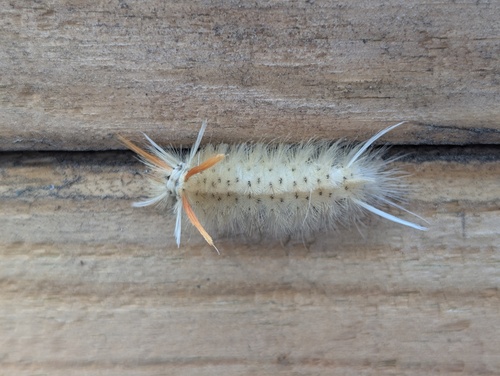
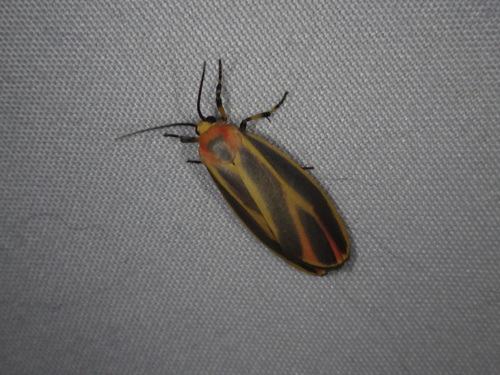
Spongy Moth
Daily sighting probability ~40% · Likely
at Shenandoah National Park

In 3 days ~80% in a week >90%

355 Verified sightings at Shenandoah National Park From 2019 to 2026
811 In all 15 parks
June Best month
☀️ Diurnal When it's spotted

About the Spongy Moth

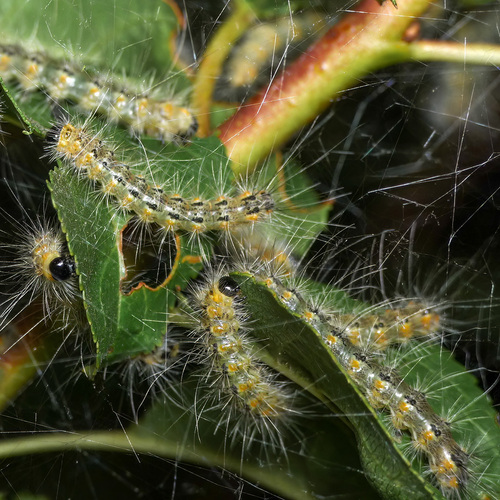
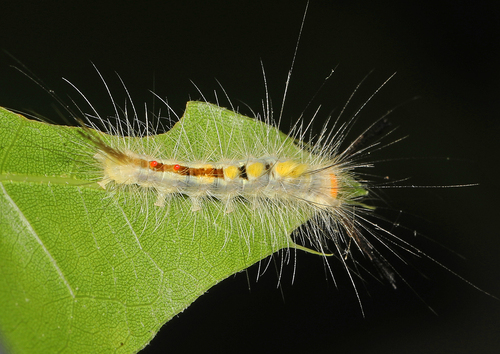
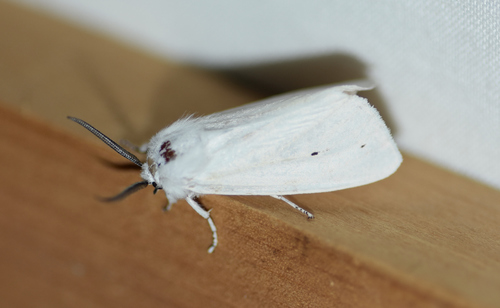
Lymantria dispar, also known as the gypsy moth, and in the United States, the spongy moth, is a species of moth in the family Erebidae native to Europe and Asia. Lymantria dispar has been introduced to several continents and is now additionally found as an invasive species in Africa, North America and South America. The polyphagous larvae live on a variety of deciduous and coniferous trees and can cause severe damage in years of mass reproduction. Due to these features, Lymantria dispar is listed among the world's 100 worst invasive alien species.

The etymology of "gypsy moth" is not conclusively known; however, the term is known to have been in use (as 'Gipsey') as early as 1832. Moths of the subfamily Lymantriinae are commonly called tussock moths due to the tussock-like tufts of hair on the caterpillars.

The name Lymantria dispar is composed of two Latin-derived words. The generic name Lymantria means 'destroyer'. The species epithet dispar means 'to separate' in Latin; it refers to the sexual dimorphism observed... Wikipedia →

Global Distribution

Parks Where Found

# Park Country Daily sighting probability
1 Biebrza National Park 🇵🇱 Poland
~40%
2 Shenandoah National Park 🇺🇸 United States
~40%
3 Cévennes National Park 🇫🇷 France
~20%
4 Aigüestortes National Park 🇪🇸 Spain
~20%
5 Acadia National Park 🇺🇸 United States
~20%
6 Białowieża National Park 🇵🇱 Poland
~10%
7 Point Pelee National Park 🇨🇦 Canada
~10%
8 Bavarian Forest National Park 🇩🇪 Germany
~10%
9 Picos de Europa National Park 🇪🇸 Spain
~10%
10 Fertő-Hanság National Park 🇭🇺 Hungary
~10%
11 Sierra Nevada National Park 🇪🇸 Spain
~10%
12 Pyrénées National Park 🇫🇷 France
~10%
13 Mercantour National Park 🇫🇷 France
~10%
14 Wadden Sea National Park 🇩🇪 Germany
~10%
15 Sierra de Guadarrama National Park 🇪🇸 Spain
~10%

Cities Where Found

# City Country Daily sighting probability
1 Toronto 🇨🇦 Canada
~20%
2 London 🇬🇧 United Kingdom
~20%
3 Busan 🇰🇷 South Korea
~20%
4 Porto 🇵🇹 Portugal
~10%
5 Novosibirsk 🇷🇺 Russia
~10%
6 Montreal 🇨🇦 Canada
~10%
7 Seoul 🇰🇷 South Korea
~10%
8 Paris 🇫🇷 France
~10%
9 Berlin 🇩🇪 Germany
~10%
10 Turin 🇮🇹 Italy
~10%

Before you go

What are the chances of seeing a Spongy Moth in Shenandoah National Park?

Likely

About 40% of wildlife watchers report a Spongy Moth sighting in Shenandoah National Park on a given day, based on 355 verified sightings from GBIF citizen-science data from 2019 to 2026. It is the 4th most-seen of the 723 insects we can rate there. Over three days the chance rises to about 80%, and over a week to over 90%, if each day is a fresh chance.

When is the best time to see a Spongy Moth in Shenandoah National Park?

June

In that month about 60% of wildlife watchers report a Spongy Moth in Shenandoah National Park on a given day, against under 5% in January–February and September, the lowest months.

What time of day is best to see a Spongy Moth?

Between 11 am and 2 pm

Across all the parks we cover, that three-hour window holds the most Spongy Moth sightings with a recorded time, and about 7 in 10 of them come between 6 am and 6 pm: it is a daytime animal.

Is Shenandoah National Park the best place to see a Spongy Moth?

Among the best

Of the 15 parks where we can rate Spongy Moth sightings, Shenandoah National Park ranks 2nd at about 40%, level with the leaders once rounded. The best odds are in Biebrza National Park (Poland, about 40%). All parks ranked.

Which relatives of the Spongy Moth live in Shenandoah National Park?

Same family: Erebidae

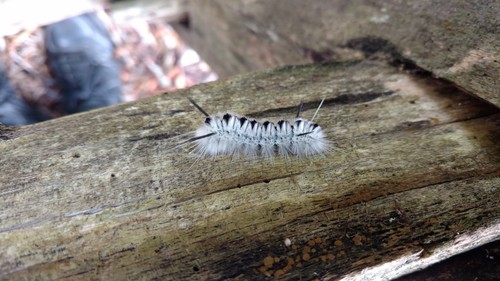
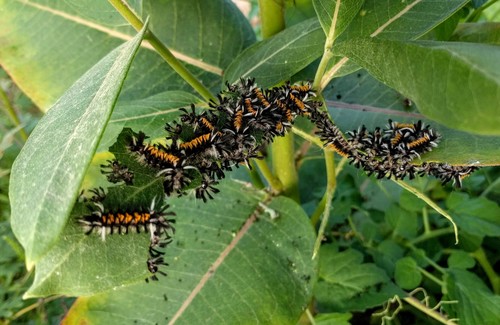
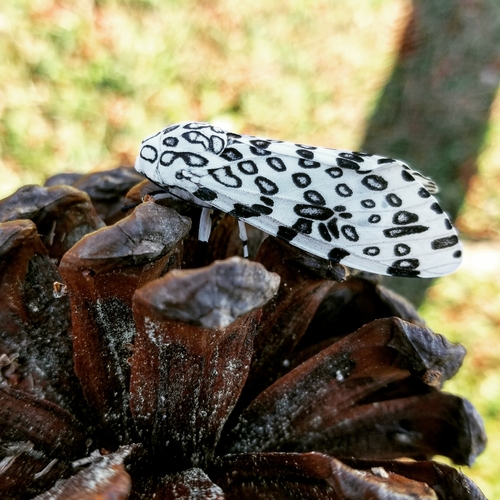
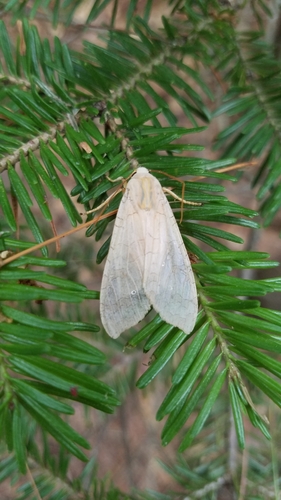
The closest relatives of the Spongy Moth that you can see in Shenandoah National Park (family Erebidae, Underwing, Tiger, Tussock, and Allied Moths) are Isabella Tiger Moth (about 30%), Hickory Tussock Moth (about 30%) and Milkweed Tussock Moth (about 30%), with each one's daily chance of a sighting.

Where does the Spongy Moth sighting chance come from?

GBIF citizen-science records

It is estimated from how often the Spongy Moth is recorded against all the insects logged in Shenandoah National Park (355 verified sightings from 2019 to 2026), calibrated against known sighting rates. Figures are rounded to the nearest 10% because citizen-science data supports honest approximations, not decimals, and months with records from fewer than five people show "—". How it works.

← Back to Shenandoah National Park