Spicebush Swallowtail

Spicebush Swallowtail

Papilio troilus

Daily sighting probability ~40% · Likely
at Shenandoah National Park

In 3 days ~80% in a week >90%

335 Verified sightings at Shenandoah National Park From 2019 to 2026
734 In all 5 parks
August Best month
☀️ Diurnal When it's spotted

About the Spicebush Swallowtail

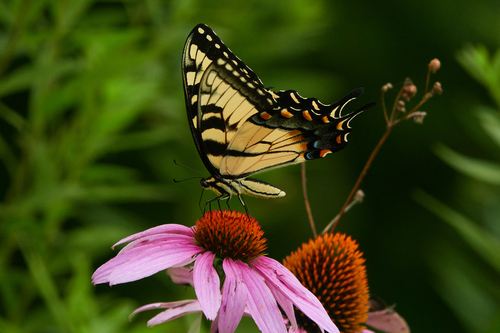
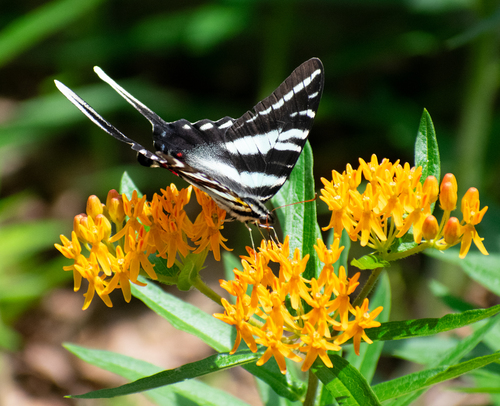
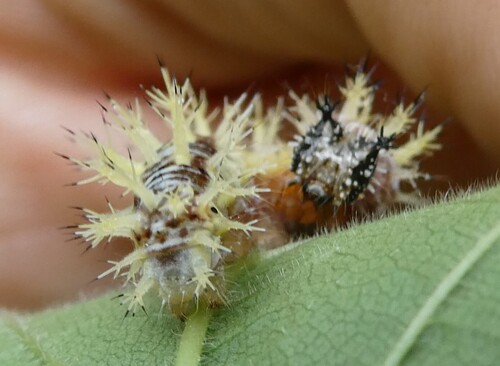
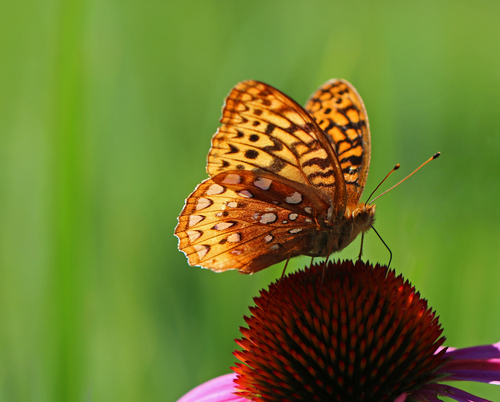
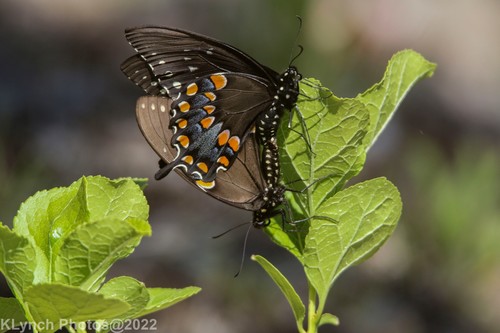
Papilio troilus, the spicebush swallowtail or green-clouded butterfly, is a common black swallowtail butterfly found in North America. It has two subspecies, Papilio troilus troilus and Papilio troilus ilioneus, the latter found mainly in the Florida peninsula. The spicebush swallowtail derives its name from its most common host plant, the spicebush, members of the genus Lindera.

The family to which spicebush swallowtails belong, Papilionidae, or swallowtails, include the largest butterflies in the world. The swallowtails are unique in that even while feeding, they continue to flutter their wings. Unlike other swallowtail butterflies, spicebushes fly low to the ground instead of at great heights.

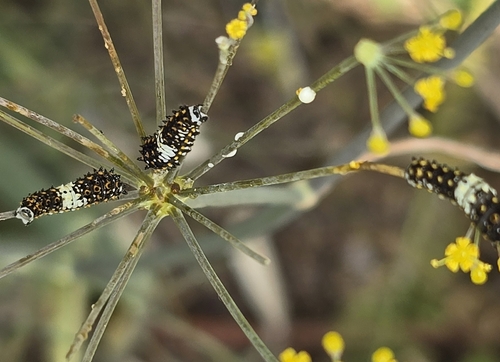
The spicebush swallowtail is found only in the eastern US and southern Ontario, but occasionally strays as far as the American plains states, Cuba, Manitoba and Colorado. While still larvae, spicebush swallowtails remain on the leaf of the plant on which they were laid. As adults, the butterflies do not limit their flight geographically and instead are motivated mostly by availability of water and nectar and mates within the species' range.

This primarily black... Wikipedia →
Global Distribution

Parks Where Found

# Park Country Daily sighting probability
1 Shenandoah National Park 🇺🇸 United States
~40%
2 Great Smoky Mountains National Park 🇺🇸 United States
~30%
3 Point Pelee National Park 🇨🇦 Canada
~30%
4 Congaree National Park 🇺🇸 United States
~10%
5 Merritt Island National Wildlife Refuge 🇺🇸 United States
~10%

Cities Where Found

# City Country Daily sighting probability
1 Orlando 🇺🇸 United States
~20%
2 Houston 🇺🇸 United States
~10%
3 Washington 🇺🇸 United States
~10%
4 Detroit 🇺🇸 United States
~10%
5 Philadelphia 🇺🇸 United States
~10%
6 New York City 🇺🇸 United States
~10%
7 Boston 🇺🇸 United States
~10%
8 Baltimore 🇺🇸 United States
~10%
9 Toronto 🇨🇦 Canada
<5%
10 Chicago 🇺🇸 United States
<5%

Before you go

What are the chances of seeing a Spicebush Swallowtail in Shenandoah National Park?

Likely

About 40% of wildlife watchers report a Spicebush Swallowtail sighting in Shenandoah National Park on a given day, based on 335 verified sightings from GBIF citizen-science data from 2019 to 2026. It is the 3rd most-seen of the 723 insects we can rate there. Over three days the chance rises to about 80%, and over a week to over 90%, if each day is a fresh chance.

When is the best time to see a Spicebush Swallowtail in Shenandoah National Park?

July and August

In those months about 50% of wildlife watchers report a Spicebush Swallowtail in Shenandoah National Park on a given day, against under 5% in November to February, the lowest months.

What time of day is best to see a Spicebush Swallowtail?

Between 11 am and 2 pm

Across all the parks we cover, that three-hour window holds the most Spicebush Swallowtail sightings with a recorded time, and about 9 in 10 of them come between 6 am and 6 pm: it is a daytime animal.

Is Shenandoah National Park the best place to see a Spicebush Swallowtail?

Yes

Of the 5 parks where we can rate Spicebush Swallowtail sightings, Shenandoah National Park has the highest daily chance: about 40%. Next come Great Smoky Mountains National Park (United States, about 30%) and Point Pelee National Park (Canada, about 30%).

Which relatives of the Spicebush Swallowtail live in Shenandoah National Park?

Same genus: Papilio

The closest relatives of the Spicebush Swallowtail that you can see in Shenandoah National Park (genus Papilio, Common Swallowtails) are Eastern Tiger Swallowtail (about 50%) and Black Swallowtail (about 10%), with each one's daily chance of a sighting.

Where does the Spicebush Swallowtail sighting chance come from?

GBIF citizen-science records

It is estimated from how often the Spicebush Swallowtail is recorded against all the insects logged in Shenandoah National Park (335 verified sightings from 2019 to 2026), calibrated against known sighting rates. Figures are rounded to the nearest 10% because citizen-science data supports honest approximations, not decimals, and months with records from fewer than five people show "—". How it works.

← Back to Shenandoah National Park