

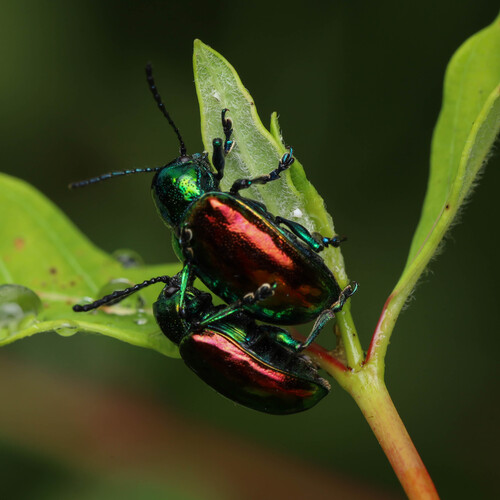
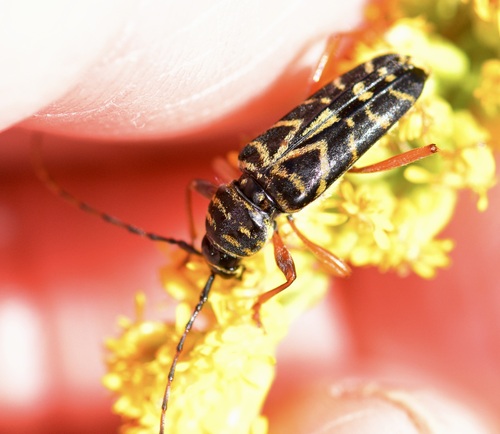
Margined Carrion Beetle

Margined Carrion Beetle

Oiceoptoma noveboracense

Daily sighting probability ~10% · With luck
at Shenandoah National Park

In 3 days ~20% in a week ~30%

10 Verified sightings at Shenandoah National Park From 2019 to 2026
10 In 1 park
March Best month
🌅 Crepuscular When it's spotted

About the Margined Carrion Beetle

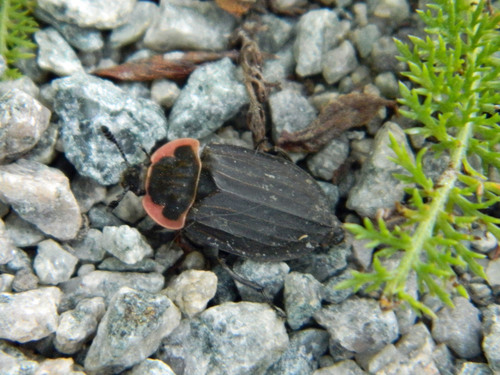
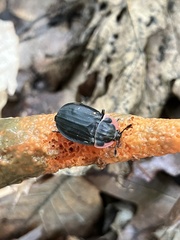
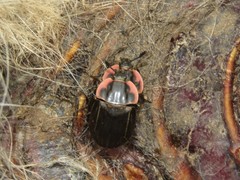
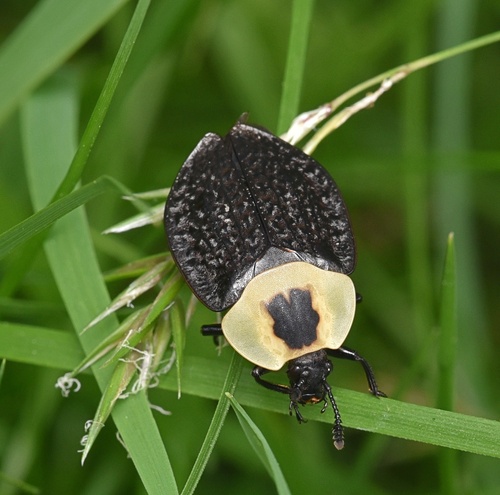
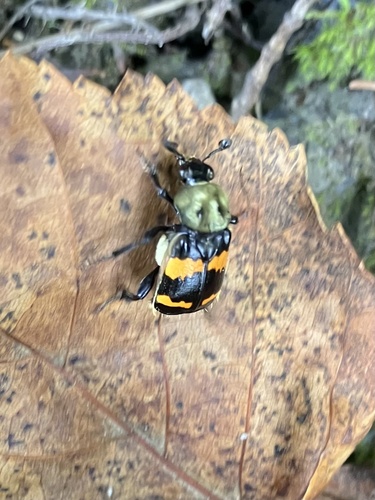
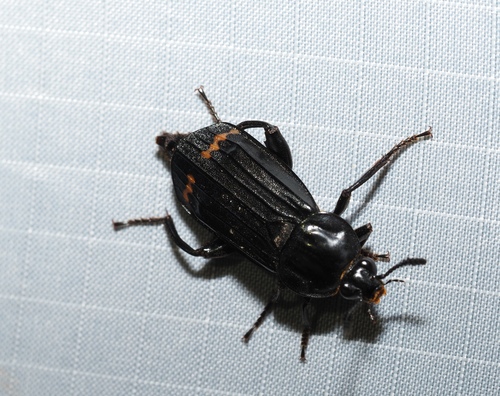
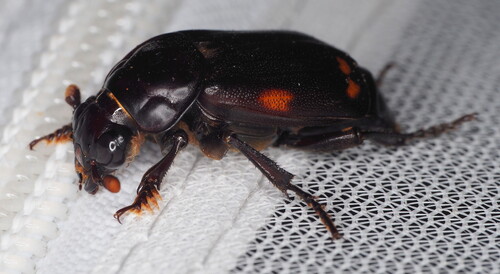
Oiceoptoma noveboracense is a member of the family Silphinae, or carrion beetles, which feed on decaying organic matter such as dead animals. Its common name is the margined carrion beetle, from the orange-red margins on the pronotum, which are helpful when identifying this species. The larva is typically light brown to red and also has vertical ridges on its thorax like the adult. This diurnal beetle can be found mainly in the spring into the fall, and it has a strong preference towards a deciduous forest habitat. The primary forensic importance of this beetle is its ability to use the succession of insect fauna to provide confirmation of postmortem intervals.

Oiceoptoma noveboracense's Latin specific name means "pertaining to New York" (Latin Novum Eboracum + -ensis), referring to the original source of the type specimen. Although less common, some literature will refer to the species as Oiceoptoma noveboracensis. The genus Oiceoptoma was described by the English naturalist, William Elford Leach, in 1815.

Oiceoptoma noveboracense larvae range from light brown to dark reddish in color. The larvae are typically flat and trilobite-like in appearance... Wikipedia →

Global Distribution

Parks Where Found

# Park Country Daily sighting probability
1 Shenandoah National Park 🇺🇸 United States
~10%

More parks will be added in future updates.

Cities Where Found

# City Country Daily sighting probability
1 Washington 🇺🇸 United States
<5%
2 Montreal 🇨🇦 Canada
<5%
3 New York City 🇺🇸 United States
<5%
4 Chicago 🇺🇸 United States
<5%
5 Toronto 🇨🇦 Canada
<5%

Before you go

What are the chances of seeing a Margined Carrion Beetle in Shenandoah National Park?

With luck

About 10% of wildlife watchers report a Margined Carrion Beetle sighting in Shenandoah National Park on a given day, based on 10 verified sightings from GBIF citizen-science data from 2019 to 2026. It is the 363rd most-seen of the 723 insects we can rate there. Over three days the chance rises to about 20%, and over a week to about 30%, if each day is a fresh chance.

When is the best time to see a Margined Carrion Beetle in Shenandoah National Park?

March

In that month about 20% of wildlife watchers report a Margined Carrion Beetle in Shenandoah National Park on a given day, against under 5% in April and July–February, the lowest months.

What time of day is best to see a Margined Carrion Beetle?

Between 6 and 9 pm

Across all the parks we cover, that three-hour window holds the most Margined Carrion Beetle sightings with a recorded time, and about half of them come between 6 am and 6 pm: it is most active around dawn and dusk.

Where else can you see a Margined Carrion Beetle?

Only Shenandoah National Park, in our data

Shenandoah National Park is the only park on Wallace's Line with enough records to rate Margined Carrion Beetle sightings: about 10% of wildlife watchers there report one on a given day.

Which relatives of the Margined Carrion Beetle live in Shenandoah National Park?

Same family: Staphylinidae

The closest relatives of the Margined Carrion Beetle that you can see in Shenandoah National Park (family Staphylinidae, Rove Beetles) are American Carrion Beetle (about 20%), Brown Rove Beetle (about 10%) and Tomentose Burying Beetle (about 10%), with each one's daily chance of a sighting.

Where does the Margined Carrion Beetle sighting chance come from?

GBIF citizen-science records

It is estimated from how often the Margined Carrion Beetle is recorded against all the insects logged in Shenandoah National Park (10 verified sightings from 2019 to 2026), calibrated against known sighting rates. Figures are rounded to the nearest 10% because citizen-science data supports honest approximations, not decimals, and months with records from fewer than five people show "—". How it works.

← Back to Shenandoah National Park