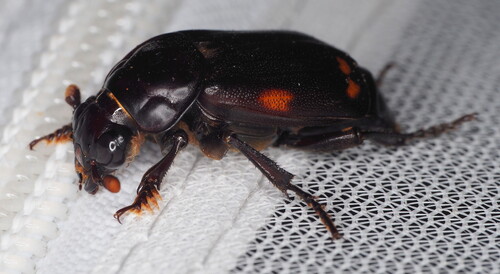
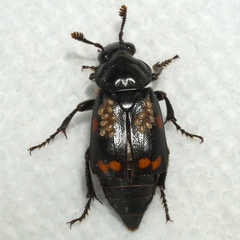
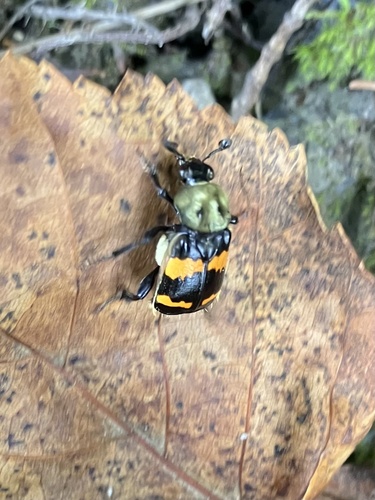
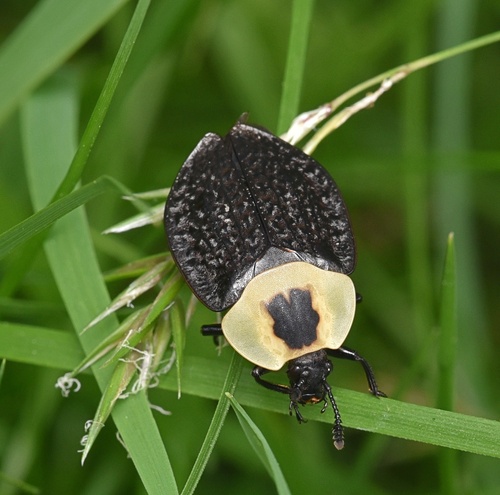
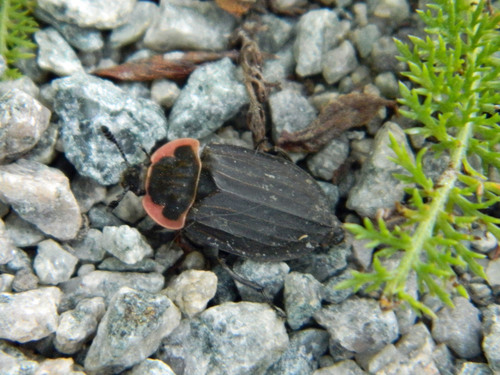
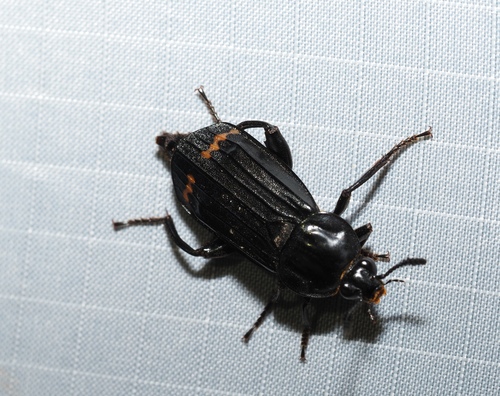


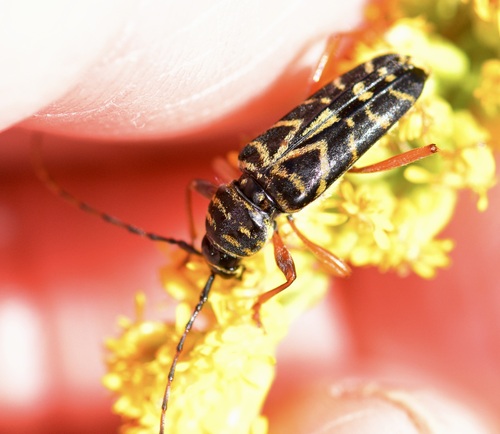
Pustulated Carrion Beetle

Pustulated Carrion Beetle

Nicrophorus pustulatus

Daily sighting probability <5% · Rare
at Shenandoah National Park

In 3 days ~10% in a week ~30%

6 Verified sightings at Shenandoah National Park From 2019 to 2026
13 In all 2 parks
June Best month
☀️🌙 Day & Night When it's spotted

About the Pustulated Carrion Beetle

Nicrophorus pustulatus, also known as the pustulated carrion beetle or blistered burying beetle, is a species of burying beetle that was described by Johann Karl Wilhelm Illiger in 1807. This species is native to North America. N. pustulatus exhibits unique habitat utilization and breeding behaviour relative to other members of the genus. This species may be the only described example of a true parasitoid targeting a vertebrate host.

N. pustulatus is one of over 60 extant species in the genus Nicrophorus. This genus belongs to the subfamily Nicrophorinae (sexton beetles), which is one of two subfamilies in the family Silphidae (carrion beetles, large carrion beetles, or burying beetles). The family Silphidae belongs to the superfamily Staphylinoidea, infraorder Staphyliniformia, suborder Polyphaga, and order Coleoptera. The genus Nicrophorus is hypothesized to have evolved in the Cretaceous Period approximately 99-127 million years ago and then undergone most of its speciation in the period approximately 40-60 million years ago. This was the period when the small-bodied vertebrates that these beetles use for carrion were also radiating.

One recent molecular... Wikipedia →

Global Distribution

Parks Where Found

# Park Country Daily sighting probability
1 Shenandoah National Park 🇺🇸 United States
<5%
2 Great Smoky Mountains National Park 🇺🇸 United States
<5%

Cities Where Found

# City Country Daily sighting probability
1 Minneapolis [Saint Paul] 🇺🇸 United States
<5%

Before you go

What are the chances of seeing a Pustulated Carrion Beetle in Shenandoah National Park?

Rare

Under 5% of wildlife watchers report a Pustulated Carrion Beetle sighting in Shenandoah National Park on a given day, based on 6 verified sightings from GBIF citizen-science data from 2019 to 2026. It is the 630th most-seen of the 723 insects we can rate there. Over three days the chance rises to about 10%, and over a week to about 30%, if each day is a fresh chance.

When is the best time to see a Pustulated Carrion Beetle in Shenandoah National Park?

June and October

In those months about 10% of wildlife watchers report a Pustulated Carrion Beetle in Shenandoah National Park on a given day, against under 5% in July–September and November–May, the lowest months.

What time of day is best to see a Pustulated Carrion Beetle?

Between 10 pm and 1 am

Across all the parks we cover, that three-hour window holds the most Pustulated Carrion Beetle sightings with a recorded time, and about 7 in 10 of them come between 6 pm and 6 am: it is seen both by day and at night.

Is Shenandoah National Park the best place to see a Pustulated Carrion Beetle?

Yes

Of the 2 parks where we can rate Pustulated Carrion Beetle sightings, Shenandoah National Park has the highest daily chance: under 5%. Next come Great Smoky Mountains National Park (United States, under 5%).

Which relatives of the Pustulated Carrion Beetle live in Shenandoah National Park?

Same genus: Nicrophorus

The closest relatives of the Pustulated Carrion Beetle that you can see in Shenandoah National Park (genus Nicrophorus, Burying Beetles) are Tomentose Burying Beetle (about 10%) and Roundneck Sexton Beetle (about 10%), with each one's daily chance of a sighting.

Where does the Pustulated Carrion Beetle sighting chance come from?

GBIF citizen-science records

It is estimated from how often the Pustulated Carrion Beetle is recorded against all the insects logged in Shenandoah National Park (6 verified sightings from 2019 to 2026), calibrated against known sighting rates. Figures are rounded to the nearest 10% because citizen-science data supports honest approximations, not decimals, and months with records from fewer than five people show "—". How it works.

← Back to Shenandoah National Park